Home / Yamanashi / Amanattōnōsekihan
Amanattōnōsekihan 甘納豆のお赤飯
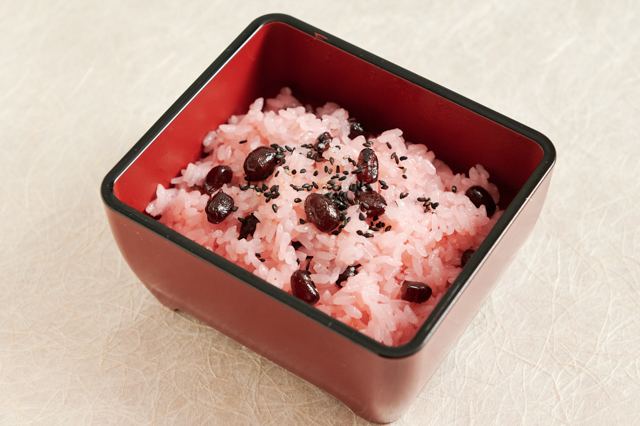
| Prefecture | Yamanashi (山梨県) |
|---|---|
| Region | Chubu |
| Japanese name | 甘納豆のお赤飯(あまなっとうのおせきはん) |
| Reading | Amanattōnōsekihan |
| Home area | South Alps, Kunichi City, Yamanashi City, Kofu City |
| Main ingredients | I'm going to have to do something about it. |
History and Origins
"Small of the sweet beans" is, as they call it, a red dish made of sweet natto. Tastes are sweet, salted and sweet and delicious to local people. Since we don't use offerings or beans, the rice doesn't turn red, and we change colors in red instead. There are both sweet reds with this sweet-nut beans in Japanese sweets and supermarkets and sweet reds with offerings and miniatures that are widely known. The red color was believed to be the color of the devil "to pay attention to." That's why "red beans" is as important as a sweet red meal on a celebration day. There are many theories about the roots of the roots, such as those reported by Mr.
When It Is Eaten
If you use sweet beans, you can go through the year to make sure they are served easily, without having to water the beans or soak the rice in the soup. Especially on the anniversary day, they are liked and eaten.
How It Is Eaten
Mix rice with rice, mix it together, and put water in a rice cooker. I'll melt the lipstick with a little water. After we have filled the amount with water, add a melted red to the water and cook it in a rice cooker. When you cook, put the sweet natto on, cover the rice cooker again, and let it steam a little. Mixed and mixed together, the mixture was placed on the bowl and salted with it. In regions where flower beans are special, such as in mountainous regions, they are also eaten with "flowers red food."
Recipe — Serves 5
Ingredients
- 2 × 180 ml glutinous rice
- 1 × 180 ml regular rice
- 150 g sweetened beans
- a pinch red food coloring
- a pinch salt
Method
- Mix rice and rice together, wash and put water in a rice cooker.
- I'll melt the lipstick with a little water. One is three pairs of water and adds a melted red to the water.
- I'll cook it in a rice cooker.
- When you cook, put the sweet natto on, cover the rice cooker again, and make it a little steamed.
- Mixed and mixed together, the mixture was placed on the bowl and salted with it.
More About Amanattōnōsekihan
Red rice is boiled by mixing rice with abalone and chicken. It is characterized by redish color because the azure and the sauerkraut colors are transferred to the juice and are absorbed by the rice.
Overview
(It is often used as a treat for Hale's day's meal, but in some areas it is used as a treat for bad things) Besides, the high nutritional value also makes cans and fres dredged objects popular and is used as emergency food. And often it is sold in convenience stores, supermarkets, and station stores as common food, such as "Red Food" and "Red Food" or "Singing Food" or "Singing Food" or "Singing Food" or "Single Food" or "Snap Food" or "Snap Foods" or "Snap Food" or "Sex" or "Sex"
The term "knitting" is common, but it is also called "kami" because it was put on the wife's head as the wife's word and applied to the word "kami" and kanji.
Until Meeki, red rice mixed with beans and other beans was distinguished from the steamed rice. But later, in some areas, the nicknames have become vague, and some areas still have red food left. Also, there are local differences as well as common red foods with beans and so on. There are different colors in Japan, and there are different ways to call them "sympathy" and so on.
In some places red rice uses chicken instead of beans. The longer the bean gets back into water, the more likely it will get to the "screw" that's going to break in an extensible way. In some places, such as the Kanto region, beans can be easily skinned and "contained" by a warrior and can use skin-hardy mustard instead of beans.
How to Eat
When you eat it, you place a salt on it, but if you cut or roast it, it's bad luck and you use it. I often eat at parties, but in some areas, not only are there celebrations, but also eat red food.
Nutrition Value
In contrast with the common white of the same mass, calories are about 1.2 - 1.5 times higher, but there are very high nutrients such as copper, protein and zinc. In particular, copper and protein are nearly twice the nutritional value of white food. Also, since there are few kinds of starchy amylose to use for eating rice, it is said that you have a good stomach.
The Origin of Reds
It has been said that red is more powerful than ancient paint. For example, in the mural painting of the grave, there is much sand in it, and in the story of the Japanese myth of the thunderous lightning and the sale of zinjio Sugishi, there is a legend of the story of the birth of the Japanese myth. And Shinto, based on rice belief, has been considered a very valuable food. (For this reason, it seems that in ancient times there was a custom to give to God a mixture of the red and red wine.) By then, as a gift, it is assumed that humans also ate red rice.
Customs
Today, there is a common custom of eating red food for good things such as festivals and birthday celebrations. However, by this time, the Edo - style book "The Fussus of the Soyuz" had already written on it as "Systemic Yulko - Chinese Noorara Eagle for the Unificational Rice" and had already learned how to cook red food. Although I don't know why they cook red food for the wrong reason, I also found that they cooked red food with the idea that they expected red to have a pernicious effect and with what is called "renewment." It's also possible that the fold of the bean may be associated with the "stabs." There are also theories that old-fashioned red rices have been turned over to good luck with the word play that was popular during the Edo period.
Where tradition and history have become clear, red food was used for sacrifices in at least the 12th century. Red rice has a strong religious significance, and there is the custom of using red food. There is a "responsive service" to the representative shrine of the Shinto shrine that still preaches this custom, as well as to the Shizuoka Prefecture temple of the shrine of the Shinto shrine of Kanagawa Prefecture. There is also a local tradition of "acquire sacrifice" based on a statement that the Eight Prince's castle was cut down by his fall when it fell.
Besides offering sacrifices, red rice has been identified as being used since the eighth century. The oldest tradition is to go to the Lake Water Festival of Lake Hakone at Hakone. It's the custom of carrying three-to-one red rices and wines on the boat and of sinking them at the bottom of the lake at the opposite side. Before this custom was performed, a young daughter was in attendance as a human sacrifice. As mentioned earlier, the Kabuki who saved it turned the boat into a habit of sinking three-and-a-half-a-half red rice and liquor into Lake Kanno. Or, an act of idolizing the dragon is carried on in the cherry pond of Shizuoka Prefecture, also known as "Dango." However, unlike Lake Sino, it is the subsoil that rises in the sky after a few days and is counted from that peculiar phenomenon as one of the seven wonders of the state or one of the stranges. In addition, there are reports that the daughter of a former beggar in the Red Pit of Gunma Prefecture Iseshima City, was drawn into the mountain and became a dragon god. The next day, as in the cherry pond, the red box of red food was empty.
Although the reason why they serve red food for the funeral is unknown, the theory is that the deceased has survived life in the wild and that the meaning of the journey and the celebration of the life of the great-great-great-great-great-great-great-great-great-grandfather is involved. Or it's also related to the hare and sacrifices mentioned earlier.
In the old days, red food was served in the traditional dress and celebration of adults. Even if you are a low-level warrior, this practice until the late Edo is often seen in the notables of Eno Six and others. In the case of girls, some families have served red food in celebration of their first tide, their wedding ceremony, and so on, but today there are fewer families who practice this custom.
As you can see from the many customs mentioned above, red food has changed shape and is found in many parts of Japan.
Locality
Hokkaido
This custom has survived even part of the Aomori Prefecture that people in the south have emigrated. There are common red foods, such as beans and offerings, but there are times when you use sweet natto bean beans or gold-time beans. If you use sweet beans, they're not colored red, so they're used for red. (If you mix the sweet beans with the red food on top of the boil, or add them together, and then add them together, then the beans will melt.) The finished product is made with a slice or piece of red pepper, and the salt is added to it. The Hokkaido retailer is sold along with common red food in the yuzu corner of supermarkets and elsewhere. Also, sugar beans are sold at the convenience store.
Aomori Prefecture
It's a sweet taste of sugar.
Also, in the southern part of Aomori Prefecture, there is a native dish called "Creaking and Cooking" with sweet red food mixed with rice.
Akita Prefecture
It is common to use black mustard instead of rice.
I didn't want to have any broken beans in my mouth, so I used a hardy, hard-to-breast black offering. If you boil with hard beans, you'll have a slightly purple color.
Also, in the southern states of Sendai, Hijizawa, and Yuzawa, it is known to make very sweet red foods with large amounts of white sugar. In addition to red food, add lots of sugar to cooked rice, potato salad, and sushi. Many people eat tomatoes with sugar on them.
In addition, this phenomenon is limited to the same Akita Prefecture in the southern part of the state, and in the northern part of the state, including Akita City, and in the northern part of the province, such as the city of Eysian, and the city of Osama, there is a taste for regular, low - sugar red foods.
Tokyo
In Tokyo, slags are sometimes used instead of sea bass. The azuquis is used for boiling, for its skin is easily broken, and its torn skin is associated with cuts, for example, for its skin is not broken.
Chiba Prefecture
In part of Chiba Prefecture, special flower plants are used.
Niigata Prefecture Transit
The local dish, which runs to Niigata Prefecture, which has been painted with turquoise in golden time, is also called the "Cypress Red Food" and the "Klongoka Redfish." It's brown because it's colored with soy sauce. In this area, "red rice" is this oily flavor. There are other regions in the Niigata Prefecture that eat the brothy, but only Nagaoka calls this red food. In Nagaoka it's also used as a wedding gift.
Although no reliable literature has been found, there are the following theories at the birth:
Since there was no offering in Nagaoka, I used the sesame oil that I was used to color my rice. There was a town built of rice paddies, and it was made of soy sauce. In the Edo era, the former proto-sun of Osaka was brought with him a wrestler from Osaka, and a former wrestler, who had obtained permission from the master to produce soy sauce, gave the oil to the front of the store and provided the believers with rice that the wrestler had made with soy sauce.
Yamanashi Prefecture is eaten as a dinner for Hale's day, mainly in South Alps, in Sasang, in Yamanashi City, and in Kofu City. Since rice doesn't turn red, I use a red color to color it. Tastes are sweet, salted and sweet and tastey locally is popular. In this area, Japanese candy stores and supermarkets, besides sweet sweet-nut beans reds, both are sold in plain and plain red food.
Yamanashi Prefecture chooses this "red" for "specially chosen and unspecified foods." (See also #Hokkaido)
Nagano Prefecture
In the Nagano Prefecture region of Totoyoku, we are eaten by using flower beans instead of beans. It's because there are fewer beans growing. You can see the Sung-sung-sung head, which is the center of the Nanjo region and is wrapped in red rice instead of rice.
Fukui PrefectureOX.
Tokushima Prefecture Sound Gate
In Tokushima Prefecture Symphony Gate, it is customary to eat with "smooth sugar."
Text adapted and translated from the Japanese Wikipedia article 赤飯 by its contributors, licensed CC BY-SA 4.0.
Dish data: Ministry of Agriculture, Forestry and Fisheries (MAFF), “Uchi no Kyodo Ryori” (Our Regional Cuisines) database, used under the Public Data License (PDL1.0); translated and adapted from the Japanese original.