Kenchin-jiru けんちん汁
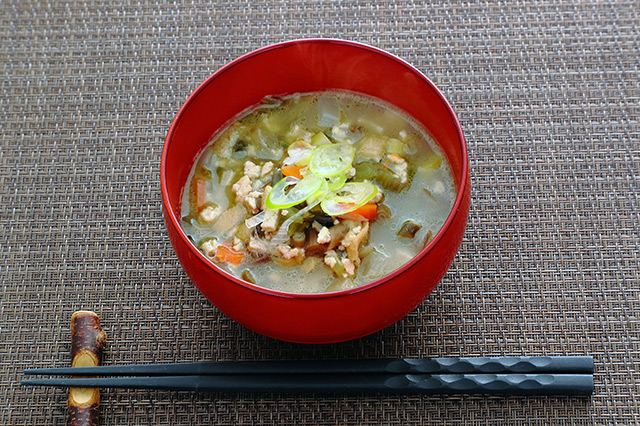
| Prefecture | Iwate (岩手県) |
|---|---|
| Region | Tohoku |
| Japanese name | けんちん汁(けんちんじる) |
| Reading | Kenchinjiru |
| Home area | Northern District |
| Main ingredients | It's a very simple process. It's very simple. |
History and Origins
The "Steak" is a soup prepared with oil and tofu, such as carrots, radishes, rice, and so on. Iwate Prefecture is characterized by not adding meat, and often roasting tofu with oil and making it powdery. So, the tofu in "Smew" was used by many families with hard hand-made tofu. It is said that during the time of the present season, it was always eaten, but in the past, it was often eaten in the garden, or during the New Year's Eve, especially in January, it was made and heated and eaten in large quantities so that women could rest. Put it there overnight. When you heat it up again, it tastes good and tastes good again. In Sendai, there is a characteristic of the Japanese people that uses a lot of semblance oil locally to finish it well.
When It Is Eaten
I was often eaten on New Year's Eve. Especially during the period of New Year's Eve in January, I made large quantities of them and ate them warm and warm so that women could rest.
How It Is Eaten
I can cook the tofu with a small cut of carrots, radish, rice, rice, rice, and so on. I'll cook it in soup, taste it in rice, and scatter the cucumbers. The point is to boil it after it's cooked. Tofu should be used with a hard tofu. When you reheat it, it tastes good and delicious. Sometimes we put the broth inside and eat it in a steamy soup. Yamanama uses long-term preserves in winter. When you put the straw back on, the color will be clean when you use a copper pot.
Recipe — Serves 6
Ingredients
- 150 g daikon radish
- 50 g carrot
- 50 g burdock root
- 2 blocks(600 g) firm tofu
- 2(20 g) aburaage (fried tofu pouch)
- 50 g konnyaku cubes
- 30 g) 200 g zenmai (royal fern)
- 100 g bracken (塩蔵)
- 100 g butterbur (塩蔵)
- 50 g 姫竹 (水煮)
- 20 g green onion
- 8 tbsp vegetable oil
- 1,500 ml、20 g、20 g、20 g) 1,100 ml dashi stock
- 7 tbsp light soy sauce
- 2 tbsp sake
- 2 tbsp mirin
- 2 salt
Method
- Put the under-processing and dry-water citrus under the dish and dip it in a soft hot water for about 30 minutes.
- I'll move it to the pot and put it on fire. When it is boiling, take it off the fire and change the water, soak it up in about three days a day, and put it back until it's dry. Since the water turns red, we will change it four times until the water comes back red.
- Put water and salt in the dish and put it on the fire.
- When it is boiling, you can get it off the fire, or you can expose it to a flow of water for about three days, and remove the salt. Depending on the amount of salt you soak in the mountain vegetable, time will change when you pour it into the running water.
- I'll put the citrus in the citrus, and I'll take the citrus. Put water and cloth in the pan and keep it for over an hour. Add boiling salt to it, and then boil it for about 20 minutes. Then add a half-minute sedation, and then put the fire down just before boiling.
- The cotton tofu keeps the water running.
- I'll cut the meat into two-inch slices, then I'll boil it down. The fish is to be peeled with a knife, laundered, exposed to water, and pulled out. In the morning, we will eat, we will dry, we will cut the danchami into a small cut of five centimeters wide. Cut it in the small eye of one centimeter. Oiling is poured over hot water and then cut off on the small eye of an inch.
- Heat the oil in the pot, add a roughly ground tofu with your hands, and roast it in a medium fire for about five minutes. If you boil until the tofu breaks down and the white-white water remains dry, you can add all the ingredients of 7. and cook more.
- When you boil a bowl of soup, add a half-minute bowl of soy sauce, a half teaspoon of wine, a bowl of salt, and boil it in a medium-fired pot for about 30 minutes. I'm going to use the remaining soy sauce to adjust it and make a tapering paste.
More About Kenchin-jiru
Kenchin jiru (けんちん汁, 巻繊汁 kenchinjiru), also spelled kenchin-jiru, and sometimes referred to simply as kenchin, is a Japanese vegetable soup prepared using root vegetables and tofu. It is a popular dish in Japan and is prepared in various manners using myriad ingredients. It has been stated that the dish originated several centuries ago from Kenchō-ji, a temple, and it has also been suggested that the dish has its roots in shippoku cuisine.
Overview
Kenchin jiru is a Japanese vegetable soup prepared using root vegetables and tofu. Typical ingredients include tofu, burdock root, daikon radish, shiitake mushrooms, konnyaku, taro root, sweet potato or potato, carrot, dashi stock, sesame oil, and seasonings. The vegetables and roots can be stir-fried prior to being added to the soup, which reduces their moisture content to accentuate their flavors. Meats such as pork and chicken are sometimes used as an ingredient.
It is a popular dish in Japan, where it is prepared in many various ways using various ingredients.
History
It has been suggested that kenchin jiru originated from Kenchō-ji, located in Kamakura, Kanagawa Prefecture, Japan, which was the first Buddhist Zen Temple in Japan. A story regarding the dish's origin is that several centuries ago, a young monk accidentally dropped a fresh tofu cake on the kitchen floor of the temple. The kitchen floor was kept in a very clean state, so the cook used the tofu in a soup for the evening meal. After this occurred, tofu used thereafter when preparing the soup was routinely crushed or crumbled into small pieces, which was based upon a Zen belief that food should be divided equally among the residents of a temple.
It has also been suggested that the dish had its roots in shippoku cuisine, which is a Japanese culinary style that is heavily influenced by Chinese cuisine. Shippoku cuisine originated from Chinese immigrants who went to Nagasaki, Japan, during the Edo period. Nagasaki was the only place in Japan where Chinese people were allowed to reside during the "centuries of seclusion". Kenchin jiru's connection with shippoku cuisine is also demonstrated per the derivation of the word kenchin from the Chinese word kenchen, which means "rolled parched food" or "rolled slivers of food". A well-known variation of kenchin jiru is prepared by rolling cooked vegetables and tofu in yuba (tofu skin) and then deep-frying the roll, rather than serving it as a soup.
Text adapted from the English Wikipedia article Kenchin-jiru by its contributors, licensed CC BY-SA 4.0.
Dish data: Ministry of Agriculture, Forestry and Fisheries (MAFF), “Uchi no Kyodo Ryori” (Our Regional Cuisines) database, used under the Public Data License (PDL1.0); translated and adapted from the Japanese original.