Damakonabe だまこ鍋
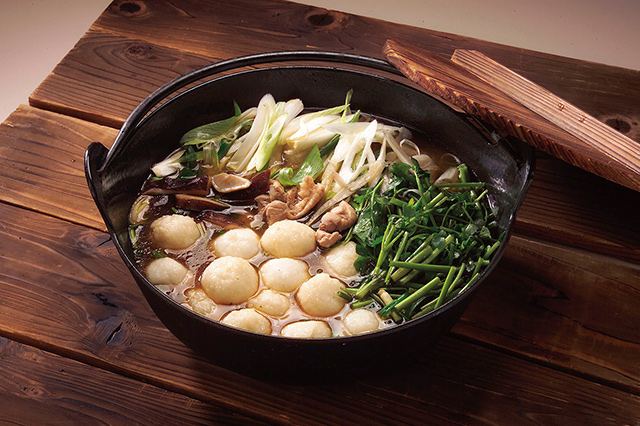
| Prefecture | Akita (秋田県) |
|---|---|
| Region | Tohoku |
| Japanese name | だまこ鍋(だまこなべ) |
| Reading | Damakonabe |
| Home area | And I'm going to show you some examples of this. |
| Main ingredients | And I'm going to show you how to do that. |
History and Origins
The chicken-rooted soup contained rice from chicken, vegetables, and stews, a local dish made from home during the winter of Akita. It's said that the southern fall region around Jiro Lagoon is the cradle. There were ways of eating a "snaps" with a tastey dish, which was originally made from the yurai, such as the dau-yang, funa, and crayfish. However, when the Yakui flat was dried and the fish was reduced by the heavy fishing rate, the fish were used instead of fish, so he was able to use chicken garlic and meat. In Akita, children's toys will be called "snakes" and they will have to put the freshly prepared rice into a bowl and grind it so well that they can roll it in the palm of their hands. The name "snake" is attributed, so to speak, to the rice dumplings and their resemblance to the shape of your hands. There is also the theory that the fox is so delicious that the children are so obsessed with eating that "the child eating quietly" can be called "snip."
When It Is Eaten
The Akita Prefecture says "the garden is rough," and there's a custom of eating mushrooms that prepares new ones that we just harvested, crush them, and fold them. And in winter there are families that make chickens with their children.
How It Is Eaten
I'll push the rice that I made for a little while and I'll push it 50 percent until I feel like it's stuck with a licorice, and I'll make a dumplings while it's hot. The chicken is a chicken, and the soup is flavored with soy sauce, soup, and so on. It is cooked with a chicken, onion, elys, mitace, and gobou. There are differences in places such as dumplings that are light salted when rounding, or rounded, and then baked a little on the net before eating. The base of soup and the materials are like the boulders of the Grand City, but the monkey is not hungry and the base is not cooked.
Recipe — Serves 5
Ingredients
- 750 g(5 × 180 ml) regular rice
- salted water, to taste
- 500–600 g chicken (leg)
- 1 burdock root
- 2 bunches seri (Japanese parsley)
- 2 green onion
- 200–300 g mushrooms (maitake mushrooms)
- 2 heads konnyaku noodles
- Stock: 900 ml bonito dashi stock
- Stock: 900 ml chicken stock
- Broth: 1 chicken bones
- Broth: 900 ml water
- 120 ml soy sauce
- 1 tbsp 1/2 miso
- 60 ml mirin
Method
- The rice is solid and solid, while it's hot, with a bowl, folds well, rounds to the size of a pinpong ball, and gently dips it in salt water. You should round it carefully so that it doesn't boil.
- I'll put soup in the soup and make soup with citrus oil, citrus and garlic, cut chicken and string in a pot, cut in half, cut in half, and cooked in a bowl. If the chicken is thoroughly boiled, I'll boil it by adding one bowl of rice, a chopped onions, or a cut of four-inch sauce.
More About Damakonabe
Falk is a native dish of Akita Prefecture, which is used in plain rice. Although there's a similar process in making the same local dish, Akita's native dish, the birth of the Japanese is different, and the Chinese have a round shape.
Overview
They've been eaten mainly as traditional household food in Akita Prefecture regions and Tokimoto. The rice is round and used mainly as a pot implement. The cheaty "choo" is a "choo" with a "choo" with a "choo" in the akita valve. It is also called a "choo" and a "choo." The pot in which the cheater entered is called a fool's pot.
Cooking.
We will crush the rice on the table to the extent that the grain remains a little, and then turn it into a sphere about three centimeters across. In some homes it is salted or burned lightly to prevent boiling. It's almost the same cook as a tadpole pot, which tastes like chicken, onions, leis, goubou, and crayfish, but instead of a stick, it can't be baked into a conch, basically. In other cases, the soup from the boiling sauce or the flavored sauce may taste a lot different from the pot from the tassels from the tassel. You can make them and use them right away, but you can save them for a few days by placing them in salt water.
Although the recipes are easy and are basically made by each family, after advanced age, there is also the sale of long-term leather pucks that can be sold with supermarkets, souvenir shops and other items.
Origins
The area around Yayyu Lagoon is born, and forestry workers put lunch on the stumps and crushed it with the ax's back. On the other hand, there is also a theory that matgi food is the origin of the dish, and that the house is the root of the joke.
I used to boil vegetables and cucumbers on the juices of fish, such as funas, daisys, and sauerkrauts, which were caught on Yyoyu La. However, because of the draining of Yyoro Latass, the small fish have been reduced to a water source, they have changed to using the present hen.
And there's a dish called "Snap" that is supposed to be a root type around Yichiyoga. I'll rip the crushed food into pieces with chopsticks and then soak it in the juice of a bowl of water.
Other
The food that has cooked the rice in the same way as the rice that has been served has a lot of rice.
In the city of Fukuyaki, in 1959, the Emperor Migiji, the Emperor of Japan, took to eating and praising the Kabuki pot in that city as a meal representing the city.
For commercial purposes it is said that the first smooth hot springs in 5th-city Castle provided a saga pot.
Text adapted and translated from the Japanese Wikipedia article だまこもち by its contributors, licensed CC BY-SA 4.0.
Dish data: Ministry of Agriculture, Forestry and Fisheries (MAFF), “Uchi no Kyodo Ryori” (Our Regional Cuisines) database, used under the Public Data License (PDL1.0); translated and adapted from the Japanese original.