Nishime 煮しめ
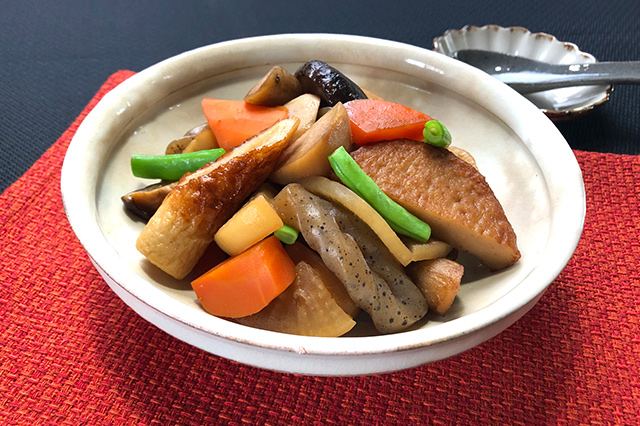
| Prefecture | Tochigi (栃木県) |
|---|---|
| Region | Kanto |
| Japanese name | 煮しめ(にしめ) |
| Reading | Nishime |
| Home area | All Tochigi Prefecture |
| Main ingredients | I'm sorry. |
History and Origins
In addition to regional festivals and annual family affairs, local dishes are served at the wedding feast. In Tochigi Prefecture, it's bound to be a bit of a joke to say "mass broth." The growth of potatoes and potatos as they surround parents is a symbol of fertility and fertility. The best of luck is the best part of the potato stew. It's said that the first time I was introduced to Japan was during the pre-gravation period. It can be grown in a wide range of adaptive areas, such as volcanic ash or sandstorms. In Tochigi Prefecture, it is harvested from volcanic ash and estates around the Hijijijigi and the sandstones at the foot of the mountain. Foods that have been known in the province for a long time, such as boiling water and everything else, exist.
When It Is Eaten
It's been eaten at various occasions, such as the shrine's festivals, New Year's, and trays, and other annual events, such as births, the wedding feasts, and so on. It's now eaten as a everyday noodle.
How It Is Eaten
The main ingredients are carrots, carrots, lentils, and so on. These are boiled until the flavor is soy sauced. In recent years, I often put in some dough, such as chicken, chicken, and so forth. You may put a stick in it. Remove the axis of the shake and, if large, half cut, half cut, half cut. Especially until the bladder is soft, when the other ingredients are stirred one at a time, the taste is more palpable as the material itself is tasted.
Recipe — Serves 4
Ingredients
- 10 taro
- 400 g daikon radish
- 1 carrot
- 100 g burdock root
- 50 g shiitake mushrooms
- 100 g konnyaku
- 50 g green beans
- 2 chikuwa (fish cake tube)
- 2 satsuma-age (fried fish cake)
- Seasonings: 1 tbsp sugar
- Seasonings: 4 tbsp soy sauce
- Seasonings: 1/2 cups mirin
- Seasonings: 3 cups dashi stock
Method
- If I remove the axis of the shaker, I cut it in half, and then I cut it in half, and then I cut it in half, and then I clean it well, then I cut it in half, and then I spill it in a boil.
- The pepper is cut into short book form and cut into the center. After that, it's a good shape on the reins.
- I'm gonna cut the snacks to size.
- I'm going to cut her into three centimeters in the bottom of the rice bowl for about a minute.
- Put a few in a pot and add a taste to it, and add it to the cooking process slowly.
- If the rice is cooked, it will boil it.
More About Nishime
Cooking is one of the dishes of stew. It's also one of Japan's typical household dishes. I often call them the sweetly boiled root vegetables, potatoes, sweets, cucumbers, oils and so on.
And while the basic recipes are the same, the last finish is the recipe that is used to make the paste with the paste called "same".
Overview
It's a cooked dish that keeps vegetables and dry foods from breaking down. It's called boiling the cooking process that takes time to cook slowly so the soup doesn't leave.
There are some dishes that are cooked together like roast chicken, when they are cooked separately. On this point, there is a case in which a pot distinguishs much of the food from "roast chicken" or "preboiled chicken," while there is also an example in which a soup is about the same as a chicken.
It's regional, such as in the bowl of Niigata Prefecture, where the casserole is used in the soup and in the casserole.
Fads
It is said that the origin of traditional cooking began with a few boils. In the construction of the heavy-box, it makes up either the heavy-sized part or the three-sized part.
A local meal.
- It comes from cutting the ingredients small, and it's called yuzu soup and yuzu soy sauce. For example, the Fukui Prefecture and so on, there are activities related to Buddhist affairs. It is sometimes introduced as a stew in the local food of the city of Hikoku-Yamaguchi Prefecture. In Iwaji City, we call them "oo-ha-ha." And yet in Tochigi Prefecture, it's called "wow" and it's called "wow."
Yum.
The basic cooking process is the same, but the last finish with the paste is called "heavy." Yuuki is called "saki" or "saki" and, in particular, in the Edo era, there was the letter "intensibly" with the letter "smell."
Text adapted and translated from the Japanese Wikipedia article 煮しめ by its contributors, licensed CC BY-SA 4.0.
Dish data: Ministry of Agriculture, Forestry and Fisheries (MAFF), “Uchi no Kyodo Ryori” (Our Regional Cuisines) database, used under the Public Data License (PDL1.0); translated and adapted from the Japanese original.