Ayushioyaki 鮎塩焼き
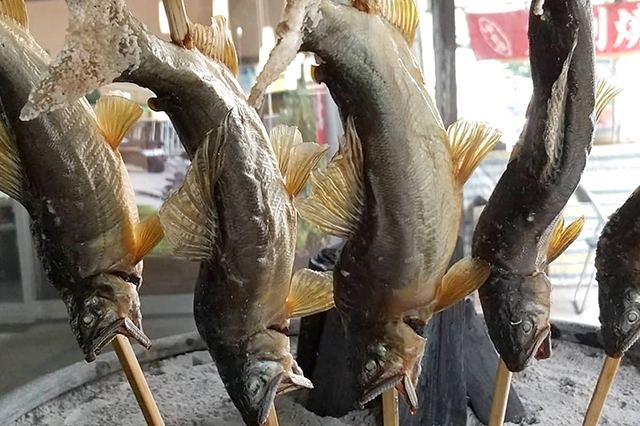
| Prefecture | Gunma (群馬県) |
|---|---|
| Region | Kanto |
| Japanese name | 鮎塩焼き(あゆしおやき) |
| Reading | Ayushioyaki |
| Home area | Unomura |
| Main ingredients | all |
History and Origins
On the horse, where there are many beautiful rivers, the native food of many rivers thrives and thrives on them. Waterfish, which are often eaten by the area, such as rice, rice, and rice, are different, but among other things, "The fish of the horse is designated as the prefecture, and is the dominant one that is actively produced. As a local dish, salted cooking is usually eaten with the same taste. Konomura, the most densely populated village on the horse. There is a river stream running through the Shin River of Tokugawa, which, as a start, is the area of the various river fish, such as Yamanaka, Iwana, and Ugly. During summertime, the yakis are allowed to be released and you can use the "salt of the mustard" as a limited period of time. At this time of the year, many people come to eat fresh rice from within and outside the province.
When It Is Eaten
A lot of people enjoy fishing before eating, and in the Ueno fishing association, they provide information about the fish. Because of the habit of making a trapeze, it is used to hook the handles around a hook, to guide them to a point where they have a trapper, and to use the "friend hunt" method to trigger the attack. Every year in the middle of June, a ban was lifted and tourists were welcome.
How It Is Eaten
Among the crescendo harvested at Gunma Prefecture, Kangawa's bowl is especially delicious, and it is a very tight-knit experience. At the Uenomura fishing union, the fresh rice is still alive, and when it is blown and salted, it is baked in a direct fire using the chrysanthemum from Ueno. It's a very simple thing to do.
Recipe — Serves 1
Ingredients
- 1 ayu (sweetfish)
- a pinch salt
- 1 skewers
Method
- I'm going to use salt on the bowl.
- When you salt it, you put it in the pan.
- I'll burn it for one and a half hours.
Dish data: Ministry of Agriculture, Forestry and Fisheries (MAFF), “Uchi no Kyodo Ryori” (Our Regional Cuisines) database, used under the Public Data License (PDL1.0); translated and adapted from the Japanese original.