35 16 サンマーメン
| Prefecture | Kanagawa (神奈川県) |
|---|---|
| Region | Kanto |
| Japanese name | サンマーメン |
| Home area | Yokohama City, Kanagawa Prefecture |
| Main ingredients | I'm going to have to give you some of the things that you can do. |
History and Origins
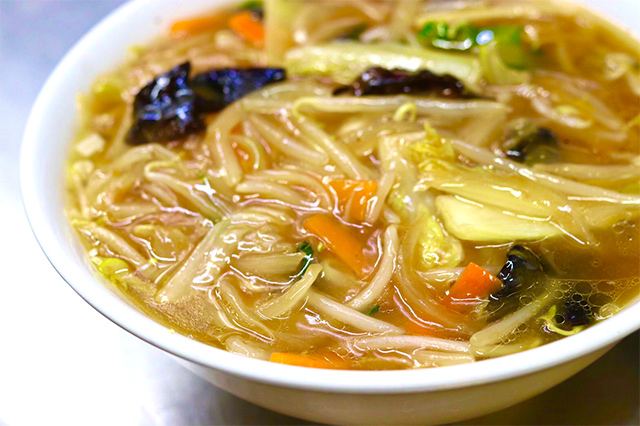
I put soup in a vegetable soup containing beans, cabbage, pork, and so on, and then I put it on ramen and served it with a dish of noodles. There are stories about its origin and kanji, but according to one theory, it means "nut" and that means "to put fresh, shaggy materials on top of it." Prewar Chinatown has often eaten beef, but it was expensive, so there's now a vegetable noodles "Sammarmen" dish. The soup was cool and the volume was high, and Chinese restaurants all over the province soon took over the menu. Now many of the ramen and Chinese restaurants in the province have Sammen as their main strength. For the people of Yokohama City and Kanagawa Prefecture, the Sunmen are familiar objects that are common to people on a daily basis.
When It Is Eaten
In restaurants around the province, you can eat at restaurants and eat at all seasons throughout the year. It's offered from expensive to popular stores, but it's mainly the taste of the unprincipled.
How It Is Eaten
If the pork is roasted and the color changes, I can add vegetables, kimchi jellyfish and other ingredients to make it fried. Add a flavored flavor, such as steam oil, and Chinese soup, and then add a paste to it with a water-salted piece of flour. I put ramen soup in the bowl and boiled noodles in the dish, and I put a vegetable pot in it and finished it. The regular tools are sprouts, cabbages, pork, but there is no specific definition for taste or material. The taste of citrus, salt, original materials, and so on are served in local stores.
Recipe — Serves 1
Ingredients
- Mix: 25 g pork
- Mix: 60 g Chinese cabbage
- Mix: 25 g bamboo shoot
- Mix: 10 g komatsuna
- Mix: 65 g onion
- Mix: 15 g carrot
- Mix: 150 g bean sprouts
- Mix: 5 g おろしニンニク
- Mix: 2 tbsp soy sauce
- Mix: 1 tsp 味の素
- Mix: 1 tsp sugar
- Mix: 1 tsp sesame oil
- Mix: 250 ml stock
- Mix: 2 tbsp potato starch
- Mix: 50 ml water
- Mix: 250 ml stock
- Mix: 30 ml わりした (soy sauce)
- 140 g noodle
Method
- I'll cook it with a bowl of citrus in a hot pan.
- When the fire starts to pass, I'll put in a B-o-o-o.
- When the fire starts to go through, we add a cinnab, and we stop it.
- I'm going to put a bowl of noodles in the bowl, and I'm going to put three in it and finish.
More About 35 16
It's a fine-sized lynx or salt ramen that's put in a pot.
(In other words, in a book written in a Chinese restaurant, which was in a Chinese restaurant before the Second World War) Since about the year 1947 to 1948 (the end of the war) the volunteer workers at Yokohama port have been fed at a low price from the general ramen, and winter has been served as a cold - weather dish. It's said that there's roots in Canton's food. The word "singu" comes from a combination of the words "sun," which describe fresh, shanky flavors, and the word "horse" meaning "m" which means "horse." There is also a theory that it is because the raw materials are fried with such force that living horses can jump around. Some stores write "Saishi" because Yokohama is a port town.
Overview
The palm palm was not essential, and at first it was a cabbage, pork, and seasonal diet, but it soon became a variety of shops, considering color and nutrition. It's also used for carrots, onions, green onions, green onions, and spinach. It's similar to a bowl of rice. There are stores that provide "Sammar" with a bowl of rice.
In Kanagawa Prefecture, many cities do not have much to eat (such as Tokyo, Osaka, Japan, and Takanashi, Japan) or Tokyo, Japan, Japan, Japan, Japan, and Japan.
I was in junior high school, and I liked to eat a Chinese restaurant called "Sammarmen" and Chinese, which my classmates owned. It was also in other provinces that Kashita introduced the store's Sanmarine at the "MUSIC TIGlRE" series of "MUSIC TREATATIONS" (MUSIC TREATlONS) that increased fame. Also, in 2009, I won the highest prize in the Noodles Department of the National Association for Chinese Food and Health Association contests.
Source of the Language
That name often misconstrues it as "sama in," but it has nothing to do with it. The ramen used in sunmas and dashis is called "The ramen."
There are theories and not clear, but Chinese is based on it. "If you write "to write," it means "to write" to mean "to live good materials." "If you're writing "three-year-olds," there's a theory of a name for using three kinds of mascot palm, pork, and tarsai. There are theories that "horses" are meant to be a horse's conscious mind, but "horses" is the foreword of a horse.
In the Chinese language, for example, the word "nemmar" means "nammr" or "nammr" in the language of the Japanese language. By the way, Menma means all kinds of tools that are put on your noodles, but they've been identified in the Chinese word for your husband. Since the meaning of "sun-sān" is in the Mandarin dialect, the reading of "three" in Beijing is better for sound than "sun-sān" in Beijing. Also, candy noodles are found in many Chinese countries, including Beijing.
History
As for the origin of the so-called "sang noodles" (in the year 1930) the Japanese cook of the Japanese dish, who prepared it, had already written a book of "sung citrus" in order to support it.
In March 2022, the Cultural Organization's 3rd anniversary as "Sanmarmen" was approved by the Food Department in the future.
It's called the birth and origin of the world.
Iseshima Hotel.
It's a related product.
A frozen food for Yokohama, Ramen. I'm going to go to a restaurant and I'm going to have a lunch with you. In 2002 productization started as "Symbok-sama" for sale. In 2010, I got a tattoo from the "Sanmarnoodle party" and sold it under the same name. I put a "100 Years Food" mark on a 2023 renal.
Text adapted and translated from the Japanese Wikipedia article サンマーメン by its contributors, licensed CC BY-SA 4.0.
Dish data: Ministry of Agriculture, Forestry and Fisheries (MAFF), “Uchi no Kyodo Ryori” (Our Regional Cuisines) database, used under the Public Data License (PDL1.0); translated and adapted from the Japanese original.