Hōonkōryōri 報恩講料理
| Prefecture | Toyama (富山県) |
|---|---|
| Region | Chubu |
| Japanese name | 報恩講料理(ほうおんこうりょうり) |
| Reading | Hōonkōryōri |
| Home area | All within the province. |
| Main ingredients | We've got vegetables, we've got mountains and grains. |
History and Origins
It's called a Shikoku kingdom. It's a Toyama Prefecture. On the day of the birth of the founder and father of the Shinji, there is a legal and a thank-you-you-do-you-do-it-you-know-all-you-you-know-you-know-all-you-you-know-all-you-you-know-all-you-you-know-you-you-know-you-you-you-know-you-you-know-you-you-you-you-know-you-you-you-you-know-you-you-you-know-you-you-you-know-you-you-you-you-know-you-you-you-know-you-you-you-you-you-you-know-you-you-you-you-know-you-you-you-you-know-know-you-you-you-know-you-know-you-you-you-you-you-you-you-you-you-you-you-you-you-you-know-you-you-you-you-you-know-you-you-you-you-you-you-you-you- Although the variety and number of dishes vary from region to region, there is a tradition for the benefits of the benefits of the benefits of the benefits of the benefits given by the best vegetables and vegetables harvested in that year and the best of the country. It is said that pure worship was brought to the northern part of the country during the time of the Kojihara period and that faith spread through the Kajijijijijiji Temple, now in the Republic of China. That is why I am still in the area of Nanjo, where the faith is particularly strong, and I am called "Koji" and there are so many dishes prepared for you. In the mountain range where the tradition remains strong, there will be a combination of stewings made from rice, such as the walrabi, tanmai, and other mountain seeds that we have kept in spring, and the hardness of the rope will not be broken, but the hardness of the rope will be produced by the cooking of red cascabs, cucumbers, and new ones.
When It Is Eaten
On November 28th, or before the death of the Mother of the Mother, when we invite monks to our temples and homes to participate in the thank-you course, we gather around the altar. Cooking, soup, soup, rice, and rice are provided, and the beans that the Buddha liked most are always served. The soups and fried rices in the thank-you course are eaten by their regular meals.
How It Is Eaten
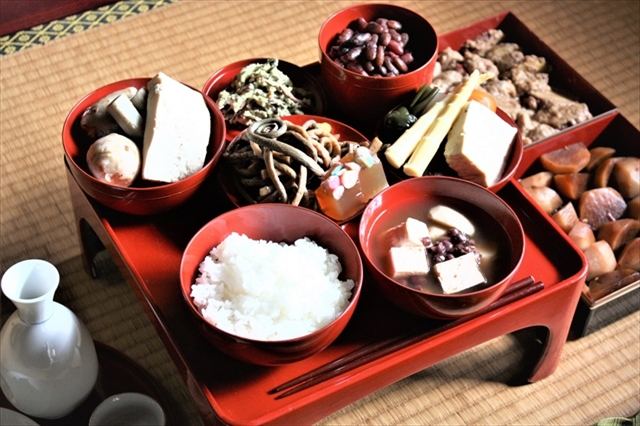
The content of the dishes and the order of the bowls vary somewhat from region to house, but in the Fukuyama district, there are colorful bowls filled with rice, soup, stew, and stew. And there's a dish that doesn't fit into a bowl, such as the stuff of red cacabs, and it's served on heavyboxes and bowls. These are called "Otoshi" and "The Rational Moths."
Dish data: Ministry of Agriculture, Forestry and Fisheries (MAFF), “Uchi no Kyodo Ryori” (Our Regional Cuisines) database, used under the Public Data License (PDL1.0); translated and adapted from the Japanese original.