Zōni 雑煮
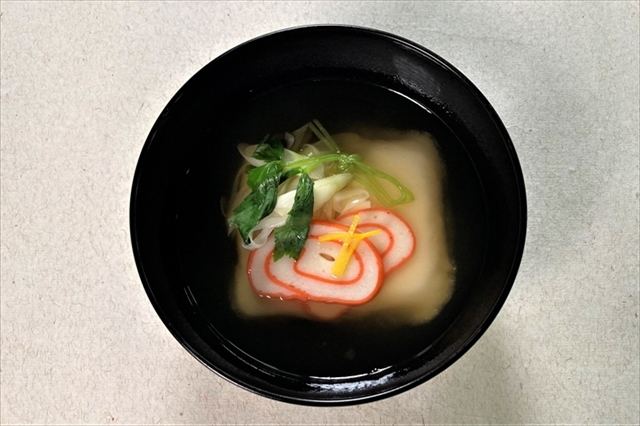
| Prefecture | Toyama (富山県) |
|---|---|
| Region | Chubu |
| Japanese name | 雑煮(ぞうに) |
| Reading | Zōni |
| Home area | All within the province. |
| Main ingredients | (Customer) Vegetables, westerns, onions, and so on. |
History and Origins
There are many kinds of citrus stew throughout the country, but in Toyama Prefecture, the bleat eaten varies from area to area. In other places, such as the Shingawa region near the eastern coast of the state, the delicate success fish and the well-being of the fish are first used, as well as other fish, such as the cahows, the saba, the shrimps, and other fish, as well as vegetables and cucumbers, and they are so well equipped that they can be hidden. On the other hand, in the west of the state, in the interior of the country, in the area of Tsubagakure, only a few types of tools, such as onions and fufu, are quite simple. Long onions are used with roots, but they are hoped to live long enough for gray hair. It's not too much to say that there is only a small number of rices in the area. It's a food rich enough to eat. And it's the "Customer," which is a special product of Toyama. The "scroll-roll" that wraps itself around is the order, but the best dish, with a red - and - white color, is often adopted. Just adding it will give you a great feeling of relief at once.
When It Is Eaten
It's made as one of the New Year's dishes, and the whole family will taste it. At the end of the year, there will be plenty of convex in the supermarkets in the province, and fish Tsu City will have an essential, unspoiled pepper-salted pepper-salted baked in the kitchen.
How It Is Eaten
Eastern: When you burn fish, you remove head, bones, skin and loosen yourself. Keep your head up for use. I'll cut out any other ingredients, such as vegetables. When using a gobow, I'll have it on the water after cutting it. When you're out of rice, fish heads, and so on, you can boil vegetables and other things gently, add fish's whey, and taste with flavor. I'll boil the rice in another pot. Put a bowl in the bowl, add some tools and juice, and put three leaves on top. Western: The onions are allowed to pass slowly into the water with their roots. I cook the soup with boiling oil and other flavors. The rice is cooked not too brown. Put a bowl of lentils, onions, and cucumbers on top of it, and pour the juice.
Recipe — Serves 4
Ingredients
- 4 cut mochi blocks
- 1(200 g) カワハギ(もしくは (中)
- 4 seri (Japanese parsley) (もしくは)
- 4 naruto fish cake (薄切り)
- 80 g soy sauce
- Broth: 6 cups water
- Broth: 12 g kelp (konbu)
- Broth: 1 カワハギの頭
- Broth: 2 tsp salt
- Broth: 1/2 tsp soy sauce
Method
- Put water in the pot and soak the cloth in about 20 minutes and then put it on the fire. Just before boiling, I take out the cloth and put in the head of a casserole and cook it. After you taste it in order of salt, soy sauce, then you take out your head.
- The bowls are made into two inches long, with water in them.
- The kite is cut into thin pieces and pasted. I'll cook it with 100 ccs of water and 1 teaspoon of sesame oil.
- The daisy is baked, and it relaxes.
- I'll cook the cut.
- Put hot water in the pot, light water in the five, and put it in the bowl.
- I'll put a daisy on the bowl and then I'll put a tadpole on it and pour the juice.
More About Zōni
Zōni (雑煮 or ぞうに), often with the honorific "o-" as o-zōni, is a Japanese soup containing mochi rice cakes. The dish is strongly associated with the Japanese New Year and its tradition of osechi ceremonial foods. The preparation of zōni varies both by household and region.
Etymology
Zōni is written in the Japanese language using two kanji characters. Since the first, 雑 means "miscellaneous" or "mixed", and the second, 煮, means "simmer" or "boil", it is thought that the word is derived from the fact that zōni consists of many miscellaneous items of food (such as mochi, vegetables and seafood) being boiled together. Formerly, amongst samurai society, the dish was referred to as "烹雑" (hōzō) with 烹 also being an archaic term for "to simmer" or "to boil".
Origin
It is said that zōni finds its roots in samurai society cuisine. It is thought to be a meal that was cooked on field during battles, boiled together with mochi, vegetables and dried foods, among other ingredients. It is also generally believed that this original meal, at first exclusive to samurai, eventually became a staple food of the common people. Zōni was first served as part of a full-course dinner (honzen ryōri), and thus is thought to have been a considerably important meal to samurai.
The tradition of eating zōni on New Year's Day dates to the end of the Muromachi period (1336–1573). The dish was offered to the gods in a ceremony on New Year's Eve.
Variations
Stock
Zōni has numerous regional variations in Japan. In many regions including the Kantō region, zōni consists of a clear soup called sumashi-jiru which is flavoured with dashi, a stock made from soy sauce, flakes of dried bonito, and/or kombu. In the Kansai region and eastern Shikoku, zōni is made with a stock of white miso, while zōni in the part of Fukui Prefecture is made with a stock of red miso. In the Tottori-Izumo region, a variety of red bean soup is used for zōni.
Mochi
The preparation of the mochi for the dish also varies by region. In the Kantō region and Tōhoku region, the mochi are cut into squares and grilled before being added to the stock. In the Kansai region and the Chūgoku region, a round, boiled mochi is generally preferred. In most of the Kyushu region, a round mochi is popular, but grill-boil difference changes depending on area. In some areas taro or tofu is used instead of mochi. This type of zōni is found on some islands or mountainous areas where rice is not grown to a large extent.
Additions
Common additions to the soup include chicken, fish or meatballs; leafy vegetables such as komatsuna or spinach; mitsuba (a Japanese herb similar to parsley); kamaboko such as naruto and carrot flakes for colour; and flakes of yuzu peel for its citrus fragrance. Regional specialties are often added. A sprinkle of seven-spice chili flakes (shichimi) is sometimes added at the table.
Text adapted from the English Wikipedia article Zōni by its contributors, licensed CC BY-SA 4.0.
Dish data: Ministry of Agriculture, Forestry and Fisheries (MAFF), “Uchi no Kyodo Ryori” (Our Regional Cuisines) database, used under the Public Data License (PDL1.0); translated and adapted from the Japanese original.