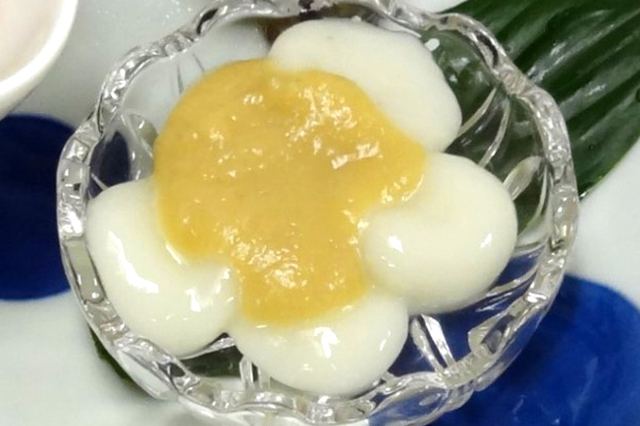
Kurumimochi くるみ餅
| Prefecture | Osaka (大阪府) |
|---|---|
| Region | Kinki |
| Japanese name | くるみ餅(くるみもち) |
| Reading | Kurumimochi |
| Home area | I'm sorry. |
| Main ingredients | (Music) (Music) |
History and Origins
The traditional sweets known as the cho-chio. I'm afraid from that name the nut is used, but it's not. "I" with a moustache color, they say it was named "ming" Sometimes they write "long-term" in Chinese characters, which has the meaning of a good taste for a long time. A man uses twigs, blue beans, and so on, but dry beans were used in mountain villages where there were few rice paddies. In the days of the War, Zheng He flourished as a port of foreign trade. At that time, they said that they used the produce they had obtained from abroad to make a pepper shop that was grown with a tin. I've been loved as a cup of tea since I was born in the city of Chiba, a city where the famed tea-doodles were born and tea-driven tea-driven culture blossomed among the great merchants of that time.
When It Is Eaten
It's provided at a number of Japanese candy stores throughout the city and is known as a everyday snack. It's popular among tourists as well.
How It Is Eaten
I'll put a steamed rice on it and I'll round it small. I take out the berries that are gently boiled, remove the skin, and put them in a blender. The ground branch beans are transferred to a pot, placed in sugar, salt, and mixed together to make a boil. I put a bowl in the bowl and I'll make sure it's done. It's not a branch, but a bean or a blue bean or a white ball or soy.
Recipe — Serves 5
Ingredients
- 200 g soybeans (乾)
- 75 g sugar
- 1 tbsp salt
- 1.6 × 180 ml glutinous rice
- 250 ml water
Method
- I'm gonna wash the soybeans well.
- (Laughter)
- It's called a blender. It's called a blender.
- It's a very simple process.
- I'll cook rice in a rice bowl.
- When you cook it, it's steamed well, then it's transferred to a steamer, and then it's salted.
- And I'm going to make it a little bit easier.
Dish data: Ministry of Agriculture, Forestry and Fisheries (MAFF), “Uchi no Kyodo Ryori” (Our Regional Cuisines) database, used under the Public Data License (PDL1.0); translated and adapted from the Japanese original.