Odamakimushi 小田巻き蒸し
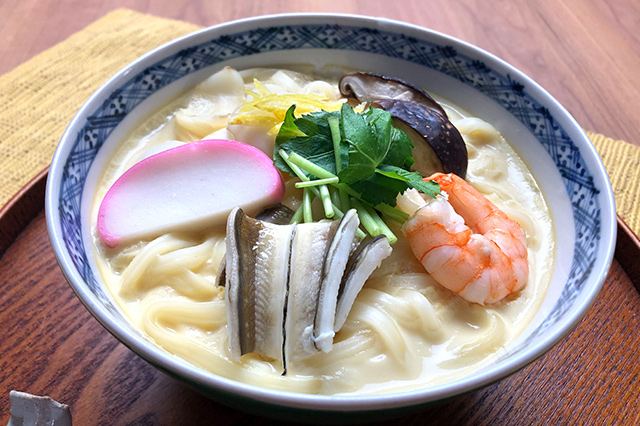
| Prefecture | Osaka (大阪府) |
|---|---|
| Region | Kinki |
| Japanese name | 小田巻き蒸し(おだまきむし) |
| Reading | Odamakimushi |
| Home area | Osaka City |
| Main ingredients | It's a big deal. It's a big deal. |
History and Origins
It's a large cup of tea with citrus in it. It's a local dish from the birth of Osaka. "The spinning of the woven silk" is called "the silk of the silkwork." And they say this name came with because it looks like the thread of the spin. The character of Koda's book is a index. In the past, when eggs were expensive, the frequent use of eggs, the dandelion of the eggs, and other merchants at the docks, were known as Hale's Day meal. The color of the materials, such as sea cucumbers and other materials, is gorgeous and fitting for a good seat. You can hold your stomach because it has soy sauce. Prior to the war, I used to write in local stores and other items, but there were also changes in diet and I didn't see much after the war.
When It Is Eaten
It's said to be an essential celebration for the wedding feast, and to be honored by visitors for the New Year's greetings.
How It Is Eaten
I'll filter the eggs into pieces, then add the juice, taste and taste. I put in vessels, rice, seaweed, mushrooms, and other tools, and pour in the egg fluid to keep it from foaming. Put it in a steamy sponge, put it in a rag, cover it, and then steam it. I'll add three leaves and a sako.
Recipe — Serves 2
Ingredients
- 2/3 heads udon noodles
- 360 ml dashi stock
- Dashi: 700 ml water
- Dashi: 5×6cm kelp (konbu)
- Dashi: 40 g laundry
- Dashi: 6 g sugar
- Dashi: a pinch salt
- Dashi: 1 tbsp 1/2 light soy sauce
- Dashi: 1/2 tsp mirin
- Dashi: 1/2 tsp sake
- 1 egg
- Mix: 2 sea Old
- Mix: 1/2 ゆりね
- Mix: 2 fresh shiitake mushrooms
- Mix: 2 slices powder
- Mix: 2 slices kamaboko (fish cake)
- Mix: mitsuba, to taste
- Mix: yuzu, to taste
Method
- Put water and cloth in the pan and fire in 40 minutes. When it is boiling, put in the jiffy, two-thirds of boiling, and put in sugar, salt, garlic, and wine, and taste it with a thin lip oil and cool.
- The sea ebony peels off the skin, peels off the backwoods, and washs them in salt. The lily is divided into cells and the vertebrae is cut into half.
- The eggs are boiled and melted until they are smoothed with a pan, and the heaty one is added to 360 cc and we make them.
- When you cut the rice in boiling water, it will sink into the bowl, color the ingredients well, and wrap the three eggs in a peeled egg, and make the lid light with an aluminum foil.
- I put four on a hot steamer, put a vegetable chopsticks on it, and cover it.
- When you remove aluminum, add vegetable chopsticks, and get a transparent sauce, you can make three leaves and abalone.
More About Odamakimushi
Koda persimmon is a local dish from the birth of the Osaka PrefectureXXZZQZZZ036X, and a large cup of tea made from rice. The tea is made by boiling the eggs with melted juice, as well as raw rice, cicadas, silver rice, mausoleums, citrus, eels, chicken and so on.
Origin of Name
His name, "The Citadel," comes from the idea of "The Sakura" in the cup of tea, which is wrapped around a woven string of silk thread. The notation for "The Oda scroll" is not the original root, but it is an index of the sound.
History
When eggs were prized for their high-end use of eggs, it was thought to be a luxury Hare's day dish, such as a shipman's merchant. Since it's a Chinese dish that uses a variety of materials, as mentioned earlier, to start with the sea cucumbers, it is often used as a memorial to the Memorial or celebration, and it is often made with visitors who come to greet you for the New Year's greeting. Also, from using eggs called complete nutrients, they were eaten as a sick diet. Before the war, it was provided at a restaurant in Osaka City, and by the time of the fall of 1955, there was a view of a restaurant in the fall that would steam the rice paddy on account of the large storefront, but it had declined after a change in diet after the war. In modern times, it is made as a home dish or is provided at a restaurant, although few, but is inherited by a small inheritance.
It's a similar dish.
Those who put the noodles in the tea bowl are called rice rice rice. This is not a condensation of Oda, but rice is a staple dish of noodles.
Text adapted and translated from the Japanese Wikipedia article 小田巻き蒸し by its contributors, licensed CC BY-SA 4.0.
Dish data: Ministry of Agriculture, Forestry and Fisheries (MAFF), “Uchi no Kyodo Ryori” (Our Regional Cuisines) database, used under the Public Data License (PDL1.0); translated and adapted from the Japanese original.