41 1 まつりずし
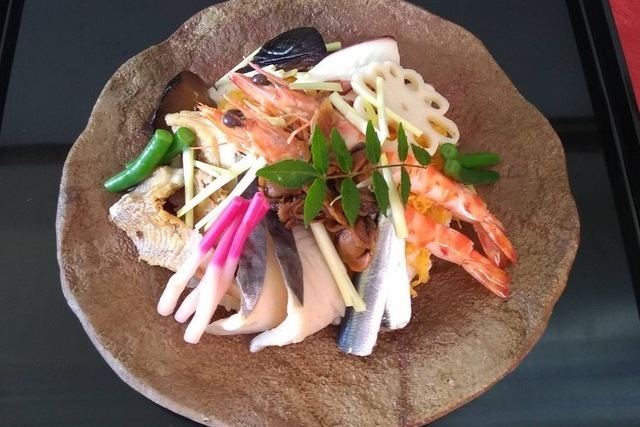
| Prefecture | Okayama (岡山県) |
|---|---|
| Region | Chugoku |
| Japanese name | まつりずし/ばらずし |
| Home area | All within the province. |
| Main ingredients | Rice, fish and vegetables in season. |
History and Origins
It's called "Aoyama and Sushi" and is made for festivals, celebrations, and visitors in the Akiyama area. It's a smooth, smooth, packed with vegetables, fish, and rich food from the Inland Sea. In the time of Edo, Iseki Ida Takashi, who was the master of the Edo, issued a relief order not to be overly anxious. So the common folk reasoned that using fish and vegetables as their food implements wouldn't be the food they ate, so they packed the rice in a hollow half-sized bowl and packed it with more than a dozen tasty vegetables and fish and cooked it. The fish and vegetables that are put in are varied from home to country, including the saguara and the anaconda, and the shrimp and other fish, as well as the fish and the fish and the fish. There's also a way to eat the "rotten" that you've steamed up with the straw. "Smew" means "warm" in the mountain dialect.
When It Is Eaten
In spring, autumn festivals, trays, law enforcement, and other things are essential as hospitality to visitors. The Hale meal, representing Okayama, is a must. In spring there are many kinds of tools to be put in, such as saguara, faki and takes, in fall, and in the season. In the community and in the home, there are different ways of cooking rice, blending vinegar, and boiling your clothing.
How It Is Eaten
The vegetables should be processed in the bottom of the rice, and tasted with soy sauce, sugar, salt, and so forth. I'll put a little salt on the sawala, then I'll put it in vinegar for a while, then I'll take it out when the perimeter turns white. Moguys wash and boil. Anago opens its back and takes bones and roasts them with soy sauce sugar. shrimps, squids, boiled in soy sauce or salted. The octopus is cut into slices and soaked in sweet vinegar. Takano Tofu is returned and cooked. The eggs are baked and cut thin. Vegetables and fish and fish are used as decorations and then mixed in with rice.
Recipe — Serves 4
Ingredients
- 400 g rice
- 500 ml water
- 10cm dashi kelp
- 4 slices Spanish mackerel
- Vinegar: 4 tbsp sugar
- Vinegar: 1/2 tbsp salt
- Vinegar: 3 tbsp vinegar
- 1 squid
- 4 shrimp
- 1/2 boiled octopus
- 60 g moguese
- 2 anago
- 80 g lotus root
- 20 g freeze-dried tofu (koya-dofu)
- 60 g boiled bamboo shoot
- 1 burdock root
- 1 butterbur
- 6 dried shiitake mushrooms
- 2 egg
- 30 g sayya window
Method
- I'll put a little salt on the sawala, then I'll put it in vinegar for a while, then I'll take it out when the perimeter turns white. I'll put one teaspoon of vinegar in the vinegar.
- Then put the cloth in and cook the rice for the whole meal.
- The squid cuts its five-millimeter cut in half, cuts it in half, and the shrimp shakes with their backs.
- Cut the octopus in half and dip it in sugar, 1 teaspoon salt.
- Moguys wash and boil. (A little more than that: 1 teaspoon sugar, 1 teaspoon soy sauce 1)
- Anago will burn it with sugar-snap, soy sauce, 1 teaspoon of sugar. Leave a few decorations and cut the rest small.
- Rencon will have the decorations in a flower, the rest are cut small, the rest is boiled with vinegar water, and then the water will be soaked with a large teaspoon of vinegar.
- Takano Tofu is returned and cooked. Cut the rest small.
- I'll add a chopped tadpole to the soup of Hanoto Tofu, and a bowl of chicken that has been cut. Add a small cut fricke and stop the fire.
- I'll boil the dried pepper that I brought back. (Exact amount: A large teaspoon of sugar
- The eggs are melted and overloaded: 2 teaspoons of sugar (a little salt) and then baked into a silky silk egg.
- I made all the other tools for decorations into rice, made them into vessels, made them into sultry and salted.
Dish data: Ministry of Agriculture, Forestry and Fisheries (MAFF), “Uchi no Kyodo Ryori” (Our Regional Cuisines) database, used under the Public Data License (PDL1.0); translated and adapted from the Japanese original.