Home / Hiroshima / Kakinodotenabe
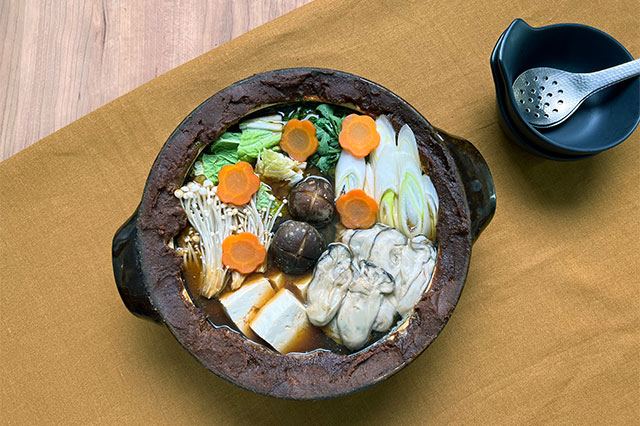
Kakinodotenabe かきの土手鍋
| Prefecture | Hiroshima (広島県) |
|---|---|
| Region | Chugoku |
| Japanese name | かきの土手鍋(かきのどてなべ) |
| Reading | Kakinodotenabe |
| Home area | I'm going to show you some of the things that we've done. |
| Main ingredients | It's a beautiful place to be. |
History and Origins
The name "The Snatcher's Cauldron" comes from three sources, and one comes from painting the taste buds like mounds inside the pot. The second is because it was Toshikichi who invented this pot. And three are said to have been fed by the banks of the river by the barges that transported the oaks of Hiroshima to Osaka in the time of Edo. It is characteristic of eating the taste control while breaking down the taste buds on the bowl. Hiroshima Prefecture is one of the largest production in the country and more than half of the country's production. It is known by the shell that the Japanese eat the rice in Hiroshima has a long history, and that the old man was eating the coconut from the time he was born. It is also believed that breeding began in the 1500s. The bays around here have a good deal of calm current, and the river flows into the bay, producing a thin layer of salt in the water from rainy season to summer, and nutrients from the mountains of China, and so on. The high level of safety is also popular, as well as the taste of large and thick Hiroshima flowers.
When It Is Eaten
As winter's local food, which enjoys the early days of January and February, we still eat restaurants and enjoy ourselves at home. Even tourists are popular.
How It Is Eaten
A mixture of white, red, wine, garlic and sugar is painted on the bottom of the pot. It's hard to burn with a cabbage core on the bottom of the pot, and add white, white, green, green, threaded, carrots, tofu and so on, and then we're done with it. Add the sauce and put it on the fire, break the sauce, and eat it while adjusting it to the taste of your choice. It's a popular way of eating a dish, along with a baked wood or a fried fly.
Recipe — Serves 4
Ingredients
- 300 g oysters
- 1 blocks tofu
- 4 fresh shiitake mushrooms
- 1 packets enoki mushrooms
- 1/3 carrot
- 1 packets shungiku (chrysanthemum greens)
- 1/4 Chinese cabbage
- dashi stock, to taste
- 2 white part of green onion
- 1 packets konnyaku noodles
- Seasonings: 100 g red miso
- Seasonings: 100 g white miso
- Seasonings: 1 tsp sake
- Seasonings: 1 tsp mirin
- Seasonings: 1 tsp sugar
Method
- The broom is washed in a thin salt water, and the water is changed to a sweet drink.
- The white onions are cut in half, the spring and the smell are 3cm, and the raw stone is removed and cut. Cut the thread to a length easily eaten. The carrots are cut in flower form and then cut in underside. The lye is cut off from the root and cut into easy-to-eat lengths. Cut tofu into easy-to-eat sizes.
- Mix the citrus with a mixture of citrus sauce, and make it into a mound on the top of the pot.
- The bottom of the pot is covered with a stinky core, and the rest of the ingredients are arranged in a fine color, and then the middle is cut, and then add the juice to the fire. If it boils, I'll have three ripped away.
Dish data: Ministry of Agriculture, Forestry and Fisheries (MAFF), “Uchi no Kyodo Ryori” (Our Regional Cuisines) database, used under the Public Data License (PDL1.0); translated and adapted from the Japanese original.