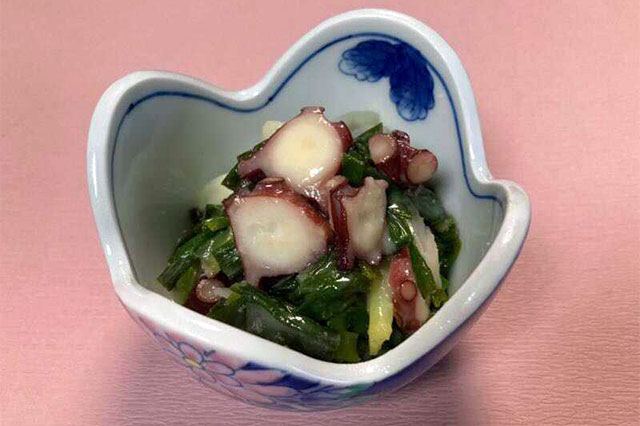
42 5 わけぎのぬた
| Prefecture | Hiroshima (広島県) |
|---|---|
| Region | Chugoku |
| Japanese name | わけぎのぬた |
| Home area | It's not just the streets. It's the streets. |
| Main ingredients | I'm going to have to do something with it. |
History and Origins
A sea cucumber belongs to an onion family of lily, a species made of the mixture of cucumbers and eschalotts, but it has a unique smell that differs from that of a clam. Since soy sauce is a property that increases by dividing the roots without producing seeds, and the first ball roots can grow to over 50 spheres in half a year, it has been eaten as a product of the wording of the peach. "The root is divided into many shares," they are called. (The Inland Sea Coast is a mild climate that is suited to raise the seams, and especially the trails are the Ministry of Agriculture, Forestry and Fisheries, which is the nation's leading production.) The way I grew up in this area is characterized by a sour, sweet taste and a sweet smell. It's already a place in the early days of the Showa or the early days of the Showa. In the '30s, we established early farming techniques, and in the '60s, it was possible to harvest all year long. And the spread of plastic houses has made it possible for stable harvests during the cold season and has greatly increased production. There's a lot of distribution in the market in 12 months and 3 months. Especially in the middle of February to early March, the time period has grown sweeter and sweeter. "Stretch" is a mixture of boiled rice, sugar, vinegar and garlic, and can be used in some ways. In addition to calcium, iron and other minerals, vitamins A, B2, C, and other sources of sulfuric acid, nila, garlic, and so forth, there are also ways to increase appetite.
When It Is Eaten
We can eat through the year, but it's in the early stages of February and March. In Kansai it is common to be eaten by the fertility of offspring.
How It Is Eaten
You can cut the rice to about three centimeters, boil it, mix it with white, sugar, vinegar, and garlic. Sometimes you can add a home-to-house soup, soup, oiling, and dough. It's also used in soups, soups, salads, eggs and so on.
Recipe — Serves 4
Ingredients
- 1 wakegi onion
- 40 g boiled octopus
- Seasonings: 2 tbsp white miso
- Seasonings: 2 tbsp sugar
- Seasonings: 2 tbsp vinegar
- Seasonings: 1 tsp mirin
Method
- I'll cut the cut to three centimeters.
- I'm going to boil the root from root to root, and I'm going to have to raise it and water it.
- Cooked mushrooms are cut to size that is easily eaten.
- Mix the succulent mixture together and add two and three.
Dish data: Ministry of Agriculture, Forestry and Fisheries (MAFF), “Uchi no Kyodo Ryori” (Our Regional Cuisines) database, used under the Public Data License (PDL1.0); translated and adapted from the Japanese original.