Home / Nagasaki / Guzōnishimabaraguzōni
Guzōnishimabaraguzōni 具雑煮
| Prefecture | Nagasaki (長崎県) |
|---|---|
| Region | Kyushu & Okinawa |
| Japanese name | 具雑煮/島原具雑煮(ぐぞうに/しまばらぐぞうに) |
| Reading | Guzōnishimabaraguzōni |
| Home area | Isle of the Isle |
| Main ingredients | I'm going to have to go to a restaurant to eat a chicken, a chicken, a cabbage, a carrots, a chicken, a chicken, a chicken, a chicken, a chicken, a chicken, a chicken, a chicken, a chicken, a chicken, a chicken, a chicken, a chicken, a crab, a chicken, a chicken, a chicken, a chicken, a chicken, a chicken, a chicken, a crab, a chicken, a chicken, a chicken, a chicken, a chicken, a chicken, a chicken, a chicken, a chicken. |
History and Origins
One of the native dishes that represents the island. It is said that when the General Shizumu Shizumu shigi shigi shigi shigi shigi shigi shigi, in the time of the early Edo, in the year 1637, was housed with 37,000 Christians, it was started as this dish by boiling the fields of war and feeding on the happiness of the mountain sea and building up the strength and strength of the long-term battle. It is known as a dish made from a nationally rare clay pot, and many tourists visit island to try to eat it.
When It Is Eaten
In the local family, they are eaten when they are served on New Year's or on the festival day. Because of making it famous, it is also possible to be offered at all times in commercial establishments, such as restaurants.
How It Is Eaten
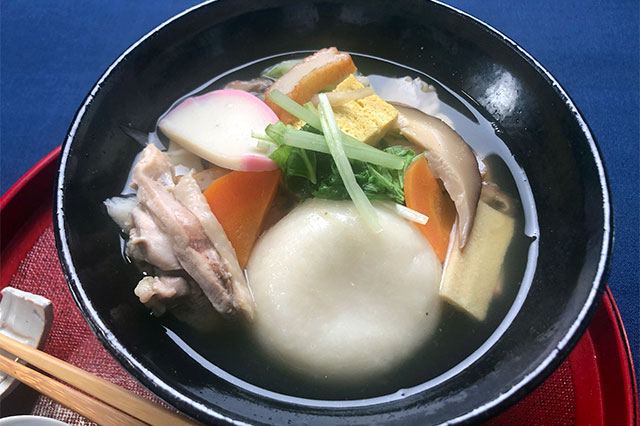
It's the style of cooking and cooking in the soup. Although the tools to be put in are varied according to the homes that are made, usually include kanji, chicken, cabbage, carrots, lentils, and tofu. Some families use baked anacondas and eggs as their standard tools.
Recipe — Serves 2
Ingredients
- 6(210 g) round mochi
- 60 g chicken thigh
- 30 g kamaboko (fish cake)
- 15 g chikuwa (fish cake tube)
- 30 g satsuma-age (fried fish cake)
- 8 g freeze-dried tofu (koya-dofu) (乾)
- 10 g dried shiitake mushrooms
- 50 g 玉子焼き
- 20 g burdock root
- 20 g carrot
- 60 g Chinese cabbage
- 30 g lotus root
- 8 g mizuna
- 3 cups dashi stock
- Dashi: 4 g kelp (konbu)
- Dashi: 10 g bonito flakes
- Dashi: shiitake mushrooms, to taste
- 1 tbsp light soy sauce
- 1 tbsp mirin
- 1 tbsp mirin
- salt, to taste
Method
- With an extra amount of water, I'll put back the chori and dried vertebrae. The juice from the dried mushrooms is used in soup, so I'll keep it.
- The chicken will also cut the meat in slices and cut the chicken, the chicken, the chicken, the chicken, the chicken, the chicken, the chicken, the chicken, and the chicken. Hano Tofu, mushrooms, and eggs will be cut to the ground.
- I'll cut carrots for the next half month. The cabbage will be cut in a narrow three-cm width, and the cinch will be cut in a semimonthly cut. I'll cut the vegetables into small pieces.
- In two cups of water, we will remove the citrus and urushi juice, dry it, and add the juice and water of the vertebrae to three cups.
- Add four bowls of soup and cook, chicken meat, chicken, carrots, carrots, and so on.
- When the materials are well cooked, add a little pepper, a little chicken, a bowl, a bowl of eggs, a little oil, a little juice, a little wine, and taste it. If it's not taste good, the salt will taste good.
- Put boiling rice and water in another pot, and cook a little.
More About Guzōnishimabaraguzōni
Tasty soup is a traditional dish from Nagasaki Prefecture. It's also called the island's crayon.
Overview
It's a local dish made in the area of the island of Toshima, which was the area of the island. It's served at New Year's or at the festival. In recent years I've made it a bit more famous, and in the past year, restaurants and other places have been provided.
It's a stew cooked in a clay pot with an abundance of tools, such as rice, vegetables, chicken, fish, and so on. And while the materials used are different from the local and family, the number of tools used has an odd number of seven or more. There are always sea horses, sea horses, sea horses, sea horses, sea horses, sea horses, sea horses, sea horses, sea horses, sea horses, sea horses, sea horses, sea horses, sea horses, sea horses, yews, yews, yews, yews, yews, hens, hens, hens, sea horses, sea horses, sea horses, sea horses and so on.
Origins
It is believed that during the turmoil on the island, Niechiro, who had his people store the rice as a spoil, gathered the food from the mountains and the sea, and cooked it.
The island's restaurant, Matsuki, is reported to have been the beginning of the "Creep Cooking" process that was produced by the First Order, which, based on the tundra of the island of Oshima in 1813, was the beginning of the seasoning process.
Text adapted and translated from the Japanese Wikipedia article 具雑煮 by its contributors, licensed CC BY-SA 4.0.
Dish data: Ministry of Agriculture, Forestry and Fisheries (MAFF), “Uchi no Kyodo Ryori” (Our Regional Cuisines) database, used under the Public Data License (PDL1.0); translated and adapted from the Japanese original.