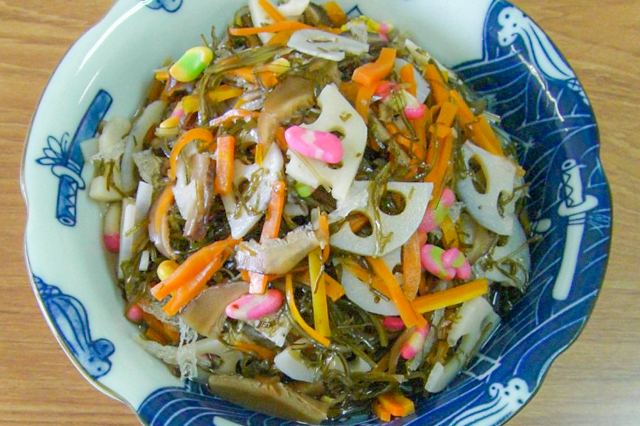
Aimaze あいまぜ
| Prefecture | Mie (三重県) |
|---|---|
| Region | Kinki |
| Japanese name | あいまぜ |
| Home area | Iseshima Hotel. |
| Main ingredients | I'm going to have to do a lot of drying. |
History and Origins
It is said that each ingredient was named "mixed" because it was boiled, seasoned, and mixed together. There are a lot of sweets that can be satisfied with vinegar, but there are different kinds of things in the family. It's also characteristic of freezing in. The frozen air is much more like the ordinary garlic, but it freezes into spongy, so it tastes sweet, so soup and so on. It feels like meat, unlike the sticky taste of raw meat. The "mixed-up" originally cut up the leftovers of the funeral dish, and it was, as it were, a last resort dish. Gradually, I stopped having funerals at home, and I couldn't make any "mixed-up," but I'm starting to get out of my way in New Year's. In some areas, large roots and carrots can be mixed together with stews such as lentils, oils, and bowls. It is said that this was made by using the rest of New Year's food.
When It Is Eaten
It's a dish that is served when people gather together, such as when law enforcement and New Year's, and has been eaten for ages. The name is different from the name of the region. In the city of Hanaoka, it's called "mass" or "scroll" in Iseshima City.
How It Is Eaten
Each ingredient should be cut short or cut in half, then taste it in flavors such as soy sauce or sugar, and then finally mix the ingredients together and dip them in vinegar and finish. A polite cook tastes each ingredient as usual. It's important to cook well when you season. It's a dish served in business events such as law and New Year's and so forth, centered around Matsumoto-Ise-Cai.
Recipe — Serves 15
Ingredients
- Dried shiitake mushrooms: 50 g dried shiitake mushrooms
- Dried shiitake mushrooms: 3 tbsp sugar
- Dried shiitake mushrooms: 25 ml dark soy sauce
- Lotus root: 1(180 g) lotus root
- Lotus root: 1 tbsp sugar
- Lotus root: 20 ml mirin
- Lotus root: 1/2 tsp salt
- Lotus root: 1 tsp vinegar
- Burdock root: 1(150 g) burdock root
- Burdock root: 1 tbsp2/3 sugar
- Burdock root: 1/2 tsp salt
- Carrot: 1(150 g) carrot
- Carrot: 1 tbsp sugar
- Carrot: 1/2 tbsp light soy sauce
- Carrot: a pinch salt
- Konnyaku: 10(15 g) konnyaku
- Konnyaku: 2 tbsp1/3 sugar
- Konnyaku: 1 tsp salt
- 30 g soy gluten
- 30 g kelp (konbu)
- Vinegar: 120 ml vinegar
- Vinegar: 3 tbsp ground white sesame
- Vinegar: 200 g sugar
Method
- If you dry, we'll drain it and cut it to 5 mm wide. The bladder is three centimeters long and five millimeters wide. The carrots are cut in the same length. It's a thin half-month, half-sized, half-sized, half-sized, and put in vinegar water and pull out the ac. When it freezes, I'll keep cutting water to the length of the vegetable, and with scissors.
- I'll boil the ingredients in each flavor, taste them, and keep them cool.
- The beans can be boiled or boiled, and put on a piece of vinegar.
- The blue plate is cut with a pair of scissors.
- I'll put three or four together and put them in vinegar for the evening.
- The vegetables were 5 different because they are left over from the "supposing" ?????????? ???? ??? ??? ??? ?? ??? ??? ?? ? ? ? ? ? ? ? ? ? ? ? ? ? ? ? ? ? ? ? ? ? ? ? ? ? ? ? ? ? ? ? ? ? ? ? ? ? ? ? ? ? ? ? ? ? ? 5 different kinds of vegetables, but now it is 5 different, but it' ? (2) These days it's hard to get frozen, and there's been a process of cutting the board thin and using threaded thread.
Dish data: Ministry of Agriculture, Forestry and Fisheries (MAFF), “Uchi no Kyodo Ryori” (Our Regional Cuisines) database, used under the Public Data License (PDL1.0); translated and adapted from the Japanese original.