Akakabuzuke 赤かぶ漬け
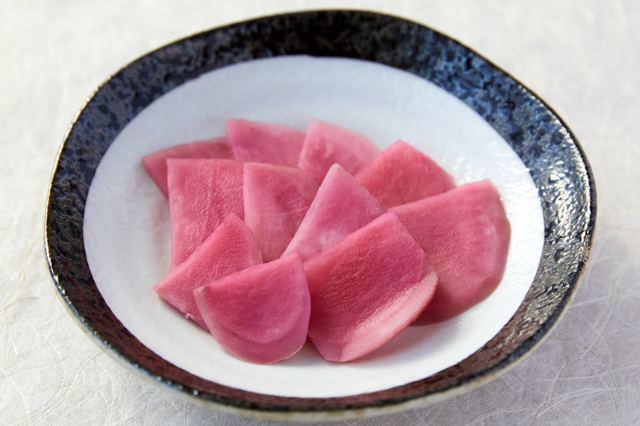
| Prefecture | Niigata (新潟県) |
|---|---|
| Region | Chubu |
| Japanese name | 赤かぶ漬け(あかかぶづけ) |
| Reading | Akakabuzuke |
| Home area | (Revelations around the village.) |
| Main ingredients | Red coat, salt. |
History and Origins
In the village of Yamayama, situated on the prefecture border with Yamagata Prefecture, the fire fields were burned in mid- August, and there was a red coat growing. The burning fields were one of the many primitive farming practices common in the poor mountain regions of the country, but they fell into decline with the currents of the times. Today, only Miyazaki Prefecture is done in the northern area of the village, Yamagata Prefecture (Sunkaoka). In Niigata Prefecture, mountains in the mountains and in the mountains of Yamagata Prefectureaoka are called red-sized, and they can be made of "red-reded" in a coat grown in this area. The red coats in the north of the mountain, which grow on the slopes, are said to have a peculiar red color in other regions and fields, and it is due to the color of the bright red that comes from the materials of the red coat. The ashes that were burned in the burning fields become good fertilizer, rich in color, and clean in shape. The coats that we harvest are carefully processed and soaked. Sometimes it is made from salt that is mixed with salt from the local river. In the snowy regions, they were eaten as long winter preserves.
When It Is Eaten
In late autumn, around November, when it gets colder, there will be a red-cover harvest. The coats I took were soaked and soaked in salt, vinegar, sugar and broiled liquids. For long-term preservation, they were created and eaten when the cold became severe.
How It Is Eaten
Each home has a mixture of ingredients and flavors, and the temperature and humidity varies at different times, making the product slightly different. If you are ready to cut it quickly, slice it thinly, slice it thinly, and then "knit it" to "knit it" to preserve it long enough, cut it into a "slict" or "snack it" to cut it into a thick "snack." The red-coated clothes that were made were eaten as food and as tea requests.
Recipe
Ingredients
- 1 kg red turnip
- Mix: 3 tbsp salt
- Mix: 2 cups water
- Mix: 4 tbsp vinegar
- Mix: 80 g sugar
- Mix: 2 tbsp shochu
Method
- You wash your red coat well, and you'll stick it in taste A for a week.
- Keep your undercover coat up and drain.
- I often mix seasoning B in the bowl.
- I'll take off my understow, put it in a barrel, place it on a heavy stone, and stuff it for about a week.
Dish data: Ministry of Agriculture, Forestry and Fisheries (MAFF), “Uchi no Kyodo Ryori” (Our Regional Cuisines) database, used under the Public Data License (PDL1.0); translated and adapted from the Japanese original.