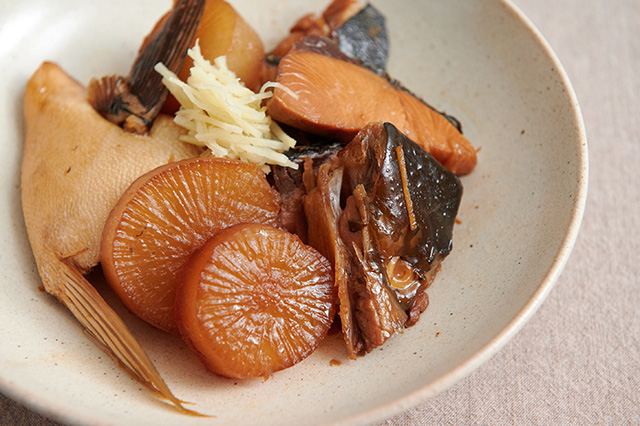
Buridaikon ぶり大根
| Prefecture | Ishikawa (石川県) |
|---|---|
| Region | Chubu |
| Japanese name | ぶり大根(ぶりだいこん) |
| Reading | Buridaikon |
| Home area | All within the province. |
| Main ingredients | Brin, big root. |
History and Origins
It's Bligh that is essential in speaking of traditional food materials from Ishikawa Prefecture. In the early winter, when the thunder called "swinging" sounds thunder, a full-scale brigade fishing is started in the inner ear of the mountain. Although farming has become common, it is said that natural briquettes have won a great deal of weight, taste, and texture. They say that the cold celadon in the winter is oily and that if you eat it with a knife, it will be so much better to eat it. It's used for birthday celebrations and gifts, and it's popular for the success and success of a successful fish whose name is changed by the size and shape. The Edo era and the newly acquired Bry were first dedicated to the Lord before they went under the castle. It's a luxury item known as "Bryn and rice" and is said to have rarely been mentioned by the common folk. Until now, there are many clavicles in the county that can be enjoyed.
When It Is Eaten
The period between November and February. This time of year, there are various kinds of tiny cicadas in the local market. It's essential to the funeral festivities and gifts and the custom of giving from the bride's home to the bride's wedding. The "so-called root" is still made in the home as a representative of the Bligh meal.
How It Is Eaten
Buri keeps the scales away from her as she slowly dips into the ice water with a pot or a cut. It's delicious when you boil the burly and radish cloth in a pot, and drink, but add sugar and stir and eat it. When you boil it up and put it on the board, when you have a slice of pepper on the table, it adds a soft flavor and color to it. It's the final decision to shift the flavor of Bry to a root. The radishes are more palatable if you cut them in thick strips and put them on your body. It's a simple native dish that can be enjoyed with the flavor of Bry in a simple way.
Recipe — Serves 4
Ingredients
- 8 slices yellowtail (頭)
- salted water, to taste
- 3cm 8 daikon radish
- 3–4 cups water
- 10cm 1 kelp (konbu)
- a pinch ginger
- a pinch red chili pepper
- 1 tbsp sugar
- 1/3 cups sake
- 1/4–1/3 cups dark soy sauce
- 1/4 cups mirin
Method
- Bry's head is cut into equal pieces and soaked in salt water.
- The radish peels off the skin and cuts it.
- (Cleaning Bligh through boiling water, taking it into water, frosting it up) and washing the scales off without delay.
- I'm going to put a bowl of rice, root, and water in the pot, and then I'm going to boil it, and then I'm going to cook it for a while.
- I'm going to drop the soy sauce, and I'm going to put the rest of the pepper in and finish it. (Laughter)
- If you boil it, it will be served on the bowl and a thousand pieces of pepper will be made in the sky.
More About Buridaikon
The main root is Japanese native dish, which is boiled in soy sauce along with the baobu. The winter meal, the season when the fat comes on the burri. In 2007, in the rural villages national food race, it was chosen as a native food of Toyama Prefecture. Today it is a well-known dish eaten throughout Japan.
Example of how to make
Take the bri scales, boil the hot water, cool the water and remove the blood. The radish is cut and peeled, and the rice lye is boiled for about an hour. Put the bludgeon and radish in the pot, and cook it until the main roots have a good amount of soy sauce and sugar.
There are other variations in the process, such as those that don't use the root underside, that heat them in microwave ovens and replace them with low-heated ones, or those that wave salt on the brine to remove odors or those that cool with boiling water. Also, in the Toyama Prefecture Ice Fair, some dishes are boiled in a tastey sauce instead of a sesame oil.
Reference Image
Text adapted and translated from the Japanese Wikipedia article ぶり大根 by its contributors, licensed CC BY-SA 4.0.
Dish data: Ministry of Agriculture, Forestry and Fisheries (MAFF), “Uchi no Kyodo Ryori” (Our Regional Cuisines) database, used under the Public Data License (PDL1.0); translated and adapted from the Japanese original.