Home / Niigata / Hegisoba Niigata
Hegisoba Niigata へぎそば
| Prefecture | Niigata (新潟県) |
|---|---|
| Region | Chubu |
| Japanese name | へぎそば |
| Home area | All within the province. |
| Main ingredients | Fowlers, sea cucumbers. |
History and Origins
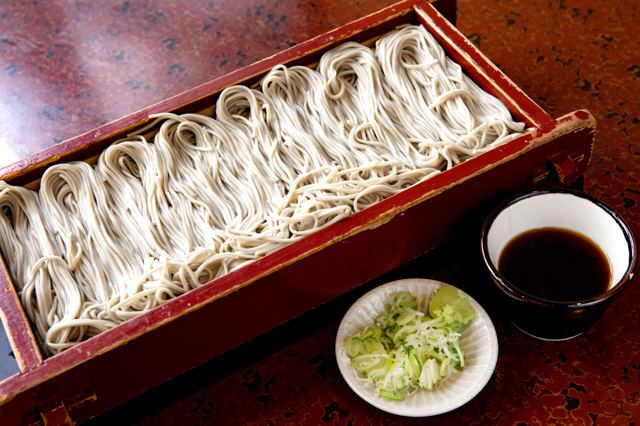
"The daisy" means "the daisy" with a sea algae bowl spread over a vessel called a gygi. This is a traditional dish called the Great Lake of the Sea, born when Niigata Prefecture and the nearby food culture combine. The "knit" next to the walrus refers to a square instrument made from a thin board, and it is derived from the accent "striping" in the accent. One by one, it has a beautiful side, called a handchair, or a handclip, or a hand-cutter, or a thread of weaving, or a stammerer, or something else. It is said that the estuary of the Shinkaga began at the Edo and that growth began at the center of the fish swamp. Since wheat was not grown in those days, the links were connected with the leaves of the mountainbows and with the soy sauce. It is said that the use of the "Cyspress Sea" to connect the fabric is the use of the sea cucumber to build the original fabric's latitude thread. The "snake" is the entry of the seaweed and produces a succulent, elastic cone. The spice is characterized by the use of mustard on-stamps, and the fish swamps are not the place to get the fish but the custom of eating with mustard instead.
When It Is Eaten
They are eaten throughout the year regardless of the time, but they are also grown in summer and harvest in fall. "The new one, harvested in fall," is called "A fall," and when it comes around this time of year, it is delicious because it has color, flavor, and flavor.
How It Is Eaten
Take a bite at the side, each bite on the side, dip it in the rice, and eat it. I'd like a small amount to be put on the side of the spice, with a good smile, with a good mustard, with a good sauce, with a good sauce, with a good sauce, with no melting sauce.
Recipe — Serves 4
Ingredients
- 30 g dried Sea Fabric
- 400 g 蕎麦粉
Method
- Put dry stains in the copper pan and boil them slowly for an hour with a weak fire until the whole is green. I'm careful now, since if you don't make chemical changes with copper pans, you won't turn into beautiful green.
- Add 80 percent florida to 20 percent. I press my arm, put my upper body weight on it, and roll around with rhythm.
- It's going to spread flat until it's a suitable thickness.
- I will press the knife down without pulling it before I can reach it. Tightly pull the board down and cut it down so that it becomes the same thick.
More About Hegisoba Niigata
It's a place where you can see the fish. A seagull using seaweed called sea algae is also a slag cut from a vessel called Hegi. The Fukuoka Group of the City of Ten Day Street has a "Am I going to Town for Ten Days," and the industry in Kojijia City has a commercial registration of "Akijiro" to "Aujijiji."
Characteristics
It is thought that the idea of a far side was the general store of Kojigigimoto's books. It was used to bind the silken fabrics of the column cloth that were raised in the fishlands.
The use of sea cucumbers to connect them makes it very evident that you can enjoy your twirl throats as compared with floured sieves and concierge. It was named because it was attached to a square vessel made from a plate called "The Rinse Tree." The way you cut three or four people in one bite, round and round, and call it "hands shaking." The "knit" of the vessel is derived from the word "slay."
In the fish swamps, it was characteristic of adding onions or assidants to the wax that didn't produce the wax that made the condiments. There are other areas that can add nut. As the wavy becomes widely available, it is possible to use it in many places, as well as in many places in ten - day cities and in small - city stores, where it is found that the flavor is different from the store's only "selectable" or "selectable from both."
To point to what is originally attached to the "goat," there is also an example in which the same store has its head covering" and a pack of dried noodles that sells in a store can be called "swandering" by the cloth sea.
Text adapted and translated from the Japanese Wikipedia article へぎそば by its contributors, licensed CC BY-SA 4.0.
Dish data: Ministry of Agriculture, Forestry and Fisheries (MAFF), “Uchi no Kyodo Ryori” (Our Regional Cuisines) database, used under the Public Data License (PDL1.0); translated and adapted from the Japanese original.