Hiyajiru 冷や汁
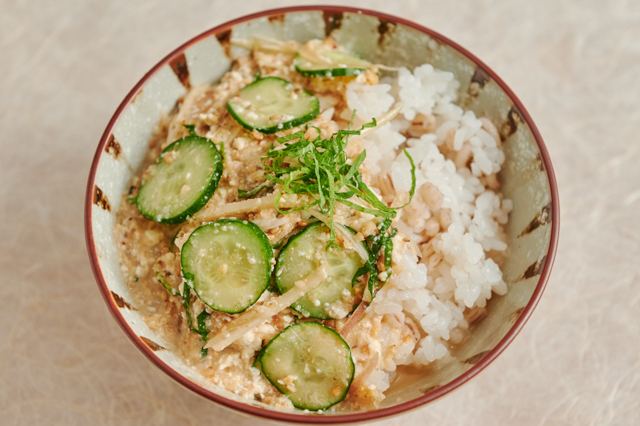
| Prefecture | Miyazaki (宮崎県) |
|---|---|
| Region | Kyushu & Okinawa |
| Japanese name | 冷や汁(ひやじる) |
| Reading | Hiyajiru |
| Home area | I'll be right back. |
| Main ingredients | I'm going to have to do something about it. |
History and Origins
"Creep and gravy" is a local dish centered on the plain of Miyazaki Prefecture in instant jiffy. In recent years as food culture spread its information, it has spread in the province and has been rooted in the climate climate of Miyazaki Prefecture, which is hot and humid. It is "cold" that makes delicious food delicious, such as fresh, rich fish from the sun's sun's rays, and vegetables and crops from the sea. It is said that the farmers were eating raw rice in hot summers and with water on them. It seems that the flour used to be ground with round wheat, then dried with water, and then cooked again. For mountain - rich Miyazaki Prefecture farmers, rice can be very valuable in the days of government.
When It Is Eaten
It is a dish that once was taught as the wisdom of life easily eaten for sufficient nutrition and restorative strength when farmers had a hard summer work, lack of time and appetite. In recent years it's been fewer, but when the relatives met in the trays at the farm or in the old house, they often had to close the dinner table.
How It Is Eaten
Fish such as Thailand or Aji are baked, loosened, and carefully kept bones. It will rub the white Gomma in a bowl, rub it in the flesh and taste it in the flesh of a fish that has been loosed, then apply it to the inside of the bowl, and then sink it upside down on the coals, until some of it is burned on the surface of the taste. I'm going to make it a stronger juice than citrus, keep it cool, and put a small-sniffed piece of rice in a cold sauce and eat it. Using Thai or Aji can be used as a raw plate to make raw boiling salts.
Recipe — Serves 6
Ingredients
- 50 g dried sardines
- 110 g miso
- 40 g sesame seeds
- 50 g peanuts
- 1/2 blocks tofu
- 1 cucumber
- 2–3 shiso
- a pinch myoga ginger
- a pinch ginger
- 6 cups barley rice
Method
- I'll take my head and my stomach and roast it in fried bread.
- I'll cook it lightly.
- I'll make more peanuts in a bowl. Add a taster and you will get better.
- Put the tofu in and mix. The tofu is loosened and mixed with hands. )
- Put in 600 ml of hot water and melt it more than the citrus juice.
- The cucumbers are cut, green and blue, while the peppers are cut into pieces. There are ways to make a recipe for tofu, not add tofu to the taste cube, but finally add to the flavor of tofu, garlic, green hair, and so on.
- I'll sit down and eat.
- It's delicious to paint 3 on the inside of the bowl without any effort; it's either a low fire in a stove, or a low fire in an aluminum, or a burned eye with toaster.
More About Hiyajiru
It's called a gravy soup.
It's a cold dish made of soup and sauce. Eat mainly in summer.
History
In the old days, there is a description of the "Crime Reservation Record" of the period, but it is believed that what is now called "cold" and taste-based cooking has been spread throughout the country by monks and others, leaving only areas where climate-based conditions are suitable for the future.
I'm going to show you some of the things that I've done in my life:
The cookbook "Crime Story" of Edo and Nintendo 2043 offers "Creation" in the soup section. It was made of mozuk, sea cucumbers, sea cucumbers, peppers, water gauze, and so forth, and it was made with a kind of sauce made with a sauce similar to the taste-smell sauce.
Miyazaki Prefecture
It was originally called "Friend Food" and "State Food." It was easy to cook and fast to eat as a food for a busy farmer, but after World War II, families moved to hard-working and hard - to - work cooking. From various studies, it has been found that food is being eaten in the interior areas, as well as in the northern and western regions of Miyazaki Prefecture. Some of them call it "coo soup."
You can feed yourself with the cold juice, and you can eat more easily by adding cold juice to the hot summer season. It's not just cold citrus, it's a hard cook, as you can see, but it's also a kind of "susten soup" as it is called. rural villages's native dish is chosen as "Miyazaki Prefecture" It's a high image of health food and is eaten as a counter-Sunbate.
As Miyazaki's masterpiece became more famous, the restaurant chose the materials carefully and served the recipes with a hard-core cold and steam. In addition to being adopted as a car eater in Kyushu, there are shops at Miyazaki Airport that offer "cold and lyremen."
In the nice houses of the restaurant chain, they offer you a menu of Miyazaki Prefecture locale menus for summertime.
Fish usually use fish in their hatchlings, but any fish that is white and free of habits can be used. A mushroom can be used by drying, except for its stomach and head. In the Mishima area of the city of São Paulo, there are also sweet-cold colds and succulent mii. Since it's originally domestic food, it's still made in Miyazaki Prefecture in different areas.
Saitama Prefecture
It's made as a summer home dish in various parts of the province, such as west, northern, and northern. The word "cold" comes from the word "coo soup." In the Kijima district, sometimes they call it "sitting." It's a dish that is used as a soup of cold water, characterized by a "cold" and is chosen for native food at rural villages. The origin and birth of citrus citrus are often eaten as rice with a slice of cucumber in the form of sugar, salt and sweets. The way they eat the leftovers is to start. I sometimes use noodles besides noodles.
This is a dish once taught by farmers as the wisdom of life that can easily be eaten to provide sufficient nutrition and restorative strength even when they have no time or appetite when they are working hard in summer. In recent years it's been fewer, but when the relatives met in the trays at the farm or in the old house, they often had to close the dinner table.
Although the cold citrus, the menu of the foreign industry, was introduced to the Yugoslav, and stores that handled the menu were only found in restaurants in the summer months of the year and in the summer months of the year of the roadside station children's nursery, there were also projects that have been used to tap into the tourist attractions of the city's concert hall since 2007.
In the summer of 2009, also provided was JR station in Tokyo. And in the Sixth Class B-party, held in the Golden Week in 2010, in the vicinity of the Grand Wall.
Yamagata Prefecture
In the season, I put vegetables and a few dry dishes back in and cooked them, and then I soaked them with a lot of steamed clothes. It's an old dish for the rice-snap rice, and it's said that the generals under the command of the battle had been cold and steamed at the opening ceremony. It's also known as New Year's Cooking, and in New Year's, it is often used as a vegetable with snow. It's also called the "cold of snowplants," which has adopted the name of the main ingredient.
It's a dish similar to that of the colds, the soups and the juices in other places.
Also, there are "C" similar to "C" in the XNiigata Prefecture area, in the Tokyo area, in the city of Tokyo, in the city of Tokyo, in the city of Tokyo, in the city of Tokyo, in the city of Tokyo, in the city of Tokyo.
Even near the city of Oita PrefectureXC, the fried fish's skimpy soup has been eaten from old times.
This is called "cold and lye" by the farmers and fishermen in the Kofu region, but when the dish is passed, it is called after its origin.
It is similar to the cold and boiling of Miyazaki Prefecture.
In the central region, centered around the city of pre-Sakisa, there is a fisher's dish called "gawa." It was originally made on a fishing boat in the business business, and it was made with a bowl of rice, ice, onions, onions, and apricots and so forth, and it was made into a rich mixture of spices, casso, conch, and leaves. Sometimes you can put a plump in to clear the fish. As a cold soup, we eat again, over rice and rice. The sound of ice hitting a pot is attributed to the name of the dish.
Text adapted and translated from the Japanese Wikipedia article 冷や汁 by its contributors, licensed CC BY-SA 4.0.
Dish data: Ministry of Agriculture, Forestry and Fisheries (MAFF), “Uchi no Kyodo Ryori” (Our Regional Cuisines) database, used under the Public Data License (PDL1.0); translated and adapted from the Japanese original.