Home / Nagano / Hoshikabochanoegomāe
Hoshikabochanoegomāe 干しかぼちゃのえごま和え
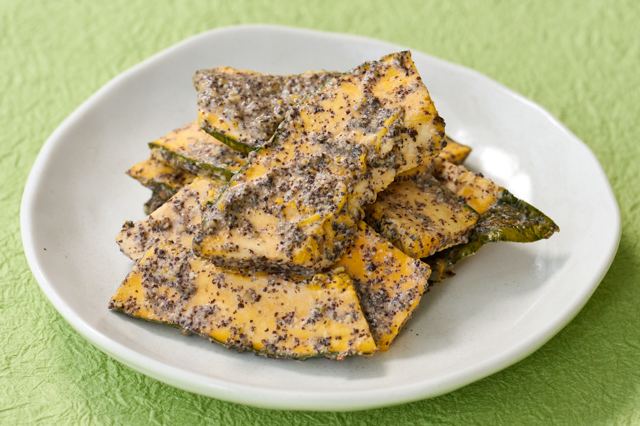
| Prefecture | Nagano (長野県) |
|---|---|
| Region | Chubu |
| Japanese name | 干しかぼちゃのえごま和え(ほしかぼちゃのえごまあえ) |
| Reading | Hoshikabochanoegomāe |
| Home area | North-Western Area |
| Main ingredients | A pumpkin. |
History and Origins
(The City of the Valley, as it is called) In the region of the valley, there is an old-fashioned culture of food to dry and store vegetables. It is said that in the remote regions of the mountains, where snow was formerly blocked from the outside traffic, food was dried and stored and eaten for long winters. When the vegetables are dry, they change their taste and taste and food and they are rich in nutrients. To dry is not only the wisdom of keeping the flavor in check, but also the wisdom of living to eat the extra vegetables without wasting it. In spring, we dry all the walnuts in the mountains, and in summer we cut them dry and dry them, and they give us a taste like meat. In autumn, various vegetables, such as pumpkins, dried roots, and so on, are made for preservation. In order to say, "The winter end is the age of pumpkins," the pumpkins can't be saved by freezing or rotting over the years. I ate two or three of them for winter preservation, and I dried them and dried them. Cut the pumpkin in short form, spread it out on top of it, and dry it until it becomes larder. When you eat, wash it and boil it, cook it into rice or stew, and use it for the rest of your life. Also, after the main and the Haozawa vegetable are finished, we will put a rope under the door, place a piece of radish and a piece of yagi, and then we will tie it together, and we will dry it in the shade under the sun. I'll sit down all winter, and when I eat, I'll take it off and eat it. In Nagano Prefecture dry culture, there is another method of making the freezes of winter and the dry winter climate. The cold weather, the freezing snow, the frozen roots, the frozen tofu, and so on, keep freezing and freezing out air, and the water runs out in the dry climate. It's a culture of food that comes from the wisdom of living, which has given way to the hard winter nature of Shizuru.
When It Is Eaten
They're being eaten every minute. Drying is done regardless of the season, but dry when a lot of vegetables are available in the summer. The dry winters were the best season for drying vegetables, where large roots were often hung under the walls and were used to hang unstuffed vegetables and dry in the yard.
How It Is Eaten
The pumpkins are finely cut in short volumes, and it'll take two days to have a nice day. The roast bowl is a bowl of roasted rice, which is boiled in soft water while we rub it together. I can make dry pumpkins a bit easier for you. Dried pumpkins can be steamed and eaten.
Recipe
Ingredients
- 50 g dried kabocha squash (乾燥)
- 10 g perilla seeds
- a pinch sugar
- a pinch salt
Method
- The nativity cooks to the point where it's not too good.
- Put it in a mill, half the size, and it will blow and remove the skin.
- It's a little warm with a lot of soft water and sugar and salt.
- I can wash the boiled pumpkins in three.
Dish data: Ministry of Agriculture, Forestry and Fisheries (MAFF), “Uchi no Kyodo Ryori” (Our Regional Cuisines) database, used under the Public Data License (PDL1.0); translated and adapted from the Japanese original.