Kobumakibōmaki 昆布巻き
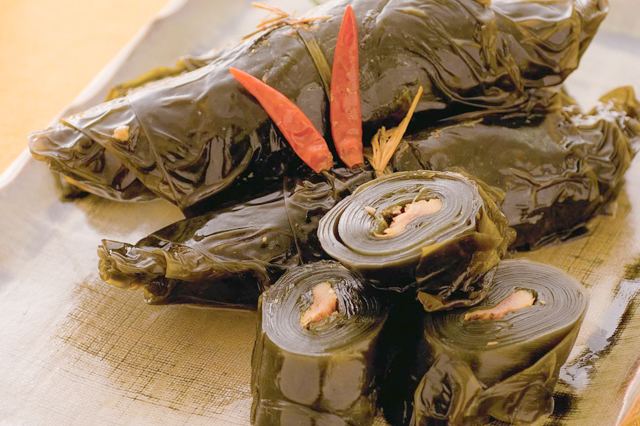
| Prefecture | Fukui (福井県) |
|---|---|
| Region | Chubu |
| Japanese name | 昆布巻き/棒巻き(こぶまき/ぼうまき) |
| Reading | Kobumakibōmaki |
| Home area | Fukui Prefecture all over. |
| Main ingredients | I've got a lot of cloth. I've got a lot of nicin. |
History and Origins
Not only were they carrying their luggage, but they were buying and buying cheap goods in the ports that they could sell at high prices and sailing with great profits. Although 90 percent of the country's public paper is taken from Hokkaido, by the north-sized ship, it is transported to western Japan and the flow of it has resulted in a local meal with silica. Fukui Prefecture has a pygmy in one of the ports of the northern ships, and with prosperity, food cultures were introduced. For anything that was brought from the north, cloth and herring were different. A man with a cloth wrapped around his neck and boiled gently, "The sieve is a good food for his offspring." By cutting again, it also meant wanting to be full, and it became an indispensable local dish to celebrate. Especially on fall festival and New Year's Eve.
When It Is Eaten
It's a dish that never ends up making big "rolls" at the trays, New Year's and celebration tables, but it's an unspoiled treat with a large roll on a plate, and it's a dish with a large roll, and it's a dish with no cuts. I roll them around with chopsticks on my fingernails, so they say "cords" and "slipsticks." Basically, you can eat all year round.
How It Is Eaten
I'm sorry, I'm sorry. She wraps the cloth around her herring with a pair of chopsticks, and cooks it gently until it is ready. You may wind up a hungry herring and a fried carrot and a cuddly egg. A cloth that is rolled with a pair of chopsticks can soften down to the center and improves its taste.
Recipe — Serves 6
Ingredients
- 60 g(100cm×4) kelp (konbu)
- 2 dried herring
- Mix: 1/2 cups(80 g–90 g) white sugar
- Mix: 1/2 cups soy sauce
- Mix: 1/2 cups mirin
Method
- The herring is soaked in rice juice overnight and pulls out the glue. The cloth is quickly washed and washed, without having to raise it and drain it. I'll wash and leave it light.
- With herring and a pair of chopsticks, she wraps her cloth around it. We wrap half the width of the cloth, and we make a big roll. Pull out the chopsticks and tie them together.
- Place a large root cut one inch by five inches in the bottom of the pan, and place a roll of spools in place, add plenty of water, and cook it gently.
- If the cloth becomes soft, add a flavor A and slowly add it to the boil.
- If you boil it, it will be cooked weakly. When the soup is gone, I will water it and boil it until the cloth is soft.
More About Kobumakibōmaki
The squawk is Japanese food that has been wrapped around fish and cooked. The sieve's roll using a hungry herring is the main thing.
Cooking.
The sieve of the sieve.
The absent herring is soaked in rice juice and brought back. It'll take about four days to replace the rysso every day. The bones are removed from the bones and they are boiled in a fool's way. The cloth is brought back in water, soft, and binds with a knot wrapped around herring. Put it in a pot that has been laid with a tree, and boil it sweetly with soup, broth, and flavor. We can turn off the fire and make it cool. A pepper cut to a small size and then applied to a needle is served in the sun.
Culture
It is believed that during the late days of the room town, a drying process was established, that the flow was expanded, that the distribution was expanded, and that the oil was made because of the spread of soy sauce.
It's one of the dishes that comes from getting to "good."
A circadre.
It's a coil of glue that is produced and consumed mainly with Toyama Prefecture. This skeleton is the basic shape of Toyama Prefecture, and it is similar if you don't use spools. In contrast, the common wooded chick in the whole country is hardly made by local cicada manufacturers, and is not sold at the supermarket. There's also a red scroll, which is commonly used but which should be avoided as a color for food. In the region of Toyama Prefecture, once under the control of Kasaka, the cucumber was eaten extensively as a substitute for fish that could not be eaten by the locals. At the same time, Toshiyama is a land where there is a high consumption of cloth, and there was a drought in which it had been mixed.
Text adapted and translated from the Japanese Wikipedia article 昆布巻き by its contributors, licensed CC BY-SA 4.0.
Dish data: Ministry of Agriculture, Forestry and Fisheries (MAFF), “Uchi no Kyodo Ryori” (Our Regional Cuisines) database, used under the Public Data License (PDL1.0); translated and adapted from the Japanese original.