Home / Nagano / Kobunanokanroni
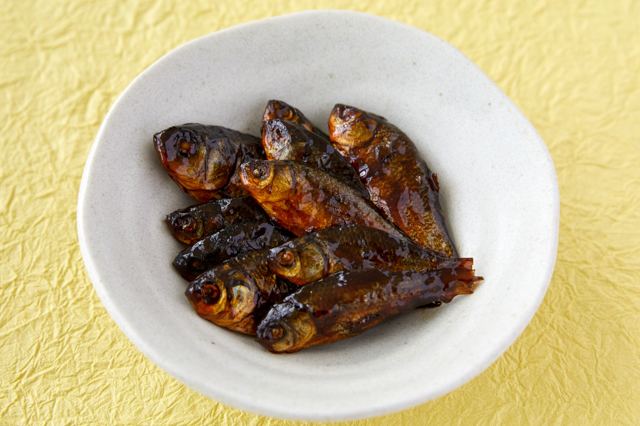
Kobunanokanroni 小鮒の甘露煮
| Prefecture | Nagano (長野県) |
|---|---|
| Region | Chubu |
| Japanese name | 小鮒の甘露煮(こぶなのかんろに) |
| Reading | Kobunanokanroni |
| Home area | Savage |
| Main ingredients | Funa, sesame oil, sugar. |
History and Origins
In the eastern part of the province, the city of Sakura is situated at the border of Gunma Prefecture, blessed with a water source so beautiful that it can keep fresh fish and cucumbers in the rice fields, and has been raised with rice in the rice fields in the rice fields. Although I had harvested it as a by-product, as a by-product, I began to thrive on it, which was less important than the koi. In the local area, in September, the five - inch - or - half - small fanna is packed alive and sold. In town, the letters "little funa" were found everywhere. The little funa is boiled sweetly with soy sauce and sugar. I'll make a small funa (which I bought very young, from rice fields) and wash it clean and clean in a pot. If you cook until you're soft enough, you'll eat with other new ones. I feel autumn coming in the short time of the Little Funa. The sealess state of Japan is blessed with rich water sources, including mountains, Senji, Kijio, and Aogawa. The rivers and lakes grow fresh fish. Take it and eat it, and in the mountain areas, food culture was rooted. There's a custom of eating river fish without using them as sweet sauce for centuries. The "Kuy's Yuka" and the "Sooji's Yuka" are also rooted in local dishes in Lake Kouji, and the sweet sauce of whole rivers fish is rich in calcium and has long been a valuable source of protein.
When It Is Eaten
When the rice is finished, the rice plants will be released from the rice paddies and the Funas will be raised with rice. In autumn, they will be fried with rice. In Sakura, it is said that on a large day, about 3,000 bags of food are shipped to supermarkets in the province and to school feedings in the districts of Totsu. In the Funa Festival, the customers who bought the funa early in the morning and sold it out in two days. Many people look forward to the little funa every year, and they are known for the taste of the fall in the Sasalong region.
How It Is Eaten
The feature of the Sasai's "Sai's Soy sauce" is still to cook the little fanna alive. The small fan will jump, so you have to hurry to cover it so as not to jump out. Mothers were always by the pot so they wouldn't burn. The "smell soup" that has become soft to the bones is eaten as a bowl of rice and a bowl of wine.
Recipe
Ingredients
- 1 kg crucian carp
- 200–250 g sake
- 180 g soy sauce
- 300 g coarse sugar
Method
- Put the fanna in a bucket of water and wash well while changing the water.
- Cut the water from the pana, put it in a pot, fill it quickly with wine and sequester, and leave it in twenty minutes.
- Put in a rougher pan, boil it in a strong fire, and take the pot carefully.
- I'm going to make it a medium-fire fire from here, and I'm going to cook it slowly with aluminum foil. I would never stir it along the way. It's as good as shaking the whole pot quietly.
- When the soup is low, I will pour the pot and then scoop up the remaining juice with a spoon and pour it over the whole. It's a good thing to do this and it's a good idea to make the whole thing taste good.
- When the soup's gone, I will put one on the plate to stop the fire and make sure it doesn't get too cold. If you want to put a lid in a storage container, use a lid and store it in a refrigerator.
- I'll do the fire well and try not to be impatient. When you want to add some juice, put in some wine. Depending on the size of the pot, it is easy to boil two kilograms. If you use a bad drink, you'll finish it clean without putting a broom in it.
Dish data: Ministry of Agriculture, Forestry and Fisheries (MAFF), “Uchi no Kyodo Ryori” (Our Regional Cuisines) database, used under the Public Data License (PDL1.0); translated and adapted from the Japanese original.