Kofukumame 幸福豆
| Prefecture | Shiga (滋賀県) |
|---|---|
| Region | Kinki |
| Japanese name | 幸福豆(こふくまめ) |
| Reading | Kofukumame |
| Home area | Lake North |
| Main ingredients | Soy, flour, sugar. |
History and Origins
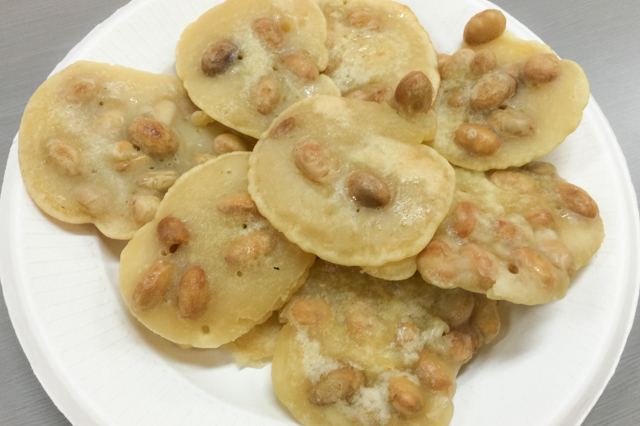
"Happy beans" is an old-fashioned "snack of beans" representing Shiga Prefecture. In the farmer's case, the beans were grown in rice paddies, and the wheat was grown in the back of rice. At present, Shiga Prefecture is increasing in wheat production and often uses flour. When made from rice flour, it is delicious as a pet. Shiga Prefecture was more abundant in rice than old because agriculture developed around rice making. The Shiga Prefecture from its high quality and productivity was also called "the rice reserves of China." That is why rice was often eaten as well as rice, such as rice and other fish and coral. "Happy beans" is one of them. In times when there were no sweets, the "Happy Bean" was eaten as a between the farm and the farm when the roasted beans and rice were mixed with sugar and water. There were lots of coral, blue beans, juices, coral, all kinds of good-natured snacks.
When It Is Eaten
Although it was eaten during the inter-agency rest, it can be eaten year-long by being easily prepared.
How It Is Eaten
Mix well flour, sugar and salt, melt with water, and add roasted soybeans. Drop the fabric onto the hot plate and burn both sides. The roasted beans may be topping while they are baking.
Recipe — Serves 4
Ingredients
- 40 g soybeans
- 100 g wheat flour (rice flour)
- 40 g sugar
- a pinch salt
- a pinch oil
Method
- I'm roasting soybeans in fried bread. You may use a commercial roasting bean pea.
- We mix flour, sugar, salt well, melt it with water, and make it a kind of slowly flowing material, then add beans and mix it. (You can do it while you're cooking.)
- I'll wipe the fabric with a ball-stab, drop it on a hot plate into a saucer, and burn both sides to finish.
Dish data: Ministry of Agriculture, Forestry and Fisheries (MAFF), “Uchi no Kyodo Ryori” (Our Regional Cuisines) database, used under the Public Data License (PDL1.0); translated and adapted from the Japanese original.