Narachameshi 奈良茶飯
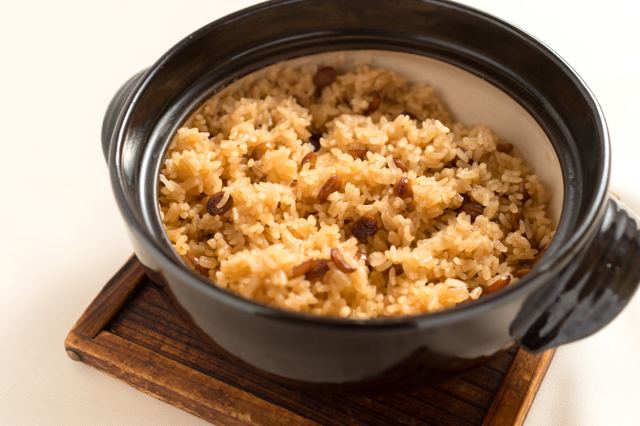
| Prefecture | Nara (奈良県) |
|---|---|
| Region | Kinki |
| Japanese name | 奈良茶飯(ならちゃめし) |
| Reading | Narachameshi |
| Home area | All within the province. |
| Main ingredients | I'm going to show you some of the things that we've done. |
History and Origins
The Watertake, which occurs in the Tokyo Great Temple each year in March, has been around for more than 1,200 years. Along with teacups, there comes what is called "gechcha." The rice came from Nara, but it didn't spread widely among the common people. A traveler who liked tea took it back to Edo, and he found many tea shops near the basilica temple in Edo, and gave them the sign of Nada tea and invited his guests. I became even more famous for appearing in the nine-year-old "Italy" in the "Italy" letter. Tea is a balanced diet of rice and beans, and it had good stomachs, so it became widely known throughout the country. It's been said that after Meiji, it began to spread again in Nara.
When It Is Eaten
Although it was eaten by monks from ancient times as food for the parades at Toyo Temple, it is now not the time for a special meal.
How It Is Eaten
When you cook them at home, you can use soft, steamed beans that come out at the right time to avoid the trouble of roasting them. If you put rice in a rice cooker, pour tea down to the top, and put beans in, you can easily cook it.
Recipe — Serves 4
Ingredients
- 2 cups rice
- 40 g soybeans
- 4 g roasted tea (茶葉)
- 600 ml water
- 4 g salt
Method
- I'll boil and cool the tea.
- When the soybeans are burned in a weak fire, the skin breaks slightly, it is quickly soaked in water, and both hands are folded together to remove the skin.
- Wash the rice, put it in a rice bowl, put some tea in normal water, and leave it for about half an hour.
- Put two peas and salt in it and cook it up.
More About Narachameshi
Nara tea is a kind of rice soup, native food from various parts of Nara Prefecture.
Overview
Add some roasted beans, beans, baked lentils, soups, seasonal vegetables, and other stored cereals and cereals, as well as some steamed teas and pastries seasoned with salt and soy sauce, and sometimes the succulent flavors.
It is believed that it is originally reserved for monks from the temple area, such as Nara's happy temple and the Tohoku Temple, and that they were eating from valuable tea at that time. In the presentation of the water collection at the Tokyo temple, there is a "gechcha" called with a cup of tea, which is thought to be the origin of the tea. But it didn't spread widely among the common folk. A traveler who liked tea took it back to Edo, then a number of Nara tea stores were made near the temple, and he came by with the sign "Nayaki." I'm famous for appearing in the nine-year-old "East of the Sea." Tea was a balanced diet of rice and beans, and had a good appetite, so it became widely known throughout the country. After Meiji, it began to spread again in Nara.
It was originally immersed in the first roasting that was made from a cup of reded-up tea. It was written in the early Edo's Cooking Story that the tea was placed in a bag and roasted with beans and rice, and it was mixed with peas and rice, which was mixed with mountains and salt, and it was mixed with saga cray broth and so forth. The rice, which is still a native dish of Kagawa Prefecture, is made from a rice and pea cooked with a little salt, and is thought to be the dish of the Naryak meal in the Cooking Story.
There are teas and cups of tea cooked in plain water all over Japan, showing that there were other uses, such as food, besides drinking.
This is the nature of what is now the customary meal, served with soup and vegetables in Nara's rice, and served with tofu soup. This led to the spread of Nara tea as food for Edo rather than in Japanese. The first teahouse in front of her house called it tadpole, turquoise, and so on.
In the case of Kawasaki.
It is reported that during the cultural period of the Kasakiji, Nara tea, served in an all-worldly shop with the succulent citrus juice and nada, was famous. It is also said that tea was served in a restaurant called a turtle shop.
Another ten-repair slide book, "Enochs of the Sea of East, " became more famous for the appearance of Yakuza and Nara's tea. In the late Edo, the big name is said to have dropped by noon.
Although the decommission of the Japanese Japanese restaurant resulted in the loss of Nasaki tea, in 2001, the literature was re-reviewed, and the taste was served at the "Famiji Festival" as well as the taste of the Shizushi soup. Then, the Japanese sweet shop in the city of Kisaki developed a modern style of Nara's tea, and it was noted as a new masterpiece of Kisaki.
References
Saito, come in. Don't worry about it. I think of Saeko, who was born in the year 21 years ago.
Text adapted and translated from the Japanese Wikipedia article 奈良茶飯 by its contributors, licensed CC BY-SA 4.0.
Dish data: Ministry of Agriculture, Forestry and Fisheries (MAFF), “Uchi no Kyodo Ryori” (Our Regional Cuisines) database, used under the Public Data License (PDL1.0); translated and adapted from the Japanese original.