Shōyunomi しょうゆの実
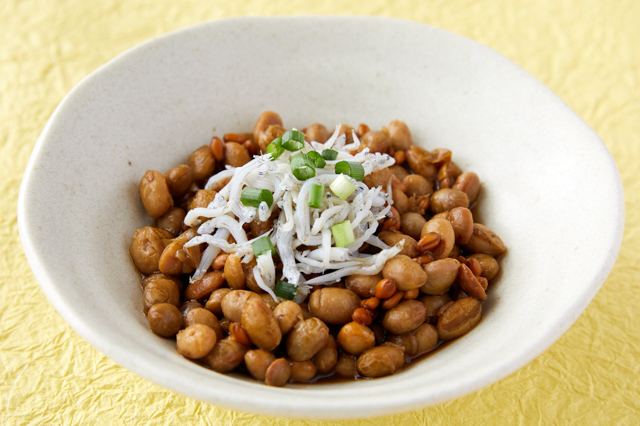
| Prefecture | Yamanashi (山梨県) |
|---|---|
| Region | Chubu |
| Japanese name | しょうゆの実(しょうゆのみ) |
| Reading | Shōyunomi |
| Home area | (Singing) |
| Main ingredients | Soy sauce. |
History and Origins
It's a local dish that has been served with the old beans and lentils in the region, and it's a local dish. Since ancient times, since the Riku region has had a lot of tilting ground and high temperatures, there has been a lot of growing beans that are hard to grow for normal vegetables and rice but strong for cold. Each household made soy sauce with watery soybeans, and the remaining beans were eaten as "same fruits" and as a valuable source. Since it's an indispensable food in winter, it still has to be made without making soy sauce every year. The recipes differ from the recipes in each home, as well as the flavor and flavor of the food, depending on the temperature and the spoon of the cook.
When It Is Eaten
Although it began to be made from about October when the soybean harvest began, it has been eaten as a winter preserver. There were a lot of soybeans, barley and wheat in the hillsides, and "Yewfruit" was once eaten on rice.
How It Is Eaten
I'll boil the soybeans for about four hours, dry them for an hour, mix them together with a piece of slat, fill them with straw and put them in a crate with four-inch thick. I'm going to cover the wall to the point where the soybeans hide a little. Put a towel blanket on it and make the temperature in the crate to about 20 degrees Celsius. When the beans are served, you can hold the wall under the box and mix them together again with a towel blanket and make it 20 degrees C. After a few days, when white flowers turn into black flowers, they will be dried well and made. When you return, you can put a soy sauce in water and a small amount of wine, and if you add a little salt, you can get "Icean fruit" in about a week. There are some things you can do. When ready, eat with a mixture of onions, cucumbers, and so on.
Recipe
Ingredients
- 2–4 soybeans
- as needed タオル
- 1 薄く広い木箱
- 1 koji
- 1 毛布
- 1 bunches ワラ (ゴザ)
Method
- (Singing soybeans for about four hours, as soft as natto) We'll dry them for an hour and get water and heat and further.
- Mix the pieces together.
- We place the wallows in the crates and put two on top and three inches in front of it.
- The wallows are thin enough for the laid beans to hide a little.
- I'll put in a towel blanket and make the temperature in the crate 20° C.
- Once the citrus process is out of the two beans, we hold the wall under the box and mix it together.
- After three steps of plating, I put another towel blanket on it and make the box 20°C.
- In a few days, you'll be turning from white flowers to black flowers.
- If the whole bean has black flowers, remove the towel blanket and dry the beans well.
- The procedure is to put the soy sauce in water and a small amount of alcohol.
- When the fruit gets a little soft, add a little salt.
- When you reach three weeks, you'll get the fruit of the soy sauce.
- The procedure is four times as long as you're ready to eat, including rice and rice.
Dish data: Ministry of Agriculture, Forestry and Fisheries (MAFF), “Uchi no Kyodo Ryori” (Our Regional Cuisines) database, used under the Public Data License (PDL1.0); translated and adapted from the Japanese original.