Wakegiae わけぎあえ
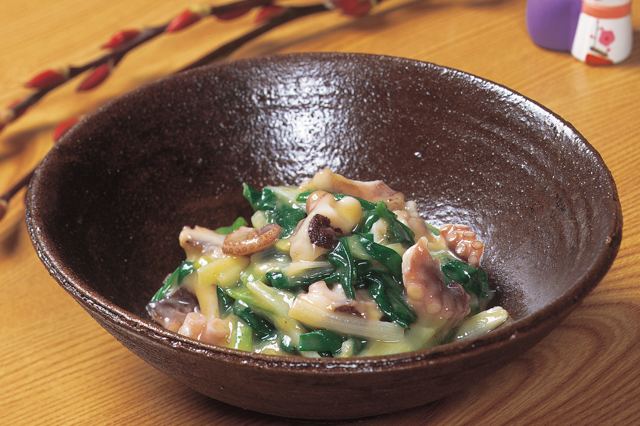
| Prefecture | Kagawa (香川県) |
|---|---|
| Region | Shikoku |
| Japanese name | わけぎあえ |
| Home area | All within the province. |
| Main ingredients | I'm going to have to go to the hospital. |
History and Origins
The farmers have long known that they were well grown as spring vegetables. Like the familiar white pepper with the fine, winter dishes that are essential to the citrus flavor, the mustard is an essential ingredient for the spring table. It's a round seed with a round neck, which has a soft flavor rather than a comb, and when heated, it makes sweet. The growth and growth of the shoots from the bulbs is called "separation." "Studently" has been eaten during the festival as a product of offspring prosperity. It's the custom to use it in a round-the-tiny-driven way, hoping that good things will continue. And there are other ways to relaxing materials that can be used as a substitute for octopuses, as well as mathematic shells and auricles, which are fishing in spring, and native dishes that are frequently used in both mountain and sea periods. The fact that white peppers are served with vinegar and other flavors has caused them to be called "a rose."
When It Is Eaten
It was supposed to be the best season of the festival, so I went up to the fields as a bowl of rice and wine. In the past, I left a white pepper made for boiling at the end of the year and used it in "Screech" too.
How It Is Eaten
Wash the saw and cut the white root and the blue parts to about three centimeters long. It's cool if you don't like boiling water with white roots and steaming the blue. The octopus will boil the salt and then boil it in boiling water and cut it into a pot. You can add white paste to the bowl, paste it, paste it with vinegar, sugar, and mix it well and cool it down.
Recipe — Serves 4
Ingredients
- 1 bunches(180 g) wakegi onion
- 150 g octopus (マテ貝)
- Miso: 60 g white miso
- Miso: 1/4 tsp prepared mustard
- Miso: 2–3 tbsp vinegar
- Miso: 30 g sugar
Method
- I'll wash the seams and divide them into white roots and blue ones and cut them into three-inch lengths.
- It's cool to boil in boiling water, white roots in white, and then boil the blue part. You can roast it with a little water.
- The octopus takes a good amount of salt and takes a good amount of salt, puts a pinch of salt in the hot water, and cuts it into a bowl. In the mathematic shell, it is good to pour wine in with a thin salt water, to remove dirt and sand from it.
- Put white pepper in the bowl, peppers, vinegar, sugar, and mix well and cool down.
Dish data: Ministry of Agriculture, Forestry and Fisheries (MAFF), “Uchi no Kyodo Ryori” (Our Regional Cuisines) database, used under the Public Data License (PDL1.0); translated and adapted from the Japanese original.