Home / Fukushima / Nishinnosanshōzuke
Nishinnosanshōzuke にしんの山椒漬け
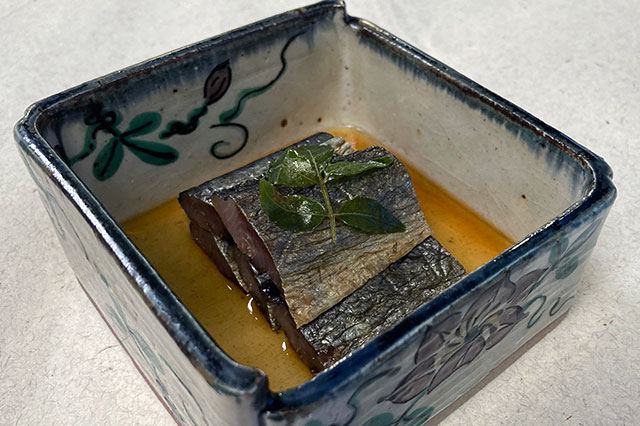
| Prefecture | Fukushima (福島県) |
|---|---|
| Region | Tohoku |
| Japanese name | にしんの山椒漬け(にしんのさんしょうづけ) |
| Reading | Nishinnosanshōzuke |
| Home area | The whole area of Isezu. |
| Main ingredients | A postcard, leaves of the mountain |
History and Origins
In the Edo, when there was very little fish distribution on Fukushima, the resulting Hokkaido dried up the cans and made them flow out of the way. It is said that this was brought to the island of Izuzu, and it was valued for saving and becoming a source. Fukushima was particularly fond of stored food because of the longer winters and the longer years of the crop. The sushi has become a familiar food, and native food has been prepared, such as "snack of garlic." The "Stamp of the Snack" is another dish that has been used with the brush. It's often eaten around Chizu Matsu, and it's familiar to the world to have a bowl of rice, called "the bowl," which is used to using a bowl of rice. It is said that it is made from Isemoto-kun, a rectangleed vessel that fits the size of a brush.
When It Is Eaten
It is often eaten during the spring to the early summer when the mountains are harvested. Also, there are two types of hard " book dry" and a slightly soft "half dry," but in the past, it was highly preserved and often used book dry in the light of the fact that it was condensed. The dish's purpose was to clean up the smell and to make it tastey by combining the soft mountain tops, because it smells.
How It Is Eaten
Place the leaves of the mountain in the bowl, and wash them thoroughly with the tassels, and place them around tightly with their heads. Then, after putting on the leaves of the mountain, add vinegar, wine, and so on, and then cover them with heavy stones. A few days to a week, the flavor will be very succulent. By the way, when you put it back in rice yuzu, it gets a good smell.
Recipe — Serves 4
Ingredients
- 20 dried herring
- 1 cups 山椒の葉 手のひら
- 1 cups vinegar
- 1 cups sake
- 1 cups soy sauce
Method
- I'm going to wash it well and clean the water with my head.
- I'll keep the leaves from the branches.
- We spread the leaves of the mountain on the bowl, we spread the reeds tightly on top of them, and then we piled them up on top of the mountain and then we covered them with the leaves of the mountain.
- We'll pour the vinegar, wine, and so on, and then press and leave heavy stones on top.
- I can eat it after three days.
More About Nishinnosanshōzuke
During the Edo, the herring from Hokkaido began to be processed into a vassin and passed across Japan. The wearovers brought to the Isezu district became valuable because they were stored and used as a protein source.
A dish that is delicious with oil, vinegar, and wine. Because of the unique smell of a varnish, it is thought that it was combined to make flavor rich as well as to extinguish the smell by the mountain bush.
A rectangle-sized pottery made from the Yonichi of Toshimoto is called a bowl made from a square mountain to match the size of a worn - out herring.
Period
It's about February when the Hokkaido makes the herring, and it's carried on a northerly boat to the new swamp, and it's brought from there to the assembly and started to go out. Since then, it has often been made by the first summer when the mountain is harvested.
Text adapted and translated from the Japanese Wikipedia article にしんの山椒漬け by its contributors, licensed CC BY-SA 4.0.
Dish data: Ministry of Agriculture, Forestry and Fisheries (MAFF), “Uchi no Kyodo Ryori” (Our Regional Cuisines) database, used under the Public Data License (PDL1.0); translated and adapted from the Japanese original.