Katemeshi かて飯
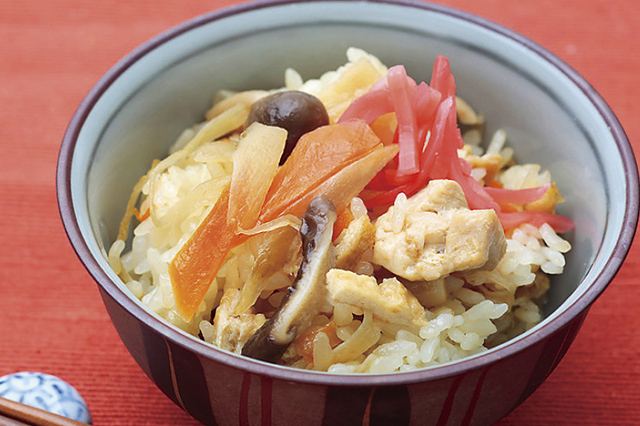
| Prefecture | Gunma (群馬県) |
|---|---|
| Region | Kanto |
| Japanese name | かて飯(かてめし) |
| Reading | Katemeshi |
| Home area | All within the province. |
| Main ingredients | And I'm going to show you some of the things that I've learned. |
History and Origins
In times when rice was scarce, there were various kinds of dishes designed to replace rice. Besides making the main diet wheat, such as "stuffed" with wheat, he was working hard to add more and more to his stomach by adding a variety of foods to his food. "Sing and eat" is one of the original ideas. It points to what is prepared by mixing rice with food that is eaten by hungry people, such as wheat, beans, root, and algae. The "Keed" is the food added to the rice and is added to increase the amount of rice. Now that rice is available and readily available, please enjoy mixing your favorite foods with vegetables and vegetables at the same time. We've become known as "Five-Sook" and "Meeting" and "Sexing" made out of seasonings of rice mixed together with tacao and mushrooms.
When It Is Eaten
The rice itself is known in areas other than Gunma Prefecture. Other areas are eaten as well as as in the rice-thing age, but especially within Gunma Prefecture, they are often eaten as easy prey when people gather together or busy.
How It Is Eaten
The materials you prepare and use vary from region to family. For example, cooking is a way to cook rice, but in addition to adding tools to cook it, it can mix the ingredients together with the cooked rice. The ingredients are many and varied in vegetables, such as wheat, beans, carrots, rice, chicken, oil and so forth. These are usually cut small before adding them to rice, and seasoned with soy sauce, and cooked with soup before cooking.
Recipe — Serves 10
Ingredients
- 5 × 180 ml(750 g) rice
- 2 aburaage (fried tofu pouch)
- 100 g burdock root
- 60 g carrot
- 100 g mushrooms (生しいたけ、しめじ等)
- 100 g konnyaku
- 1 tbsp oil
- Seasonings: 20 g sugar
- Seasonings: 2 tbsp mirin
- Seasonings: 4 tbsp soy sauce
- Seasonings: 1 tbsp sake
- Seasonings: 150 ml dashi stock
- Mix: as needed pickled red ginger
Method
- Carrots, carrots, carrots, lentils, and mushrooms are cut small. Cut the oiled oil in half to the base and cut it to two-tenths of a millimeter wide.
- Oil the pot, roast the eggs first, add carrots and garlic.
- I'll put the oil in the pan, and I'll cook it in the middle of the fire. When it is cooked gently, the cooked rice will be mixed with ingredients and soup.
- The rice is prepared and the rice is served as an example, such as a mountain dish that has seasoned.
More About Katemeshi
Katemeshi, also spelled katé-meshi, was a common peasant food in Japan during the Meiji and Taishō periods (1867–1924). Some laborers and farmers subsisted on the dish during this time, whereas wealthier people consumed larger quantities of rice, which was a relatively expensive food compared to the income of some workers. Typical ingredients in the dish included rice, barley, millet, and chopped daikon (a mild winter radish). Variations of the dish were based upon the regional and seasonal availability of foods in different areas of Japan.
History
Katemeshi was a rice dish, peasant food and former staple food in Japanese cuisine that was common during the Meiji and Taishō periods of Japan. During this time, rice was an expensive food for laborers, and some employers fed their workers katemeshi, while feeding themselves with significantly larger quantities of rice and separate side dishes. Some farmers in rural Japan also subsisted on katemeshi, whereas merchants and (former) samurai who lived in cities consumed larger quantities of rice.
Preparation
Typical ingredients in the preparation of katemeshi included rice, barley, millet, chopped daikon radish root and leaves, and other greens. The use of daikon in the dish was very common. Various additional ingredients were also used in the dish in regional areas of Japan, based upon food availability. In the Mie prefecture of Japan, potato leaves were used in addition to daikon. In Eastern Japan, white potatoes were used as an ingredient in katemeshi, and in Western Japan, sweet potatoes were used. Edible seaweeds such as hijiki and wakame were used as ingredients in coastal areas.
Tofu and okara, which is a leftover pulp by-product from tofu production, were sometimes used in katemeshi. Other ingredients used in the dish in various areas of Japan, when available, included wheat, carrots, turnips, burdock, taro, pumpkin, soybeans, mushrooms, kidney beans, and adzuki beans, among others.
Text adapted from the English Wikipedia article Katemeshi by its contributors, licensed CC BY-SA 4.0.
Dish data: Ministry of Agriculture, Forestry and Fisheries (MAFF), “Uchi no Kyodo Ryori” (Our Regional Cuisines) database, used under the Public Data License (PDL1.0); translated and adapted from the Japanese original.