32 8 ねぎぬた
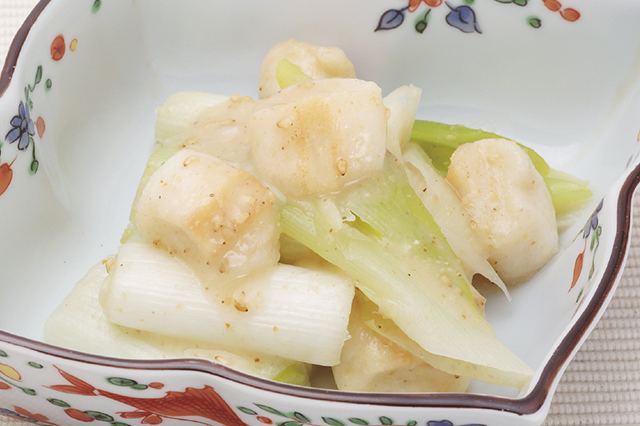
| Prefecture | Gunma (群馬県) |
|---|---|
| Region | Kanto |
| Japanese name | ねぎぬた |
| Home area | All within the province. |
| Main ingredients | Snack. |
History and Origins
One of the special products produced at Gunma Prefecture has a twist. Although it is also produced in such places as deep and busy Shanghai, the most widely recognized one will be the "Odysji Owada." It is said that it was the Edo that began to produce the Yinjita, and because of the request from the great Edo name, it is also called "Master." The feature is that the fat is the largest and the length of the foot is four centimeters and the length is fifteen and twenty centimeters. To the extent that it is used as a gift, such as an old age or a middle age. It's a local dish made of cucumbers that makes up these delicious, individualized foals that makes parents of the horse. It's a dish that can be cooked to finish with vinegar. There's also a similar dish, which can be used to make the meat tender and to make the tofu sweet.
When It Is Eaten
It's made as an event, a wedding ceremony, or a welcome dish for celebration. It is often accompanied by such things as peach phrases as not to be married.
How It Is Eaten
You can use a steamer to steam the well-washed cucumbers, or to steam them, or to boil them gently and to cut them into pieces to the right length, to make them taste, sugar, and vinegar taste. It is said that sweet is better served to the best, and so is a good rule of thumb with its unique sweet taste, such as the Xujita. It's also possible to put vinegar on before it can be added to make the cucumbers softer and more tasty.
Recipe — Serves 4
Ingredients
- 5 green onion
- fu (wheat gluten), to taste
- Seasonings: 1 tbsp ground sesame seeds
- Seasonings: 2 tbsp sugar
- Seasonings: 1 tbsp white miso
- Seasonings: vinegar, to taste
Method
- I'll cut the bow thin and diagonally.
- I'll cook the dish for two to three minutes in boiling water. I'll have to go up and narrow down the water.
- Water is used to boil the rice and to make it easy to eat. It's delicious to taste but sweet to taste.
More About 32 8
Sakura
It's a sort of Kochi Prefecture tradition tip. A piece of leaves is carved into a paste and mixed well with white pepper, vinegar, sugar and so on. It's often used when eating a burly knife. I'm sorry, I'm sorry. In modern times, they usually say a dish that has a vinegar flavor. It's the main term, and it's the summary. That's an alias.
It's a kind of citrus, and it's usually mixed with a combination of vinegar and taste. One of Japanese traditional and native dishes.
Overview
Sea algae, such as onions, peas, tuna, squid, blue-seeded animals, and other sea algae, which are cooked with vinegar, soy sauce.
Origins
This name came from the thought of Numada by the apparent appearance of its tastey face. A kind of sauce for cooking such things as "Namata" in a 1603-year-old daily dictionary. (or vinegar citrus caeche). ¶nutanamasuzu ¶ "" and it was established as cooking by the end of the room town.
Use Methods
The ingredients that are served are made from the basic flavors of sweets and colors, from the point of taste and color, by a high amount of white peppers used to make them mixed with vinegar, sugar, and mustard.
As mentioned above, in plants, materials are used in a lot of ways as standard ingredients. In addition to onions, there are a lot of plants that have been added to the flavor of the citrus, nilla, garlic, or wildflower novels, gygmy garlic and other sulfuric acidic antlers.
On the other hand, in fish and fish, oysters are preferred and often used for raw materials such as blue-sniffed clams, oysters and fish.
However, your raw sauce is rich and most of the food is fresh and delicious. To put it simply, vegetables are delicious when they are eaten by rice, when they are eaten by fish and fish. The firefish is boiled, and it often has vinegar when you eat it, but it's OK if you want it.
Text adapted and translated from the Japanese Wikipedia article ぬた by its contributors, licensed CC BY-SA 4.0.
Dish data: Ministry of Agriculture, Forestry and Fisheries (MAFF), “Uchi no Kyodo Ryori” (Our Regional Cuisines) database, used under the Public Data License (PDL1.0); translated and adapted from the Japanese original.