Kushikatsu 串カツ
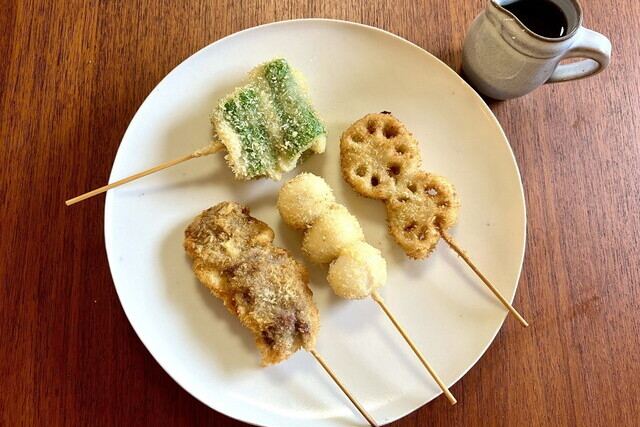
| Prefecture | Osaka (大阪府) |
|---|---|
| Region | Kinki |
| Japanese name | 串カツ(くしかつ) |
| Reading | Kushikatsu |
| Home area | All within Osaka City and Osaka Prefecture |
| Main ingredients | And I'm going to show you some of the things that I've been doing. |
History and Origins
I used to stick a wide variety of raw materials, such as beef, vegetables, and fish, into a bowl to make them fly. It's also widely known that there are "No Restriction twice" rules to allow people to share the sauce with each other. There are various theories about the origin of the "Cutkats," but it is said that it originated in the New World of Osaka's new world from the end of the Great War to the beginning of Japan. To fill the belly of the workers working nearby, they invented a thick coat of lean beef so that they could eat at low prices and with no time. It seems that after the war, more stores have served them while the food supply is not stable and they are free of food poisoning. In the 2000's, there was a national chain that had the power of katkats, and they advertised it as Osaka, and the name of the katkat spread across the country. While the katchis with their "Friends, Fast and Good" are a large food store, there are other stores that use luxury foods such as mushrooms in recent years and expensive stores that young people can use for dating.
When It Is Eaten
It's been enjoyed all year round, regardless of the season. You can make it at home, but mainly at the store. There are still restaurants in the new world that provide them with a lot of cacao and restaurants that enjoy them throughout the Osaka Prefecture.
How It Is Eaten
I'll stick my favorite tools, such as beef, garlic, eggs, and fish, and then put flour and eggs on melted fabrics and then put flour on them and put them on oil, fried them, and put sauce on them and eat them.
Recipe
Ingredients
- 50 g wheat flour (cake flour)
- 60 g water
- a pinch salt
- to taste ) 10–15 g 牛肉 ※カレー用のソトモモなど
- panko breadcrumbs (細目), to taste
- oil for frying, to taste
Method
- I mix flour and water and salt to make batter fabric.
- Cut the eggs, root, and so on, and cut into bamboo.
- We can soak the material into the pieces of the grasshopper, and use the glue in the container to make extra fabric.
- I'll let you put on the crumbs of bread.
- With the oil at the level, I'll return it to you in two minutes, until it's browned.
More About Kushikatsu
Kushikatsu (串カツ), also known as kushiage (串揚げ), is a Japanese dish of deep-fried skewered meat and vegetables. In Japanese, kushi (串) refers to the skewers used while katsu means a deep-fried cutlet of meat.
Ingredients
Kushikatsu can be made with chicken, pork, seafood, and seasonal vegetables. These are skewered on bamboo kushi, then dipped in seasoned flour, egg wash, and panko and deep-fried in vegetable oil. They may be served alone or with tonkatsu sauce.
- Meat
- beef (gyūniku), pork meat (butaniku) and cartilage (nankotsu), sausage, chicken parts including tsukune (minced chicken), gizzard (sunagimo), skin (torikawa), and horse meat (baniku), chicken egg and Japanese quail egg
- Seafood
- Atlantic horse mackerel (aji), Japanese smelt-whitings (kisu), shishamo smelt, wakasagi blackwater smelt, prawn and shrimp (ebi), Japanese scallop (hotate or kaibashira), oyster (kaki), octopus (tako), squid and cuttlefish (ika)
- Vegetable
- onion, eggplant (nasu), bamboo shoot (takenoko), okra, tomato, potato, sweet potato, Chinese yam (nagaimo), bell pepper (pīman), lotus root (renkon), greater burdock (gobō), pumpkin (kabocha), broccoli, asparagus, shiitake mushroom, garlic and shishito pepper
- Products and prepared
- fish products: chikuwa, hanpen and kamaboko
- dairy: hard, cream, and smoked cheeses
- prepared: bell pepper stuffed with minced pork, asparagus wrapped with bacon strips, chikuwa filled with hard cheese, mochi rice cakes, dumplings including jiaozi (gyōza), shūmai, and beni shōga (pickled ginger root colored bright pink)
Geographical varieties
Osaka area
The origin of kushiage is said to be served at food bars in downtown Osaka, in the Shinsekai neighborhood. Kushikatsu restaurants specialize in the dish. An owner of a small Shinsekai food bar since 1929 is said to be the pioneer cook, and her menu was quite popular among the district of blue-collar workers. She prepared and deep-fried meat on skewers, which was a kind of fast food handy to eat, not costly, and filling.
As that menu spread to other areas of Osaka and beyond, it is standard that kushikatsu are prepared with a single food—not like that in Tokyo where, for example, they alternately put pork and onion on a skewer. Wider varieties of foods were prepared as the menu developed, unlike those in Nagoya or Tokyo—for instance, thin slices of pickled ginger or sausage by itself.
Generally speaking, the food on a skewer is smaller in Osaka-style kushikatsu, and customers tend to order larger numbers of kushi compared to Tokyo or Nagoya. That encouraged many kushiage restaurants to use a premixed "batter flour" of powdered egg and flour (compared to that in Tokyo or Nagoya where batter is prepared with fresh egg, water and flour topped with panko crusts). High-end kushiage restaurants in Osaka serve kushikatsu in Tokyo-Nagoya style. Grated yam is added for softer texture. New types of kushikatsu restaurants serve fondue-style kushikatsu, in which customers fry kushi at the table in a deep pan with cooking oil. Kushinobō is a typical high-end Osaka-style kushiage restaurant with franchises across Japan, and it is appreciated for its unique serving style — until a customer informs staff that they are full and do not need any more, staff continues to bring variations of kushiage to the table.
Tokyo area
The basic kushikatsu in Kanto eastern Japan area including Tokyo is made with diced pork rib in 3–4 cm (1.5 in) cubes, skewered with sliced onions or leeks. Battered with fresh egg, flour and a thin layer of panko crust, the skewer is deep-fried in vegetable oil — cottonseed, soybean, canola or rapeseed oil. At the table, skewers are seasoned with thick brown sauce, sweeter than Worcestershire sauce, with mustard if provided in the cruet stand.
Nagoya area
In Nagoya and its surrounding cities, they serve the local specialty doteni, and have an option to order kushikatsu with it. Unlike the serving style in Osaka and Tokyo, in Nagoya they dip kushikatsu in the thick sauce they grilled and sauteed beef sinew. That sauce is based on hatcho-miso, and the kushikatsu is called miso katsu.
Other varieties
Sophisticated sauces are prepared in suburban areas of other cities including Nishinomiya and Kobe, and several sauces are served along with kushikatsu course. Plain salt, soy sauce, sesame oil and ketchup along with tartar sauce, miso, mayonnaise and other dip-style sauce could be the speciality of each restaurant.
Eating etiquette
Eating style is unique at kushikatsu restaurants and food bars as kushikatsu is dipped into a pot of thinner sauce before eating. As a sauce pot is shared among customers, reinserting food after a bite is seen as bad manners and unsanitary. Instead, a slice of cabbage is used to scoop up sauce from the pot and pour it onto the kushikatsu. Some restaurants put a brush or spoon at the shared pot to season the kushi.
Some kushiyaki restaurants have a menu and instructions in English and other languages to warn travelers not to dip food into the shared sauce pot after biting it.
Children's songs
A comic kushikatsu song titled "Kushikatsu wa ippon" became popular to the generation born in 1990s as they enjoyed the song in children's song program on TV broadcast.
- "Kushikatsuwa ippon" (Single Kushikatsu Skewer), broadcast on NHK channel
- "Daruma no Ossan no Uta - sōsu no nidozuke wa kinshi ya de" (Song dedicated to Mr. Darma - never dip your kushikatsu twice in the sauce pot)
Text adapted from the English Wikipedia article Kushikatsu by its contributors, licensed CC BY-SA 4.0.
Dish data: Ministry of Agriculture, Forestry and Fisheries (MAFF), “Uchi no Kyodo Ryori” (Our Regional Cuisines) database, used under the Public Data License (PDL1.0); translated and adapted from the Japanese original.