Izushisarasoba 出石皿そば
| Prefecture | Hyogo (兵庫県) |
|---|---|
| Region | Kinki |
| Japanese name | 出石皿そば(いずしさらそば) |
| Reading | Izushisarasoba |
| Home area | Hyogo PrefectureXOAYAYAYAYA |
| Main ingredients | (Frequent, splice) |
History and Origins
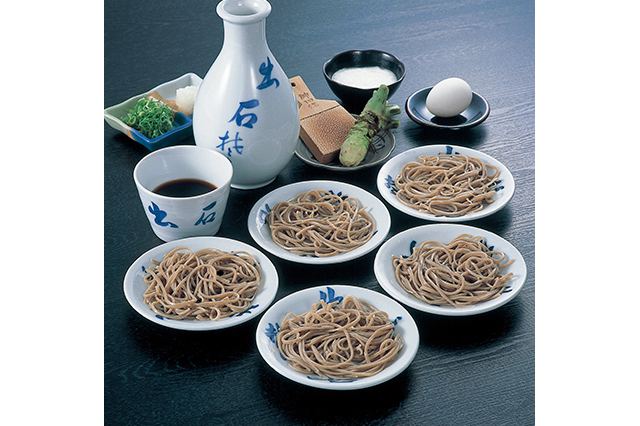
I'm sure you'll agree. The side of the five pairs is one person. In the local community, the amount of height with chopsticks is said to be one adult male. From the masturbator who was brought to me by Najiji Hijigi, who came from Owada to change his country. New techniques have been added to pre-recording technology since over 300 years ago, with improvements and refinements, have been developed by the discipline of the craftsmen. Next to the stone is a traditional process of grinding, beating, and boiling. The small plate with its side around it is about 13 centimeters across. At the end of the curtain, it is believed that the convenience of carrying the food on the stand has begun to make a small shallow salt plate rise. Later on, the white magnetic field of the burning stone was used.
When It Is Eaten
They're being eaten at any time of the year. There are about 40 restaurants in town that provide table dishes for the town (as of 2021) you can eat easily.
How It Is Eaten
On a small plate about four inches across, the rice bowl is poured from the pros and cons, eggs, onions, radish, and so on, and so on.
Recipe — Serves 4
Ingredients
- by the Table of Stones, to taste
- Condiments: chopped green onion, to taste
- spiral, to taste
Method
- I'm gonna wash my side with plenty of water.
- Put the paste in the rice bowl and put the sauce and the flavor in the dish.
- I'll eat while I put my arm around my mouth.
More About Izushisarasoba
Ikeba is a local dish that is eaten around Hyogo PrefectureOA from Hijioka City.
Overview
It is believed that it began with the arrival of a craftsman, Senjiji, who was replaced by a horse-sharing company from Tohoku, Shikoku, Shikoku. Now they take the form of a subsidy, and this form begins at the end of the curtain, when it is carried by a convenient hand-salt plate. In the 1930s and '64s, the present form of the "Serving Table of Stone" was established.
A small plate that is made from a broth is painted with a brand new stone, and it is one of the ways to enjoy watching the dishes in each store.
Characteristics
There are fifty wells in the city of stone called Kyoto. In addition, on April 3rd Sunday each year, there will be a big dinner festival in Tokoku-style, near the St.
At the store, there are five dishes per person, but it is said to be one of the adult men when he eats them on a local plate and gets high on a chopsticks. If you eat by the fixed amount, some stores will receive souvenirs, such as a sign by hand.
In 2008, the Hajidashi Union was founded and in cooperation with the government to try to create local brands, promoting the elimination of land by local production. Branding "Cowtories" and making contact with approved sub-production organizations, they send out the basovas from Kaoka City, which is shipped to the start of JA, and supply them with stone plates by the Cooperative to the Stone Zone. The Soba Productor who participates in this project is the Six Associations of the Nakatani Co., Your Majesty's Association, the Confederation of the Confederation of the Confederation of the Confederation of the Confederation of the Confederation of the Confederation of the Confederate, the Confederation of the Confederation of the Confederation of the Confederation of the Confederation of the Confederation of the Confederation of the Confederation of the Confederation of the Confederation of the Secada.
(Singing) (Singing)
Text adapted and translated from the Japanese Wikipedia article 出石そば by its contributors, licensed CC BY-SA 4.0.
Dish data: Ministry of Agriculture, Forestry and Fisheries (MAFF), “Uchi no Kyodo Ryori” (Our Regional Cuisines) database, used under the Public Data License (PDL1.0); translated and adapted from the Japanese original.