Home / Hyogo / Banshūtenobesōmen
Banshūtenobesōmen 播州手延べそうめん
| Prefecture | Hyogo (兵庫県) |
|---|---|
| Region | Kinki |
| Japanese name | 播州手延べそうめん(ばんしゅうてのべそうめん) |
| Reading | Banshūtenobesōmen |
| Home area | Plumbing |
| Main ingredients | It's like wheat, salt, water. |
History and Origins
It's a masterpiece from the brush shop. The history of the Japanese yakuza begins with the "Kai" that was the source of the sweets that were brought back from Tangs in Nara. The connection between the Hyogo Prefecture district and the old document from the Taako of the Lakota, and the description of the Sauman section of the article in the year 25 1818) can be traced. It is said that the serious development of the art of making the art began in the Edo and was encouraged to be a "perpetual industry" of Kanno during the rest of his life. In the cultural year 1818, Konono began to train for protection of his species. Since the state of Sung-yang was a traditional industry of the province of Shizuoka, it was a matter of great importance to be cultivated (the wheat harvest in Shizuoka, China) as well as the presence of fresh water and the salting of the salt-salt) and the winter-endurable side of the farming process. It's classified as seven degrees when it is made, according to the season, the type of flour, and the fineness of the noodles. It responds widely from household items to fine gifts.
When It Is Eaten
"The silk thread" is produced every year from October to April of the year, but in the family, summer is cold and cold, winter is eaten all year round, and winter is warm. Because the cut that comes out when you make the silkworms resembles a triple-line bee, they say "sniff," they say "sniff," they are stronger, stronger and saltier than they are. The soup is boiled, the rice is boiled, and cooked with vegetables, and eaten by family and school meals.
How It Is Eaten
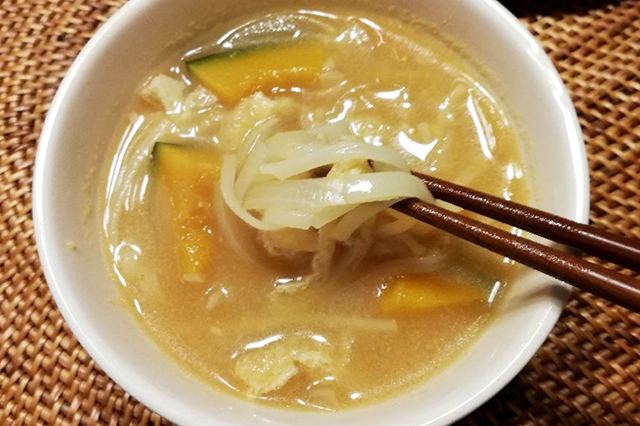
The "sing" in the "soy sauce" is made easily at home, since it's made directly and in the juice instead of the rice. Cut the carrots short and boil them to the size that is easy to eat. I'll cut the oiling into size easily eaten, and I'll boil all the ingredients in the soup. Just before you stop the fire, you put a "snap" in and add a citrus oil and adjust the flavor. Because of the high salt content, the juice taste is thin and can be added to the sauce before it tastes good.
Recipe — Serves 2
Ingredients
- 10 g そうめんばち
- Broth: 300 g dashi stock
- Broth: 50 g kabocha squash
- Broth: 5 g aburaage (fried tofu)
- Broth: 16 g miso
Method
- I'll make some soup.
- Put it in the soup pot, and cook it until it's soft.
Dish data: Ministry of Agriculture, Forestry and Fisheries (MAFF), “Uchi no Kyodo Ryori” (Our Regional Cuisines) database, used under the Public Data License (PDL1.0); translated and adapted from the Japanese original.