Kabuzōni かぶ雑煮
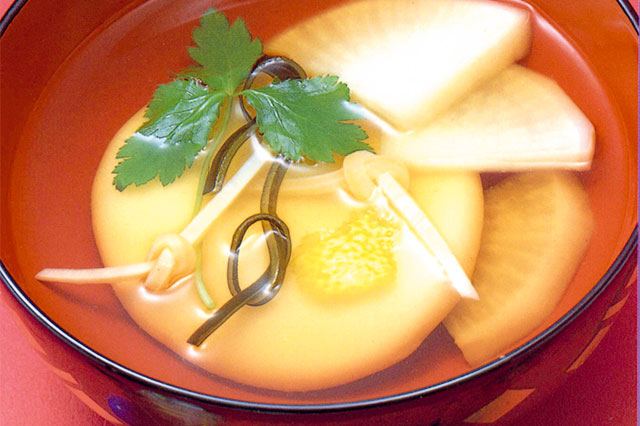
| Prefecture | Yamaguchi (山口県) |
|---|---|
| Region | Chugoku |
| Japanese name | かぶ雑煮(かぶぞうに) |
| Reading | Kabuzōni |
| Home area | All within the province. |
| Main ingredients | I'll be right back. |
History and Origins
Tasty soup, which is essential for New Year's cooking, has strong local colors and different ingredients and recipes for each household. For example, Japan often uses a bowl of Toyama Prefecture, ZX092X, ZXZQ096X, and Western Japan tends to boil round rice. Also, there are many yuzu soups in Japan, but such as Kyoto Prefecture, Nara Prefecture and XXKagawa Prefecture taste in white. Okinawa Prefecture doesn't have the habit of eating turquoise, and so on. Even though there are differences within Yamaguchi Prefecture, there are different areas and families, and the jiffy that makes the condensation of citrus is basically popular. The "shoe soup" that is eaten all over the province, centered around the haiku, is a simple local dish made of round and kab and triple leaves. It is characteristic to put a little steaming in the soup to make it unburned. If you tie a thin cut into a light knot, it will smell better and look better. The custom has been reduced recently, but in the Kosaka district, the practice was the role of male. At the end of the year, the men in the house will steam rice, and they will boil it with mills and cucumbers, and women will clean it up and prepare New Year's food. The bowl was offered to the god Buddha and then painted the New Year table as a boiling dish again.
When It Is Eaten
They're being eaten as New Year's food.
How It Is Eaten
Put boiling salt in the water, and cook it for ten minutes in a low cooking, and keep the juice from coming out. I'll have the big cuts cut, the cucumbers cut, and the bowl cut. The helmet is added to the boiling sauce, and the ingredients are cooked until they are soft before they can taste with soy sauce. Add a round bowl and cook until it's soft. At this time, when the soup is boiled, the cucumber melts, so be careful. I'll cover the bush with three leaves. In Azato-town, it is possible to put in a coat of leaves too.
Recipe — Serves 4
Ingredients
- 4 round mochi
- 60 g turnip
- 10 g kelp (konbu)
- 10 g するめ
- a pinch 三ツ葉
- 4 cups dashi stock
- 8 niboshi (dried sardines)
- 2–3 tsp soy sauce
- 1 tbsp sake
Method
- I'll boil the water in quantity and keep it cooked for ten minutes on a low fire.
- I'll keep the mold wide cut and the bowl cut into pieces.
- The helmet is made, add it to the soup, and then cook the ingredients gently and taste them with the succulent.
- I'll cook it until it's soft. I can't boil my arms so I don't melt. )
- I'll boil the rice in a bowl, and I'll pick up the leaves.
More About Kabuzōni
The dish is a local dish that is eaten within Yamaguchi Prefecture, which is centered around soy sauce. It's a simple unkempt soup made of round, turnip and triplets.
Different in each home and area, but in Yamaguchi Prefecture, the jiffy that is made into a broth of sesame oil is commonly used to make it into a steaming sauce without baking. The soup gets a little steamed in so that it will add no dough, too. Although the materials are limited to only turnips and leaves, they can be tied lightly with finely cut combs to improve the smell and looks. Or they can be used as vegetables. In Koji, it is men's work to prepare rice at the end of the year, and it is their custom to cook bleat. Puting in the turnip is meant to be a partnership to raise the stock.
In 2022, when the Lifelog Technologies company announced the boiling, it was listed as "the lowest-caloried stew" along with the smudge of Ishikawa Prefecture. It's 130 kilocalories per meal.
Text adapted and translated from the Japanese Wikipedia article かぶ雑煮 by its contributors, licensed CC BY-SA 4.0.
Dish data: Ministry of Agriculture, Forestry and Fisheries (MAFF), “Uchi no Kyodo Ryori” (Our Regional Cuisines) database, used under the Public Data License (PDL1.0); translated and adapted from the Japanese original.