Chanpurū ゴーヤーチャンプルー
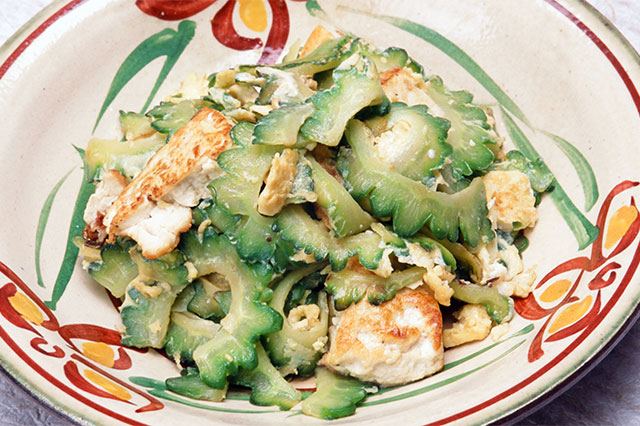
| Prefecture | Okinawa (沖縄県) |
|---|---|
| Region | Kyushu & Okinawa |
| Japanese name | ゴーヤーチャンプルー |
| Home area | All within the province. |
| Main ingredients | Goyer, island tofu. |
History and Origins
There's a "Campple" for the folk food that represents Okinawa. "Campple" is for baked island tofu and seasoned vegetable soup. A typical one of them is "Goyya Chanpurula," and a home in the state, as well as in the state, has been spreading throughout the country. It is easy to eat bitter Goyers by roasting them with island tofu or eggs, and it is nice to be cooked with a delicious taste that you never tire of eating every day. The "Changpru" requires tofu, and Okinawa's tofu is firm and so it can be fried tightly. Okinawan tofu is sold in a hot state as it is, and it is delicious because it has not been watered. However, because of the relationship of Happup in recent years, temperature management has become necessary, and the time for the sale of hot tofu has been limited and it has become a little more difficult to obtain. (The main product of the goyer is Okinawa Prefecture, of course, and, according to local 30-year-old vegetable production, its output is 6247 tons, ZQ1010X homex.) We're shipping more than twice as much Miyazaki Prefecture as 2242 tons. The Okinawa Prefecture has also been served Goyer's food, including "Goyers juice" and "Goyersy" that boils in the sauce.
When It Is Eaten
The bitter taste that stimulates appetite and contains an abundance of heat - resistant vitamins C, which has been highly prized for protection against the summer plague. Goyers are summer vegetables, but they're being improved in their crop year after year, and they're being behaved at home every season, as well as served in a restaurant.
How It Is Eaten
Three pork meats are boiled into short volumes. The goyer divides it in two, removes the seeds and the pieces with a spoon, and cuts them in half a month. Tofu increases the moisture. Hot oil with fried bread, rip tofu into large pieces with your hands, roast it and take it out on a plate until it's cooked. Add oil to the pan, heat it, and roast the yo-yo. Add three pigs and taste them with salt, and pour in the melted eggs and bind them all together. I'll put the tofu back, mix it up, and pour the soy sauce in the pot and finish it. If you care about the bitter taste of the goyers, use it after you have salted them and narrowed them down and removed the bitter taste. And sometimes we use canned pigs like spam instead of three pigs.
Recipe — Serves 4
Ingredients
- 300 g ゴーヤー (にがうり)
- 300 g tofu (firm tofu)
- 100 g pork belly (もしくは豚バラブロック肉)
- 2 egg
- 2 tbsp vegetable oil
- salt, to taste
Method
- The goyer divides the seeds in half a month, removes the pieces with a spoon, and cuts them in half a month.
- I'm going to add to the moisture around the tofu. (In cotton tofu, wrap it in a kitchen paper, weigh it for about ten minutes and drain it.)
- After a quick boiling of three pigs, we boil water in another pot, put three pigs in a pot, pick up a pot, and cook about 20 minutes in a medium fire. (I wish you had some transparent juice with your hands and hands.) I'll cut the cooked meat short.
- Hot one teaspoon of oil in a pan, rip tofu into a large bowl with your hands, cook it in a medium fire for about two minutes, and cook it and cook it on a plate until it is cooked.
- Hot with 1 teaspoon of oil in a pan, and a minute of cooking with a fire so hot that one can't burn a orange. I'll taste it with salt, melt eggs in the sink, and put 3.2 pork and 4. tofu in and mix them together.
More About Chanpurū
Chanpurū (Okinawan: チャンプルー) is an Okinawan stir fry dish. It is considered the representative dish of Okinawan cuisine. It generally consists of tofu combined with some kind of vegetable, meat, or fish. Luncheon meat (such as American Spam or Danish Tulip), egg, moyashi (bean sprouts) and gōyā (bitter melon) are some other common ingredients. Spam is not typically used in mainland Japan, but it is more common in Okinawa due primarily to the historical influence of its introduction by the US Navy. Chanpurū is Okinawan for "something mixed" and the word is sometimes used to refer to the culture of Okinawa, as it can be seen as a mixture of traditional Okinawan, Chinese, mainland Japanese, Southeast Asian and North American culture.
Long a local specialty only found on Okinawa, chanpurū has in recent years, through television shows and increased interest in Okinawan culture, spread to many restaurants on mainland Japan.
Types of chanpurū
Gōyā chanpurū (Okinawan: ゴーヤーチャンプルー) is the quintessential chanpurū. It consists of bitter melon (gōyā), egg, Shima tofu, and either Spam or thinly sliced pork belly or canned tuna. It often also stir fried with vegetables such as carrots. Other variations include tofu chanpurū (Okinawan: トーフチャンプルー) made with firm Shima tofu, māmina (mung bean sprout) chanpurū (Okinawan: マーミナーチャンプルー), fū (seitan) chanpurū (Okinawan: フーチャンプルー), sōmin (sōmen) chanpurū (Okinawan: ソーミンチャンプルー), and nābērā (luffa) chanpurū (Okinawan: ゴーヤーチャンプルー).
Text adapted from the English Wikipedia article Chanpurū by its contributors, licensed CC BY-SA 4.0.
Dish data: Ministry of Agriculture, Forestry and Fisheries (MAFF), “Uchi no Kyodo Ryori” (Our Regional Cuisines) database, used under the Public Data License (PDL1.0); translated and adapted from the Japanese original.