Ankōnotomozu あんこうの共酢
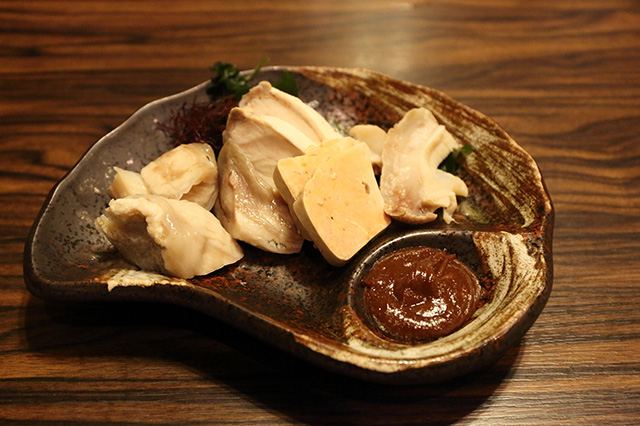
| Prefecture | Ibaraki (茨城県) |
|---|---|
| Region | Kanto |
| Japanese name | あんこうの共酢(あんこうのともず) |
| Reading | Ankōnotomozu |
| Home area | Northern Area |
| Main ingredients | It's an apricot, apricot. |
History and Origins
A local dish to eat with a steamed amcot on its favorite vinegar taste. Anuco is a local product of Ibaraki Prefecture and is highly valued as a quality regular. In the Edo era, it is considered a gift from the Mihodo, and in the Ibaraki Prefecture seacoasting, there has been an abundance of amber fishing. Amko food can also be eaten in other provinces, but the "Akyu" is peculiar to Ibaraki Prefecture. At Ibaraki Prefecture, the dishes with the amcouse are colorful. There is also the theory that this name is attached to the popular "Sing" by tourists because it is made from vegetables and sauces, such as radishes, instead of water, and is melted out of the anuco's liver and is so succulent. In general homes, many uses are used as "Ninji" and "Naiji" pot. Also, in the Edo era, the anchovies' liver was counted among the five rarest fish "The Three Birds," and they are widely known for their winter native food.
When It Is Eaten
Anko is the winter flavor of the Ibaraki Prefecture, named "West Fug," which is named "East Fog." It is eaten mainly in November to March, but especially in December to February, it is said to be delicious because it is particularly rich. The "Yuji Yu" is known for its deep eating habits in the northern regions as a drink bowl. The ant can eat nothing but bones, jaws, and eyeballs, but because it has a lot of skin stains, it is more likely to spin around faster and cut more slowly. In northern Japan, events such as hanging and watching events are also held at the time of flooding.
How It Is Eaten
I'm going to boil the seven ingredients of anuco, and I'm going to eat them with a paste and a tip of apricot liver and an anchorda. There are various parts to enjoy the food. It's often obvious as a combination.
Recipe — Serves 4
Ingredients
- 200 g ankou (下ごしらえしたもの)
- 2 tbsp 1/3 miso
- 40 g sugar
- a pinch vinegar
- 40 g wakame seaweed
Method
- (As a rule, an anucots wash well in salt water, put their lips down on a large branch near the kitchen, pour a lot of water down their mouth, stabilize it, and then cut it down.) Then, when you've finished with each part of the anuco, called seven tools, you'll boil it in hot water and use it for a variety of dishes.
- I'll roast the anchore's liver, put it in a bowl, and grind it well.
- Put in taste buds, sugar and vinegar to make vinegar together.
- You can cut the raw potatoes into size easily eaten pieces, scale them on pans, and sort them out. I'm going to put vinegar on both sides.
Dish data: Ministry of Agriculture, Forestry and Fisheries (MAFF), “Uchi no Kyodo Ryori” (Our Regional Cuisines) database, used under the Public Data License (PDL1.0); translated and adapted from the Japanese original.