Home / Kagoshima / Fukure-Gashi
Fukure-Gashi ふくれ菓子
| Prefecture | Kagoshima (鹿児島県) |
|---|---|
| Region | Kyushu & Okinawa |
| Japanese name | ふくれ菓子(ふくれがし) |
| Reading | Fukuregashi |
| Home area | All within the province. |
| Main ingredients | It's not just wheat, it's rice. |
History and Origins
The "smooth sweets" of native sweets that are steamed with flour, soda and black sugar. It's called "the soda candy" and it's called "the greasy" and it's called "the chicken." In Kagoshima Prefecture, black sugar was strongly rooted as a sweetener in the Edo age. It is believed that the Sasai, who ruled the kingdom of Chibo, was the sole source of the vast wealth of citrus, which dominated the kingdom of Chobo, and Mayumi, who monopolized the production of soy sauce and black sugar. The annual allowance from rice, the price of black sugar at the time, and the exclusiveness of black sugar brought about a sudden recovery of the finances. On the other hand, the island people were forced to put the production of black sugar ahead of the production of daily food, so they began to work their way around the harsh situation called black sugar hell. Over the course of history like this, Kagoshima Prefecture brought forth various native foods with black sugar and other uses. In sweets, such as "knock" is also known as the traditional dish of Kagoshima Prefecture using black sugar.
When It Is Eaten
At one time, they were eaten as guests at festival tables and as tea during farm work. Now it's eaten, especially at any time, and is popular with young and old.
How It Is Eaten
Mixed with flour and baking soda, melted eggs, black sugar, garlic, vinegar and water. I'll pour the fabric in a small bowl, and then evaporate for about 40 minutes until it's fully cooked inside. In some places, you can mix the dough with a busy pumpkin or put the leaves of the Sanin's (moons) on top of it and enjoy the aroma of the leaves. The family, the community, and the stores enjoy various climates. It's a warm, warm, warm food. It's a solid food.
Recipe
Ingredients
- 120 g wheat flour
- 1 tsp baking soda
- 140 g brown sugar
- 1 egg
- 1 tsp vinegar
- 0.5 tbsp はちみつ
- 80 ml water
Method
- The flour and the soda shake together.
- The eggs are melted in bowls and mixed with powdered black sugar, vinegar, garlic and water.
- You divide one into several pieces and mix it up to make it disappear.
- You have to put a cloth on top of it, drain three into it, and steam it with a steamed distiller for 40 minutes. The cap of the steamer is bound to be wrapped in cloth so that water does not fall down on the fabric.
- If you don't stab the four cores with bamboo, and the fabric comes with it, then you'll boil it up.
More About Fukure-Gashi
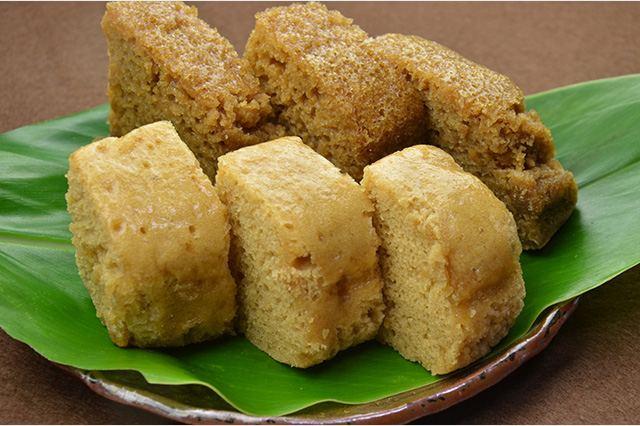
Fukure-Gashi (ふくれがし / ふくれかし) is a traditional confection from the Kyushu of Japan. It is a steamed, brown-colored cake with a rich brown sugar flavor, resembling a sweet bread or sponge cake.
In Okinawa Prefecture, there are similar steamed confections with comparable flavor, often made in a hemispherical shape. These are commonly known as Agarasaa (あがらさー) or Kokutō Kasutera (黒糖かすてら).
Overview
Fukure-Gashi is a traditional Japanese confection with origins in the Edo period, commonly eaten in regions such as Kagoshima, Miyazaki, and Okinawa. Today, it is enjoyed not only in southern Kyushu but also in northern areas such as Fukuoka and Saga, and remains a familiar treat in many Kyushu households.
Most versions are flavored with brown sugar, which accounts for the majority of types. In recent years, however, flavor variations such as matcha and strawberry have also become popular.
Because baking soda is used as a leavening agent, the cake expands to more than twice its original size when steamed. For this reason, it is sometimes referred to as Soda-gashi (ソーダ菓子).
In the Amami Islands, regional names for this sweet include Fukure-kan (ふくれかん) in Amami Ōshima, Fukuri-kan (ふくりかん) in Kikaijima, and Soda-mochi (ソーダ餅) in Tokunoshima. All of these are recognized as referring to Fukure-Gashi.
History
In Kagoshima, Fukure-Gashi is believed to have gradually developed during the Edo period through interactions between the Satsuma Domain and the Ryukyu Kingdom(Okinawa), which was a major producer of brown sugar at the time. This cultural exchange gave rise to a variety of local dishes in southern Kyushu that incorporated brown sugar as a key ingredient.
From the Meiji period onward, Fukure-Gashi was commonly seen in households throughout Kyushu as a snack for children. During wartime, it was also valued as a sweet treat by people in both Kyushu and Okinawa.
Preparation
The basic ingredients for Fukure-Gashi are brown sugar powder, cake flour, water, and baking soda, typically in a weight ratio of approximately 2:2:1:0.05. Using equal parts flour and sugar yields the most desirable texture.
Because using only brown sugar powder results in a very dark color, some recipes substitute about half of it with white sugar, depending on personal preference. Variations may also include replacing part of the water with milk or eggs, or adding ingredients such as honey, mugwort, pumpkin, red beans, or Suizenjina (スイゼンジナ, also known as Handama or はんだま). In Amami Ōshima, a bright orange version is made using white sugar and tankan juice.
The baking soda is mixed into the flour and sifted. The sugar is dissolved in heated water to create a syrup.
The flour and sugar syrup are combined into a batter, then poured into a mold or cake pan lined with cloth. The mixture is steamed in a steamer for 40–50 minutes until it rises and becomes firm.
In some cases, a small amount of vinegar is added before steaming to promote aeration, though this tends to produce larger air holes. Adding vinegar slightly reduces the viscosity of the batter, making it more fluid. When eggs are included, the resulting texture is somewhat firmer.
Text adapted from the English Wikipedia article Fukure-Gashi by its contributors, licensed CC BY-SA 4.0.
Dish data: Ministry of Agriculture, Forestry and Fisheries (MAFF), “Uchi no Kyodo Ryori” (Our Regional Cuisines) database, used under the Public Data License (PDL1.0); translated and adapted from the Japanese original.