Furofukidaikon ふろふき大根
| Prefecture | Aichi (愛知県) |
|---|---|
| Region | Chubu |
| Japanese name | ふろふき大根(ふろふきだいこん) |
| Reading | Furofukidaikon |
| Home area | All within the province. |
| Main ingredients | Big root, red root. |
History and Origins
Aichi Prefecture also has a dark tide that runs through the Pacific and provides a mild climate throughout the year. Also, agriculture has grown from old times, such as the large rivers and agricultural water that are represented by the Toshigi River, the Great River, and the Three Rivers in the Shizura River. The mounds that the Kisawa River created were so large that they were large in sand, so good in water, that they served as root plants growing in the ground, and they were very productive. Three main roots, such as the "heavy root," representing the tail, are recognized by traditional vegetables for the "major root" that is grown in the center of the city and often used in the stew, and for the long ones, which are more than six feet [180 cm] long, are recognized by the traditional vegetables of Aichi Prefecture. It is often seen in supermarkets and other supermarkets, and the blue neck is called the "Miya Major root" and the "The Major root" is known as the root of "The Laots," which is famous for Kanto. Since it's a great place for big roots, it's also eaten very well. In addition to the Japanese taste buds, "Smoo root" is also popular. Aichi Prefecture's "smooth root" flavor is still used with the Aichi Prefecture diet. The thickly boiled moss and its unique crinkle are also good for the root that has added sugar to it in the juice.
When It Is Eaten
The "Smoky Roots" that warms up when you eat are often eaten during the cold season. And at the Chief Chief's temple in Akira City, each year on the 29th of November, we have the Daiku san'a. It's said that the "smooth root" is acted upon by the visitors and that eating this will keep you healthy and not be confined to bed.
How It Is Eaten
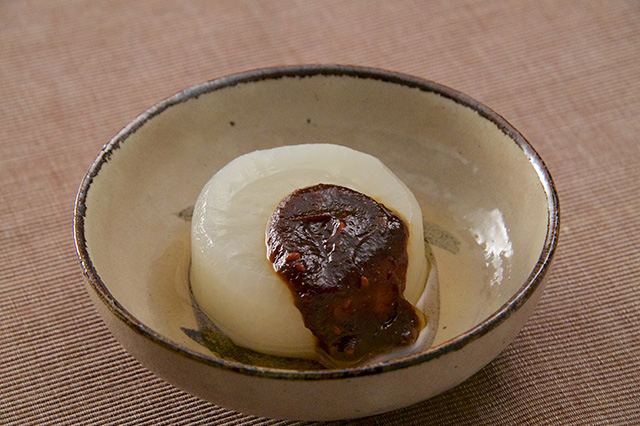
Cut into about three centimeters thick, and covered radish, and boiled in soup, then served with a sweet sauce of red pepper. In the case of the "smooth root," the meat is so fine and hard to boil, the "mal" is good, but even "moon root" is not a problem. The time boiling by the large seed will change. Taste dandelion, based on bean sauce, tastes different in each home. Sometimes they are served as a refreshing flavor.
Recipe — Serves 4
Ingredients
- 1 daikon radish
- Mix: 110 g red miso
- Mix: 4 tbsp mirin
- Mix: 1 pieces ginger juice
- Mix: 1 tbsp sesame seeds
- Mix: 4 tbsp sugar
- 3cm dashi kelp
Method
- The large core is cut into a three-centimeter thickness and shaped.
- Put rice yuzu in the pot and cook it for about 20 minutes.
- Put A ingredients in another pot, and paste them together until they come out of the fire.
- Wash quickly, put it in a pot, add water to the pot until it boils, add gravy cloth, and cook it in a weak fire for about an hour.
- Please put three on to each.
More About Furofukidaikon
Bathing is Japanese food, with a large cut of vegetables, boiled, boiled, and steamed. Winter season.
They are called "Sweet Stake" and "Sweet Sweat" and "Sweet Snacking" and "Sweet Sniffing" and they all eat hot things.
Origin of Name
There are theories in the origin of the name. The maccupist dryed it in the storage room of the plaster bather, and in winter it was dry and difficult. (That the squabbles that you were taught to spray the juice with a large core, and when you did so, they became solid with warm moisture.) At this point I began to taste the root of the mustard so I could get the juice in the sauce.
There are also theories that people who rub the dirt in a steam bath are like "sweat" or that eating a bath is similar to a bath that blows a bath while you breathe. Or that you blow your breath in boiling a bath.
Text adapted and translated from the Japanese Wikipedia article 風呂吹き by its contributors, licensed CC BY-SA 4.0.
Dish data: Ministry of Agriculture, Forestry and Fisheries (MAFF), “Uchi no Kyodo Ryori” (Our Regional Cuisines) database, used under the Public Data License (PDL1.0); translated and adapted from the Japanese original.