Home / Nara / Hagesshōmochikomugimochisanaburimochi
Hagesshōmochikomugimochisanaburimochi 半夏生餅
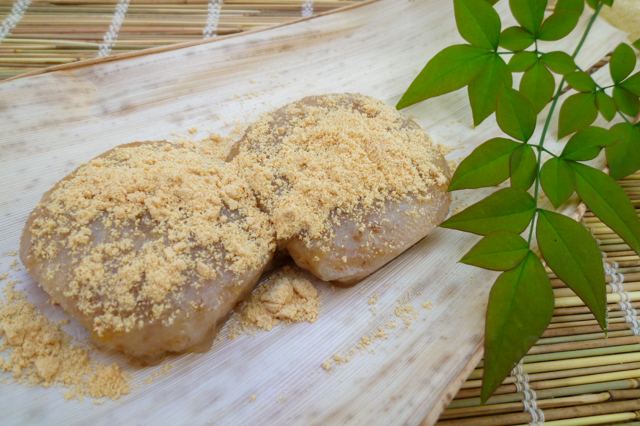
| Prefecture | Nara (奈良県) |
|---|---|
| Region | Kinki |
| Japanese name | 半夏生餅/小麦餅/さなぶり餅(はげっしょうもち/こむぎもち/さなぶりもち) |
| Reading | Hagesshōmochikomugimochisanaburimochi |
| Home area | All within the province. |
| Main ingredients | I'm going to show you how to do that. |
History and Origins
The 11th day, counting from the summer solstice, is called "Sunday Life." In Nara basin, since the wheat harvest was finished when I was "Sunday" and the rice plantings were cut down, I'm going to make and take a rest. "Sunsummer" is a connoisseur that mixes flour and rice. The fact that you're eaten by the end of the plant and the end of the country God of Tata.
When It Is Eaten
I often eat at the end of the plant. In some areas it's said that it's reserved for rice paddies.
How It Is Eaten
"Six-summer" has a hard tooth and good digestion, making it difficult for the stomach to heal because of the wheat.
Recipe
Ingredients
- 2.5 cups fiery wheat (小麦を押しつぶしたもの)
- 2.5 cups glutinous rice
- kinako (roasted soybean flour), to taste
- sugar, to taste
- salt, to taste
Method
- Wash rice and soak it overnight.
- The crushed wheat is a light wash.
- Put a steamer in a steamer with a 1 in it, and put two in it before it is steamed up.
- I'll make three with a sticker. (To leave the wheat teeth on the ground, the wheat is later added to the grinder)
- I'll round it to the right size and dust it with sugar.
Dish data: Ministry of Agriculture, Forestry and Fisheries (MAFF), “Uchi no Kyodo Ryori” (Our Regional Cuisines) database, used under the Public Data License (PDL1.0); translated and adapted from the Japanese original.