Hagedango はげ団子
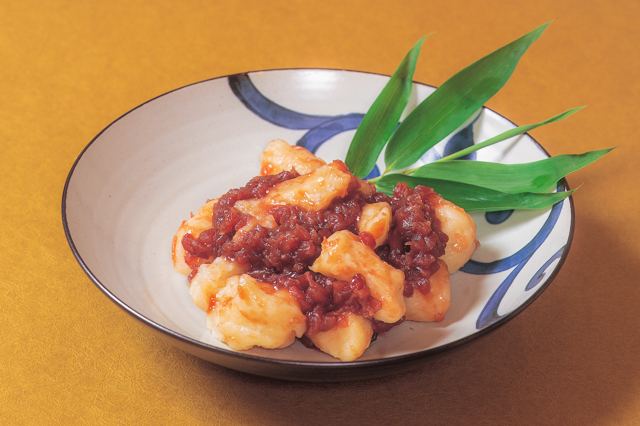
| Prefecture | Kagawa (香川県) |
|---|---|
| Region | Shikoku |
| Japanese name | はげ団子(はげだんご) |
| Reading | Hagedango |
| Home area | All within the province. |
| Main ingredients | It's wheat flour, beans. |
History and Origins
In Kagawa Prefecture, the agricultural season begins in May when we plant rice from June. It's called the "Sun of the Summer" (Sun of the Summer) on July 2th, and "If we don't finish planting the fields by the summer, it'll be half summer" and the farmer will hurry to work before he is late. I was told it was "Small summers" again, and it's also time for the rainy season to begin. On this sunny day, I eat a "Santaji" and get tired for about half a day. The coral is made from fresh wheat flour. It's rich and smells good. The name "scarlets" was named after a half-summer or a sign of a still-breasting appearance on the surface of the coral.
When It Is Eaten
I have a custom of taking rest in the semisummer, making fresh wheat and making coral and thanking nature for its blessings. The created "Santaji" eats with the family dedicated to the god Buddha.
How It Is Eaten
I will boil the little beans or offerings gently with plenty of water. Put in the same amount of sugar as the beans, and boil more. If you add a little salt at this time, the sweets will get more sweet. I make flour in water. Cooking water and dropping a single-sized coral. If the coral comes up, I'll do it. Once the coral is water free, the whole reef will be covered. There is a special flavor in the way you eat food in the area by putting a can in the fabric and baking it with iron, or boiling coral, or rubbing dust on top of the pot.
Recipe — Serves 4
Ingredients
- 400 g wheat flour
- 200 g water
- a pinch salt
- Bean paste: 100 g azuki beans
- Bean paste: water, to taste
- Bean paste: 100 g sugar
- Bean paste: 1/2 tsp salt
Method
- I'll make you an aura. Since the little beans or offerings are soy, they are boiled from plenty of water, and when they are boiling along the way, the water will be cut and then the water will be dropped. Once again, add plenty of water and cook gently. When it is cooked, add sugar and boil it so that it doesn't boil to the mass of hardness. I'll put salt in it and I'll pull the sweets.
- The flour is ground in water, and the fabric is made of hardness to the ear. To boil the water, to boil the boiling water, and to drop a piece of coral, which is the size of a cup of rice. I'll have to stand up.
- Cut the water, and while it's hot I'll have to wipe one of them while it's hot. Akira still clings to it, and when it comes to coral, it is excellent.
Dish data: Ministry of Agriculture, Forestry and Fisheries (MAFF), “Uchi no Kyodo Ryori” (Our Regional Cuisines) database, used under the Public Data License (PDL1.0); translated and adapted from the Japanese original.