Harakomeshi はらこ飯
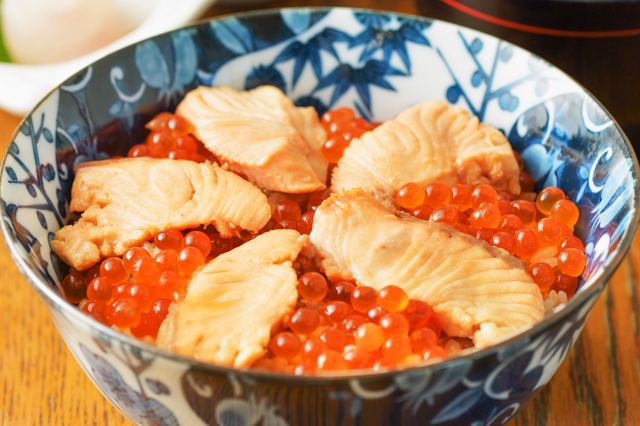
| Prefecture | Miyagi (宮城県) |
|---|---|
| Region | Tohoku |
| Japanese name | はらこ飯(はらこめし) |
| Reading | Harakomeshi |
| Home area | Yuichi City |
| Main ingredients | (Laughter) |
History and Origins
The Miyagi Prefecture has a variety of small rivers, including the North North, the Sound, and the Akashi River, and each fall, the cherry goes back for its eggs. So the catch of white quarks is the top class in the country. There has been a history of protecting the Sakes for over a hundred years, such as doing decompression operations. There are still 20 quarries in the county, and continued efforts to multiply and preserve resources continue. The most famous local dish for the Sake is "Sakikaki" in such a castle. This is also famous for having been donated by the people when Ise officials observed the canal construction on the rough beach. I hear that "mariko" is a word that has come to be called in this region by a child who's hungry on the sad side. Even before I dedicated myself to the temples, I was eaten as a local masturbator, who had caught the sake that came back on the Akashi River. Since the flavors vary from home to home, the word "my" has become the common word in Togo. In modern times, they say that rice, boiled with boiled and boiled rice and soup, each of which is served with a soup, but in the old days it was a mixture of "mixed food." It's a simple look, unlike the leftovers that are being prepared today, but at the Wild Beach Lady's Council, they do various activities to convey the flavor of this original.
When It Is Eaten
The salmon is going back in fall. From September to November. At this time of year, there are many drinks in the Miyagi Prefecture, not to mention the logic here, where "goat" is provided. Also at fall festival, they are served to local people and guests along with the saxophone alaikus.
How It Is Eaten
I made rice in a bowl of rice, or a cup of coffee, or I made it into a loose pumpkin or soup, and I added three leaves to the color. It is often offered along with soup and stew.
Recipe — Serves 4
Ingredients
- 3 cups rice
- 32/3 cups salmon
- 240 g salmon
- 80 g salmon roe
- Mix: 3 tbsp soy sauce
- Mix: 2 tbsp sake
- Mix: 1 tbsp sugar
- Mix: 1 tsp soy sauce
- Mix: 1 tsp mirin
Method
- The salmon cuts off the skin and bones. Cut from the side of the tail, it's hard to boil. Cook the seasoning A in the pot, put on the pumpkin, and use chopsticks to loosen yourself so that you don't stick. When it's cooked, I'll wipe myself out and spread it out into a flat bowl and separate it with the soup.
- The octopus washs water and gently loosens the monkey in the water at 60 degrees Fahrenheit [50 ° C]. Put it in one juice, put it in a cook, stir it lightly, cook it before you start to boil it up, and mix it in a flavor B. The soup is cooked in rice. If you put it in the soup, this smell will disappear. However, if you boil too much, you'll get stiffer, so be careful.
- I'll keep rice for half an hour without washing it. Put two soups and water in the rice and cook it.
- The rice is laid flat on a bowl and placed on top of it, and scatters the chicken.
More About Harakomeshi
The rice is a kind of soup, made of boiled soup mixed with steaming oils and seasonings, and can be cooked on top of rice, before being served to guests, and so on. These are elements in the lunch box, but if they are served in the store, it is common to add more citrus juice.
It's also distinguished from the "Ikea" with which you put a knife.
It's also sold as a station valve in all Tohoku places, such as Sendai and Tsukaoka Station in JR Japan.
It's a salmon and an Ikra.
(Singing the rice rice on a piece of rice) As a local dish in Miyagi Prefectureyang, China, rice is made from the sauce of rice and the rice is brown. If you put a bowl on white rice without boiling it (and other saxophones) and put it on white rice, if you add an eyebrow, it's called "Sake Parent's Child" and so on. If rice is sushi, it's called by various names as a type of sushi.
It's called "Fool Food."
Origin of Name
How much do they call the eggs that are tied to the roots of the egg, but they're said to be derived from the word "snap" in which the child in the belly is born. Now, rice and rice, cooked in saxophones, boiled in soups, is served separately, but it was once a mixture of all the ingredients.
History
At the beach near the river Ayuzu River, there was a great deal of fishing in the sea. It's said that fishermen behaved when fishing big. Iseshima, who became lord during the Edo, visited the area to see if he could repair the river. It's said that at this time local fishermen gave up their food.
How?
Cut the thumb into strips and muscles, loosen the muscle, and Ille. Using such cuts as sesame oil, Japanese wine, sugar, and so forth, I cook the bowl. I cook rice with the leftover soup thinned. Ikea and rice are made on top of rice. It's often used to loosen and mix rice with boiling sauce. In that case, I will put an eyebrow on the rice mixed with the rice. (Because it's a native dish, it's native food, so each household has a few differences in the quality of the meat, the water is light, and the surface is hot.)
In a professional shop, water is often served to the extent that it doesn't get light white in order to remove the fineness, and some stores are accompanied by citrus juice. It's been broadcast on every TV media in recent years and has gained a national reputation. The fall season is in season, but in other seasons, the winters are served.
In the case of the dish known as "parents" or " how much" or "how much do you owe," you can only place them on white rice, but in the case of rice, they also taste different.
As a station valve.
When Hanaoka station was the last stop for the Tohoku train, it was also a popular station for passengers to take on the "Bub" of Aldo Aomori. Also, in the time of the express train line between Owada and Aomori Station, when the train was on the line between Owada and Owada station, it was a diamond that took longer to stop at the train station at 6:50 p.m., and it was sold by passengers who would buy it for breakfast at many times.
Text adapted and translated from the Japanese Wikipedia article はらこ飯 by its contributors, licensed CC BY-SA 4.0.
Dish data: Ministry of Agriculture, Forestry and Fisheries (MAFF), “Uchi no Kyodo Ryori” (Our Regional Cuisines) database, used under the Public Data License (PDL1.0); translated and adapted from the Japanese original.