Hattojiru はっと汁
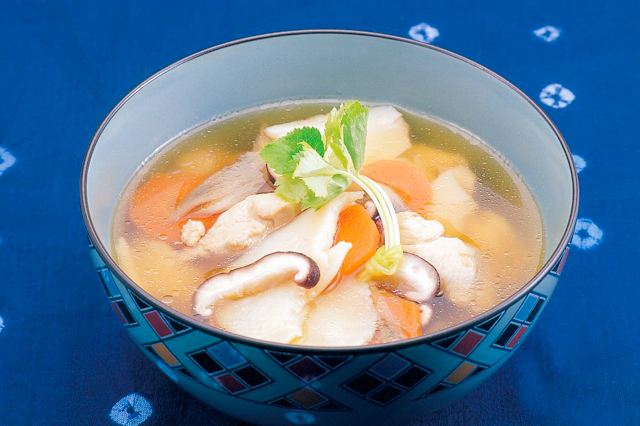
| Prefecture | Miyagi (宮城県) |
|---|---|
| Region | Tohoku |
| Japanese name | はっと汁(はっとじる) |
| Reading | Hattojiru |
| Home area | (Sunward) |
| Main ingredients | I'm going to have to do something about it. |
History and Origins
Ha Ni, it's eaten in the northern district and native food with flour. Add water to the flour, and prepare well until you have a soft ear, and stretch it thinly with your fingers at the right time. It used to be the women's skill to grow thin enough for them to pass through. In the U.S., in the U.S., in the U.S., in the U.S., in the U.S., in the U.S., in the U.S., in the U.S., in the U.S., in the U. The way you eat is as diverse as a cucumber, and it can be mixed with a soup, besides a "soy sauce," which is made into a soup. That history dates back to 400 years ago. In the northern United States, where the rice was a large number, farmers were not able to eat rice well because the rice was also served in the fields after paying the annual price by the "Buy" system. The wise farmers, in addition to rice, were sifting wheat from their fields into flour and boiling it up as "steel." At first, the "aha" was an alternative food for rice, but after many years of effort it became more delicious food and was eaten as a favorite food. However, the lord who had ruled the country over the country, who feared that farmers would neglect to prepare rice, who began to "lawiness" and since then has been called "space" since. The juice and tools of the juice are varied from region to area in the United States and from region to area in the United States. The soup is made from casserole, boiling, and the material is the taste of families passed on from mother to child, such as seasonal vegetables, mushrooms, chickens, pigs, and so on. Even in modern times, local affairs throughout the four seasons have "a lot of juice" in them.
When It Is Eaten
During the four seasons, an event will be eaten. It's also eaten in the year of the year as a family dish.
How It Is Eaten
I put seasonal vegetables and meats in the soup, and then I cut and paste flour in the ear-to-eye frame and put it in and put it in and put it on with soy sauce. It's a big pot and can be used to run around on an event.
Recipe — Serves 4
Ingredients
- 160 g wheat flour
- 80–10 ml water
- 150 g daikon radish
- 50 g carrot
- 50 g burdock root
- 2–3 dried shiitake mushrooms
- 1 green onion
- 4–5 niboshi (dried sardines)
- 4 cups dashi stock (niboshi (dried sardines))
- Mix: 2 tbsp1/2 soy sauce
- Mix: 2 tbsp sake
Method
- I'll pour a little water into the sifted flour and rub it a little softer than the ear. Water is tempered by the quality of flour and by the season. Summers are low.
- I'll be able to spend two hours with weltkin.
- We'll boil a lot of water in the pot, we'll wet our hands, take two with our left hand, and we'll make them as thin as possible with our thumbs and forefingers as thin as four centimeters. When I float up, I crawl over and drain the monkey.
- I'll cut short the carrots and pick them up. I will cut the dried water into a thousand pieces. I'm going to cut the chicken on the side.
- 4 cups of yuzu yuzu, yuzu and yuzu yuzu shi shishi (the sauce of yuzu, yuzu and yuzu) are put into a pot and boiled, boiled, boiled, boiled, boiled, boiled, boiled, boiled, boiled, boiled, boiled, boiled, boiled, put it in order of carrots. I'll taste it with seasoning A.
- If you put three in the box, and then boil the last piece, then you can stop the fire and put it on the bowl.
- If you want to put a bow in, cut it to about three centimeters long.
More About Hattojiru
Add water to the flour, and it will be carefully polished, matured, and thinly stretched fabric will be raised in a dough and cooked into a tight, sticky texture. There are ways to eat a bowl of sauerkraut, beans, and twigs, as well as how to replace it with a soup of local vegetables and meat. (The latter way of eating is called "soy sauce" and tastes it in citrus juice). They look more like the seams than like the carnivores, or the tan.
Origin of Name
There are some roots.
The Lord has made this dish "Creation of the Law."
When the second order of operations, Mihoji Mito and Tokugawa, visited the town of Ibaraki Prefecture, they banned the Kokoji General as part of the financial reform. It's so delicious that the lady who ate said it was lawful for the common people to eat.
The theory of origin is an accent.
From the sweets that existed during the peace period. A rockman's palm is from the fact that when a piece of wheat is refined, it will produce five pieces of flour and three bowls of skin and add to it and become an eight-year-old.
The main dish.
It's similar to a dish with local ingredients, and it's similar to a pepper, and it has different methods of cooking on each piece of land. In the old U.S. town of Miyagi Prefecture, they tend to add special oil to their tools. (See the "Sweet" in similar flour dishes in the north basin of Iwate Prefecture.) (As its name suggests, it is made by pulling the fabric and throwing it into the juice.) There is also a local dish that has been called a "knit" in a bowl of vegetable juice that has been poured into the shape of the leaves. It is common to eat raw potatoes and egomas in hot water, which are boiled in boiling water, and then scattered like cucumbers. These are also called unspoiled readings, such as 'Sweet' and 'Sweet', taking names of the things involved. The bowl in the pan, the soy sauce base, add fish and vegetables, and the bowl in a very smooth and easy-to-sized style, and the bowl in the south of the Iwate Prefecture is famous. Fukushima Prefecture's special product from the Southwest region of Japan, where you can prepare a good amount of florida and rice, postpone it, cut it into molds, and eat it on a soft powder.
Other
In early December, at Miyagi Prefecture climbing, in the city of Tokyo, U.S.A., a national festival is hosting a national festival with all the similar dishes. And as a city project in the United States City of Japan, the short film "Go! In addition, the following year, November, 2017, a series of "Foodless Noisy-Operation" has been released. There's a song called "The "Song of the Love" with a title. In the city of Iwate Prefecture, the tourist attractions attract tourists by saying, "The Hakhous are "awk-ha-ha" and then offering food to the city's restaurant and souvenir store.
Text adapted and translated from the Japanese Wikipedia article はっと by its contributors, licensed CC BY-SA 4.0.
Dish data: Ministry of Agriculture, Forestry and Fisheries (MAFF), “Uchi no Kyodo Ryori” (Our Regional Cuisines) database, used under the Public Data License (PDL1.0); translated and adapted from the Japanese original.