Zunda-mochi ずんだ餅
| Prefecture | Miyagi (宮城県) |
|---|---|
| Region | Tohoku |
| Japanese name | ずんだ餅(ずんだもち) |
| Reading | Zundamochi |
| Home area | Districts |
| Main ingredients | rice, twig beans. |
History and Origins
Miyagi Prefecture has a lot of opportunities to eat chicken, and says that New Year's Day, weddings, law enforcement, funeral services, and other annual services are all eaten. In the past, family responsibilities have been built up, but in recent years more people are buying them. Because they are eaten often or because they are abundant in variety. There are also rice paddies, natto beans and walnuts that have been used with the use of a stick. You can't do that. One of them is a local dish representing Miyagi Prefecture. There are many stories called "sniff" and the story of the Ise-Sun-Sun-Sun-Sun-Sun-Sun-Sun-Sun-Sun-Sun-Sun-Sun-Sun-Sun-Sun-Sun-Sun-Sun-Sun-Sun-Sun-Sun-Sun-Sun-Sun-Sun-Sun-Sun-Sun-Sun-Sun-Sun-Sun-Sun-Sun-Sun-Sun-Sun-Sun-Sun-Sun-Sun-Sun-Sun-Sun-Sun-Sun-Sun-Sun-Sun-Sun-Sun-Sun-Sun-Sun-Sun-Sun-Sun-Sun-Sun-Sun-Y's-S-S-S-Sun-Tung-T-Tung-Y's-S-S-S-S-T-S-S-S-T-T-S-T-T-T-T- By the end of Edo, this duplicating garment had been fixed, so it was said that fruit beans had already been used. There's also the theory that it represented the sound of the beans beating. It's hard to make, so they say that at one time the children would work on picking beans out of the pods and start out with the whole family. The bright green sieve is always seasoned with sugar and salt, but when it comes to it, it often tastes only with sugar.
When It Is Eaten
In New Year's, wedding ceremonies, legal ceremonies, funerals and other activities, it is customary to eat rice.
How It Is Eaten
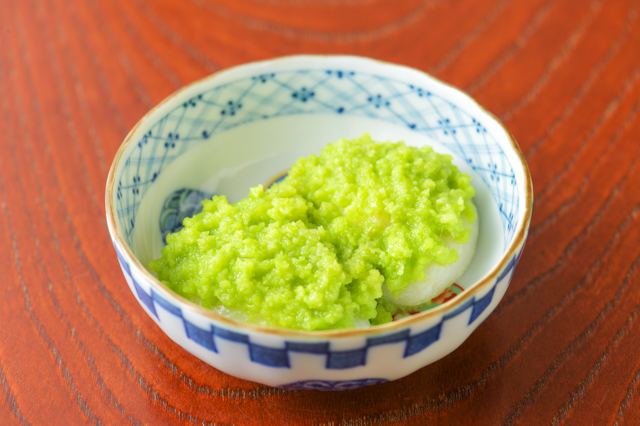
I'm going to eat it with a fresh bowl. It's also popular to put a lot of stuff on a dumplings.
Recipe — Serves 4
Ingredients
- 600 g edamame (さや付き)
- as needed water
- as needed mochi
- Mix: 60 g sugar
- Mix: a pinch salt
Method
- Wash the branch beans and shake the salt a lot. We boil plenty of water in the pot and boil the beans. I'll boil it a little soft, take the beans from the pods, peel it thin, cut it with a rough board, then rub it well in the bowl.
- Add flavor A to taste and water to make it easy to make fun of.
- I'm going to take care of it.
More About Zunda-mochi
Zunda-mochi (ずんだ餅) is a type of Japanese confectionery popular in northeastern Japan. It is sometimes translated as "green soybean rice cake." It generally consists of a round cake of short-grained glutinous rice with sweetened mashed soybean paste on top. In some varieties, the green soybean paste entirely covers the white rice cake. In all cases, immature soybeans known as edamame are used. A closely related product is "kurumi-mochi", which uses walnuts instead of soybeans.
Etymology
There are various theories about how the term zunda-mochi arose. According to one theory, the word zunda traces its roots to zuda (豆打), which refers to "bean-mashing." Another theory suggests that zuda is derived from the jindachi sword of the famous warlord Date Masamune, who reputedly mashed beans with his sword during the Warring States period. A third theory holds that a farmer named Jinta came up with the idea for this dish. Reputedly, the warlord Date Masamune liked this farmer's idea and named the product "jinta mochi." Terms of zunda-mochi have evolved into several variants in diverse parts of northern Japan. Moreover, in some dialects the word "mochi" itself is pronounced "mozu".
History
Zunda-mochi has a long history dating from at least Japan's Sengoku period. It is mentioned briefly in the diary of Prince Gosuko-in (1372–1456). Reputedly zunda-mochi was a favorite dessert of Date Masamune. It is perhaps for this reason that zunda-mochi is often regarded as a speciality of Sendai. At one time zunda-mochi was made by rice farmers soon after their summer soybean and rice harvest. It was likely used as an offering during the traditional obon and higan festivals. Eventually, it became a traditional sweet for various occasions such as weddings and funerals in some sections of northern Japan.
Today zunda-mochi is manufactured and marketed in many forms. For example, zunda-mochi gift sets are sold by Japan Post, the nation's largest mail carrier. Moreover, zunda-daifuku, which could be described as the inverse of zunda-mochi with the sticky rice on the outside and sweet bean-paste at the center, is popular in Miyagi prefecture. A related product is zunda cream dorayaki, which might be described as two pancakes with a creamy sweet soybean filling. Zunda mochi ice cream is available in some parts of Sendai city and in 2019 Häagen-Dazs even released a limited edition of that product. Since 2009 Nestlé Japan has marketed "Zunda-mochi" flavor Kit-Kat bars in some parts of northern Japan. It is also possible to buy zunda-mochi shaved ice and milkshakes not only in parts of Japan, but also Hawaii. Zunda-mochi related foods continue to evolve, often fusing elements of Western and Japanese cuisine.
Text adapted from the English Wikipedia article Zunda-mochi by its contributors, licensed CC BY-SA 4.0.
Dish data: Ministry of Agriculture, Forestry and Fisheries (MAFF), “Uchi no Kyodo Ryori” (Our Regional Cuisines) database, used under the Public Data License (PDL1.0); translated and adapted from the Japanese original.