Heshiko へしこ
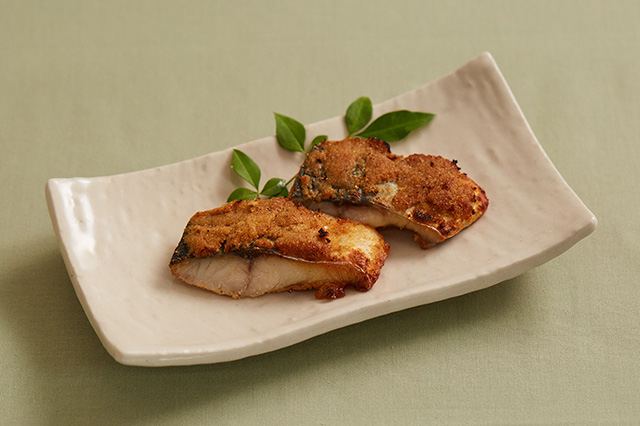
| Prefecture | Kyoto (京都府) |
|---|---|
| Region | Kinki |
| Japanese name | へしこ |
| Home area | Postponing Areas |
| Main ingredients | Sava, Illusion. |
History and Origins
Kyoto, which often gives the impression that the ocean's prosperity is not possible, but the region that faces the Japanese Sea has the effect of streams that flow in the mountains of the opposite warm currents, the latter islands and the mountain ranges, and it is a good fishing resort. For example, the fishing industry that is being produced with Kyoto Prefecture is a vast variety of fishing operations, fishing in the ocean, fishing in the ocean, fishing in the sea, fishing in the sea, fishing in the sea, fishing in the sea, and fishing in the sea. The fish fish are being fished, such as the zewish crab, the triglycera and the burly. Fishermen have the custom of drying fish for their own use at the time of the flood, and the tradition is still passed on. Dried, boiled, dried algae and other items are the most famous products of post-operative surgery. It is the "kiku" that is eaten in the latter part of the Itahara region. The "sumi" is a food that preserves fish, such as sabbaticals and eagles, soaked in soy sauce and salt for a long time. There are many theories that the name comes from the name "screw" among fishermen who say that putting fish in barrels "stuff" is "stuffed" and the word "sucked" has been reduced to "suck." The "kashiki" has more flavor than the raw Shebas that were made before the process. Unique flavors and salts go well with rice and liquor claws. The Imoto-town "kaku" is made up of a country that has a good fat ride and a Canadian and Norwegian Saba.
When It Is Eaten
From autumn to winter, they are soaked in rice plants, and they are eaten for six months to a year. In the past, it was a well-known food for each family, but now it is made up of fishing and water companies that make up a large part of it.
How It Is Eaten
Cut the rice lightly, cut it into the right size, and then cook it lightly before eating. If you're worried about the citrus, you can wash it with water before it's cooked. The baked sushi is usually served in tea or in rice. If it is cooked too much, it gets tough, so I take care. A "kami" can be preserved for a long time. If you cook and loosen and store the surplus, you can use it for a variety of dishes.
Recipe
Ingredients
- 20 kg mackerel
- 3 kg salt
- Mix: 3 kg rice bran
- Mix: 100 g chili pepper
- Mix: 1.8 L sake
- Mix: 200 ml white Ricker
- Mix: 200 g sansho berries (生)
Method
- Sava will take her head and her entrails, put two pieces of salt on them, shake as heavy as a fish, and hold it ten days behind her.
- Mix all the ingredients of A together.
- I'm going to stick it in a bag of goods, side by side with A, fish, A, Fish and A.
- I'm going to put the white car on the table and put it in a cool place.
- I'll be back in six months.
More About Heshiko
The Japanese Japanese Japanese are salted and salted blue fish and then boiled native food and water products. Fukui Prefecture Young X and Kyoto Prefecture latter, Ishikawa Prefecture traditional food, prized for winter winter preservation. In December of 2007, I was selected as "The Powder of the Powder" and one of the rural villages's native food pickers.
It's considered a rare product and raw product. The type of fish to be swallowed is typical of the Saba, but it is also used by the eagle and the fish.
Source of the Language
From the way the name comes from saying that the fisherman "drives" the fish into a barrel, from the idea that the fish were "screw" and the "screw" became "screw" and "scrolling" the water that would appear when the fish are salted, " and from the idea that this is an accented expression, "the water that comes out of the water is called "residious" in Inne language, " and "restained" in the language of the word "resistance," which is derived from the word "responsible" and "resistible" in the word "sistance of the taste" ."
Processing
In modern times, not only salt and citrus, but also fish that is cooked after salting, and so on. Depending on the ratio of these duffel mixtures and the climate of the region where they are produced, the tastes vary in subtle ways from manufacturer to manufacturer. Lightly light fireed rice is good for tea and wine. If it's fresh, you can also eat it with a knife. It's salty, but it's deep in salt, so it's also used for pasta and sandwiches and so on.
It is said that, as a dish for making fish, there were Hokkaido leeways and thick shores, and at the base of the room, there were nicins and masmas, which spread across the land by means of the north pre-ship.
The love affair on the beach.
There is a rare character named Mizuko in the beautiful town of Shiba in the young district. In that town, under the decline of ocean bathers, we decided to discuss the local diet for local cooking committees since 1997 and put the emphasis on the connoisseurs. I'm going to use it for my cooking.
On April 24th, 2015 (pronounced 2015) "a small cultural heritage linking the sea and the city - a small and a small part of the city" - was identified as a Japanese heritage.
Characteristics
History
In the beautiful beach towns on the sea, there are various fish cultures that use rich sea products. The most popular of them is the kite. In the homes of Tobashima, fishing villages are said to have been eaten all year round, not to mention in rural areas.
The winters of snowfalls, because many farmers were in the country, because of the season, because of the times when fishing was too busy to go fishing in the villages, and because of the great challenge of keeping their food in the winter season, the kites were valued as a food reserve. The easy preservation of food, using materials familiar to us in a local area called U.S. and Saba, is another factor that has been absorbed by the Japanese mushrooms.
At Terrace Town, they were not just sabbaticals, but fugus, silicas, hataka, and Tobi fish, and so on. "You can eat a chicken four times." "It's a well-known food in the community, so much so that it's like, "it's smelly on top, and it's so hot on the bottom, and it's so hard to eat, it's so hard to eat, it's so hard to eat."
Processing
We'll wash and clean the blood with a mixed sabbatical. I put salt on both sides of the barrel and salt on both sides. I'm not sure if you're going to be able to do that. It's important to use when you're packing books. Booking mixes salt in rice. In each home in town, according to the manufacturer's shop, the process is different. I'll add flavors such as soy sauce, garlic, peppers, and so on. I'll finish it with a proud cherry that I think is delicious.
According to a hearing survey of the museum generals and Mizuko Northamura, which is located in Tobashima, Japan, the following is the way you make this house-made ladder:
I'll prepare a big ball or a bat and then pour salt into the sand. As if it were folded over the entire snail, the amount of salt was placed on the scales so that it would be white and white instead of a single gram. Put the opened body back in one piece, press it through the tub with a tight grip, and wrap it up in place for ten to two weeks, and the salt will pass through you and come out. With it, I wash the salt that I leave in the tub without melting, and I open myself up in the box overnight and put myself to sleep and not water. When the lye comes out in a large pot and is carefully pressed in a sultry, it produces a little more fluid than the stylus. Each house has its own juice, which makes it proud of itself. In the North Koreans, it makes it their own. I'll put a sabbatical in this soup, open the skin and place it on top of the bowl, and then I'll stick it in a bowl without a second thought. I'll shake my bill before I sink it into the bottom of my bowl and repeat it and follow it without delay. Some people say that the name "spoke" came from a strong push. In some homes, they are lighter and heavier than the first, but in the North Village they use the same weight as in the beginning and add the fluid if the succulent has been soaked in the pot. Half of the heavy stones are going to be forced to the point where they can be soaked in water for about ten months.
How to Eat
As a process under process, you can first spread it out out of the bag by hand. I'm going to have to clean out the rice bowl that is full of it with my hands, and keep it alive without throwing away the rice bowl that is full of flavor. I'll distribute two mushrooms that are on the back of my back and cut them into easy- to-eat sizes. If you can't eat it at once, you can wrap one piece in a lap and put it in a zipper-stuffed storage bag and freeze it.
When the rice bowl is cooked in a weak fire together with the cucumbers, the rest of the bones will be boiled and the juice will produce this delicious juice. When cutting, the rice bowl burns easily, so you can cook both sides by adjusting the fire force. When eating raw, the abdomen is knife-knited, peeled back, and sliced into size that is easily eaten.
Traditional Action
To protect traditional food, to keep the community active, to connect to tourist PR, in May 2005, Tobay City registered as "This City of the Snow" and sold "This City of Beauty" nationally."
Since there were fewer tourists to Shiba Town, as well as the number of tourists to Shiba City, Mishima City has set itself up as a tourist plan. To make one of the pillars of tourist vision a masterpiece, in 1999 I set up the "Systems of the Great Beach Foods Commission" and edited the "Symphant Sculptor." In the editorial, members of the Tourism Society in Shibatown, and the generals of the hotels and inns, argued over the fine dishes. The Japanese traditional diet is young and the Japanese traditional diet is the theme of which they appeal to you all year round.
Also, by studying the study of Professor Fukui Prefecture Red Hanell, ZQQ 886X, compared to the jaundice, with 2.5 times as many amino acids, five times as many Peptide to suppress blood pressure, and the effect of reducing blood pressure has also attracted attention as a health improvement food. At the "Young Shiraji Chooji" held in 2003 (Young Shiraji, Japan) it was the first time that a cherry from a beach flew to visitors from the interior of the province, and it was the first time that the "Nao of the Beach" was known.
The cherry tree on the beach is pressed into two stages. It adds to the flavors used in the book, such as soy sauce, peppers, peppers, and so on, and adds to the flavors that are different from the rest of the world, and it has become a popular secret.
Mizuki City applied for a commercial registration of "This City" in 2004. The registration was granted in May 2005. In 2006, when I was a student at the University of Michigan, I was asked to do something about it. The tourist force, with its administrative and private hands, has made the release of "this City of Beauty" throughout the country.
Akiko of the Women's Group's Association's 'The Fabulous' was won at the Food Aprison contest, the President's Prize, and the "The Chiba' of the Great Traveler' Academy for the first time in a major travel company.
I was very enthusiastic about my research in cooking. The generals of the beach town and the museum were united, thinking of sandwiches, Chijimi, Calpato, and pasta with their toys. The talent man's moustache speaks with his favorite pasta and proposes to name him "Kincchino."
So this production and production in 2003 increased from 146,500 per year to 8,240,000 per year, and made up about 41.2 percent of the palm production in Fukui Prefecture.
In other than the menu served as food for school meals in elementary school schools in Tobashima, elementary school students are doing this PR on their school vacation.
In June of 2015, we're trying to build a brand-up town, such as the "Creaking Society" by all the cherry producers and individuals in the beautiful city of Shiba.
Text adapted and translated from the Japanese Wikipedia article へしこ by its contributors, licensed CC BY-SA 4.0.
Dish data: Ministry of Agriculture, Forestry and Fisheries (MAFF), “Uchi no Kyodo Ryori” (Our Regional Cuisines) database, used under the Public Data License (PDL1.0); translated and adapted from the Japanese original.