Home / Kyoto / Taikaburashōgoinkabutotainonimono
Taikaburashōgoinkabutotainonimono 鯛蕪
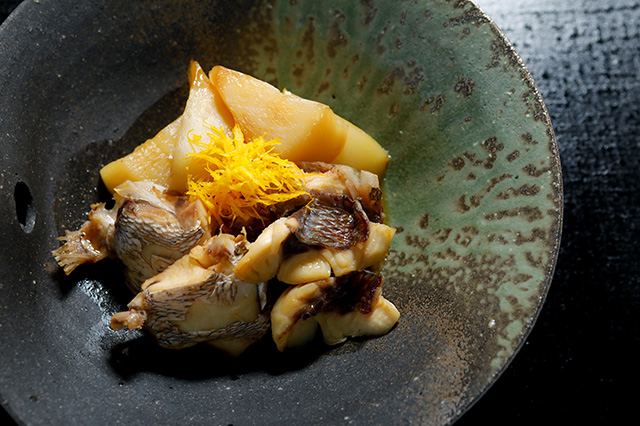
| Prefecture | Kyoto (京都府) |
|---|---|
| Region | Kinki |
| Japanese name | 鯛蕪/聖護院かぶと鯛の煮物(たいかぶら/しょうごいんかぶとたいのにもの) |
| Reading | Taikaburashōgoinkabutotainonimono |
| Home area | Kyoto City |
| Main ingredients | Ty, the sanctum. |
History and Origins
The sacrilege and Thai stew is an old-fashioned native dish eaten in Kyoto City. Winter's traditional dish with the flavor of Thailand and the sweet taste of its top. It's a combination of Thai and wear and a good match. "The sacrilege worn by the Japanese people" is one of the traditional vegetables in Tokyo. It is believed that farmers from the Sequoia Abbey took seeds from the cove that were grown in Shiga PrefectureXXZQX0ZQZQ099XXXXXXXXXXXXXXXX and started growing. A different shape of the fruit is characteristic of the general suit, but this is said to have improved. It's big, it's from four to five kilograms, and it's the largest suit in the country, and it's known for its soft and elegant taste. During the year of Tokyo, the "1,000-stamped" with the sacred wards was generally known to the public, and it has grown well. In growing them, the grower has a variety of manuals, and he has a hard time making them beautiful, without cutting away dirt and compost. In the Yukaoka area, which has become a prominent center in the Holy House, production began shortly after the war. It is said that morning and evening temperatures, peculiar fog, climate and climate climate conditions, and so on, are good for growing conditions and have increased productivity. Most of the "sucking" produced at Kyoto is a coat that is worn in this area. Kyoto Prefecture has determined that vegetables grown in the government from old age are "Kinya traditional vegetables" and are working on Bursham. It has defined the branding of a branding house, pre-Kinai, the entire government, and the removal of mushrooms and cida, including the mushrooms.
When It Is Eaten
In the sanatorium, it's cold in late August and warm in late September, and it's harvested in mid- November and late February. At that time, the restaurant and other things will be served as a "tosser."
How It Is Eaten
I cook Thailand's meat with the flavors, such as soup, wine, lentils and soy sauce, and so on. If the mold is soft and boiled, then put it on a plate and eat it before eating. It's more delicious than having a soft flavor when you cut the skin into a slice before eating it. The leaves of the mold can be used for condiments and other purposes.
Recipe
Ingredients
- 1 sea bream
- 1(600 g)12 turnip
- Mix: 2 cups dashi stock
- Mix: 2 tbsp(3%) sake
- Mix: 3 tbsp(4.5%) mirin
- Mix: 2 tbsp 1/2(0.6%) light soy sauce
- 1 yuzu
Method
- After waving salt on Thailand's head and body, a lot of boiling water is poured on it, and the protein on the surface is hardened.
- The running water cleans out scales and so on.
- The mold is cut in a corner of about three inches, and it is boiled soft in rice rysme, and then it is boiled in a juice with a tie, and then it is boiled.
- Finally, I'll add a lot of abscess.
Dish data: Ministry of Agriculture, Forestry and Fisheries (MAFF), “Uchi no Kyodo Ryori” (Our Regional Cuisines) database, used under the Public Data License (PDL1.0); translated and adapted from the Japanese original.