Hinezushi ひねずし
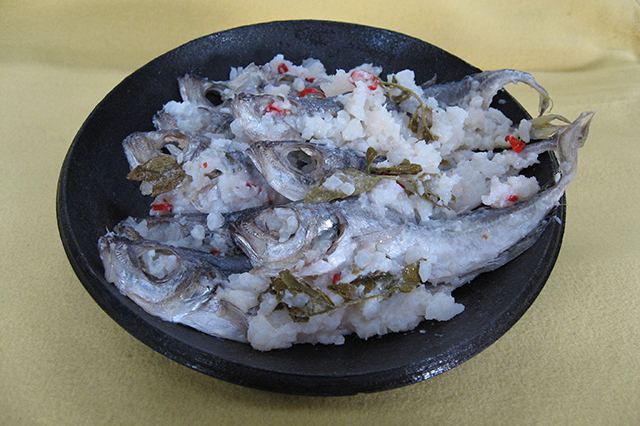
| Prefecture | Ishikawa (石川県) |
|---|---|
| Region | Chubu |
| Japanese name | ひねずし |
| Home area | Faber Area |
| Main ingredients | (The fish and the fish and the sauba) |
History and Origins
"Sweeting" is an cereal that has salted fish soaked in with rice. The areas of depth climbing, such as Iwashima City, Water Town and Hijiyama, are the main source of the country. The mountain range in the Hajijiji district was old and has been reduced to a shallow region where the rice needed for the "single" was grown. The river streams that flow in the area provide fish for the rivers such as Ayu and Uguy. For the mountainous region where traffic infrastructure could not reach, the "frozen" was not only a food reserve but also a valuable source. In some areas, it is sometimes called "sw." It is not certain when they started eating, but in the Edo-adjusted "Precise of the Nations," we can see an description of their existence. It's estimated that at that time, customers were acting as valuable items, at the time of the Memorial or festival. It is said that salted and ripeness can change the flavor and taste of the taste, as well as the taste of the condiment. In recent years, river fish have become less available than they used to be, so they don't have to be stored or cooked. That's why it's common to use fresh seafood as a "sniff." Fish and other fish are used, such as ducks, macabres, and macabres, but fish are the main sources of fish.
When It Is Eaten
Besides the celebration, they were eaten at summer festivals, fall festivals and so on. In the spring, salted age will be packed and matured in rice, leaves from the mountains, red pepper, and so on. If you mature for about a month or two at the festival season, then you can eat the extracts as well as deliciously. In the meantime, I'm making fewer opportunities at home, but it's sold at supermarkets and souvenir shops.
How It Is Eaten
There are various ways of making and not unununified in each household. You can't check the inside of the tub until you open the drop-off immediately before eating. It's also called zygote food, and even if the same person is swallowed, the flavors change according to salt and climate. When you mature, you can take it out of the tub and cut it into easy-to-eat size and eat it as it is. It has a unique smell and flavor, but many people become jealous when eaten.
Recipe — Serves 20
Ingredients
- 5 kg horse mackerel
- 2 kg salt
- 1 rice
- 500 g sansho leaves
- 70 g red chili pepper
- 2 1/2 cups vinegar
- 15 kg weight (for pressing)
- 1 桶
- 1 落としぶた
- 1 cups4 g) salt
Method
- Pick a fresh medium and take out your head and your stomach, and wash the water three times or so.
- Place the water in the tub and use the salt. Put the salt on top of it. This is a series of salts that are wrapped in, crushed, and crushed, and heavy stones.
- After about a week or so, I take it out, wash it quickly, wash it up, and water it.
- I'll split the leaves in small groups. Red pepper cuts seeds into two millimeters.
- If you cook rice or move it into a cage, you add 50 grams of salt and mix it together. It will cool down.
- We spread a full bowl of leaves on the bottom of the tub and played the rest of the salt to suppress the bluish smell, and then scattered the red pepper on top of it.
- Now, before you like to cook cold rice, wrap it up, put vinegar on your hands, and hold it tight.
- After the water is steamed, the azi is placed in a cast without waiting for it.
- I'll repeat the six-year-old pattern of leaves, red pepper, rice, and azu.
- Drop it and put a 15-pound heavy stone on it. I put on a Nickon bag, wrapped the paper around the tub, and spent two months in the cold, waiting for the sprout.
- After a month, throw away all the water that comes up.
- After you take out the amount you eat, put salt around the heavy stone to prevent corruption. Every time I pull this out, it happens.
Dish data: Ministry of Agriculture, Forestry and Fisheries (MAFF), “Uchi no Kyodo Ryori” (Our Regional Cuisines) database, used under the Public Data License (PDL1.0); translated and adapted from the Japanese original.