Hōchō 鮑腸
| Prefecture | Oita (大分県) |
|---|---|
| Region | Kyushu & Okinawa |
| Japanese name | 鮑腸(ほうちょう) |
| Reading | Hōchō |
| Home area | Oita City Next Door Area, Ono River region |
| Main ingredients | Cypriot |
History and Origins
It's just a long time ago, grain growing based on fields has grown. The ground flour that ground the wheat was used by such dishes as "sniff" and "sniff" and "sniff" and "sniff" and built up the ground for the powder culture. I put it in a dish of noodles. When Kyushu's warhead friends, or Oysters, gave up what they had to do with thinning flour like an abalone intestines, it was said that the entomology of the abalone - loving seams was very much appreciated by the entrepreneur. It is thought that after that, it was rooted in a large amount of wheat - growing area, the Duquesto district. A lot of local people like different tongue textures and food. There are similar dishes with Yamanashi Prefecture's "heavy," but there is also a theory that this "heavy" has come across as "heavy" by means of his accent.
When It Is Eaten
Although "coo" and "scarp" are all local food, it is one of the big features of the masoleum, which is to add more than two meters by hand. It took so much effort and effort to get it to eat, that it wasn't something to eat on a daily basis, but it was behaved like a tray or a festival or something, when we were hosting guests.
How It Is Eaten
Mix flour with salt and water, and by sleeping for about an hour, you can increase the gluten and keep it long. After boiling in hot water, it's by holding it firmly in cold water that it's elastic and it gives you a sense of bite. And it's also very good to eat with citrus citrus. I got it from a very special product, dried dried rice, but I'm going to add some flavors to the juices, so I'm going to put some salts in the juice, but then I'm going to put them in a mixture of sweets, sweets, and onions. The noodles are over two meters long, so I'll cut them into pieces. It's delicious to boil with chicken, chicken, chicken, potatoes, carrots, radish and so on.
Recipe — Serves 12
Ingredients
- 1 kg wheat flour
- 35 g salt
- 8 cups water
- 30 g dried sardines
- 20 g dried shiitake mushrooms
- 10cm kelp (konbu)
- 5–10 g bonito flakes
- 1 cups light soy sauce
- 3 tbsp mirin
- a pinch salt
- sesame seeds
Method
- Add salt to the flour, mix it, and add water little by little.
- I'm often glancing until I'm as hard as an ear.
- I'll wrap it in a weifkin and put it to bed for 15 minutes.
- When the fabric is laid down, it's going to rip off the stick.
- I'll make sure that every one of them becomes 20 grams.
- I'll leave it welfkin on. Each one of these will become a single noodles.
- I'll hold them in my hands.
- If you don't put your energy into it, it won't work.
- The point is to make the overall thickness equal to the width of the whole thing, and to make both ends look different.
- I can sleep for another 20 minutes.
- I use my fingertips to twist them.
- I turn around, and I just keep going.
- It's about two meters long.
- I'll hang it around my knees and my arms, so I have to wear a tie.
- The dried noodles are rolled twice in the pan.
- I'm going to take another little weight from here.
- I'll put it in boiling water and boil it. If you don't boil the rice quickly, you'll lose the rice. )
- I'll pass the water.
- When you boil it up, you take it with three hands.
- Wash in cold water.
- I'll have to put it together one by one.
- I'll keep dry water, cloth, and cucumbers in the water for a while.
- It'll be cooked in a weak fire, and before boiling, we'll take out the cloth and boil it for ten minutes and put it in a pot and stop the fire. When the cat's face sinks, I can put a frickin' stick on it and taste it with a flavor.
- I'm going to have to make a dish for you.
- I'm putting the flavor on the bowl. When the sponge is stretched, crush it a little.
- Just before eating, I poured water on the enema, poured it into the bowl, and the soup was finished.
- Since the enema is long, I'll cut it with chopsticks.
More About Hōchō
The pyre is a native dish similar to Chung, which is passed on to the region of Oita PrefectureZQ135X. It's sometimes written as a broom with a proper name. As "door-to-door oyster" on December 7, 2018, it is designated as Oita City's non-citizen culture.
Overview
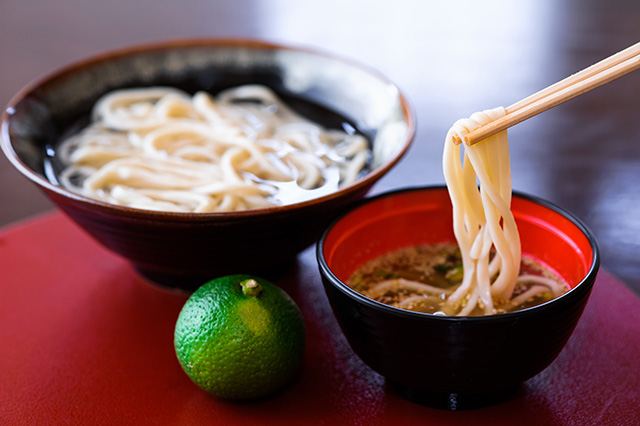
I'll boil the long noodles that I made out of wheat flour, boil them, boil them, mix them with rice, wine, and pepper, add soy sauce and so on, and then soak them in a bowl that has been narrowed down. I use ginger and onions as a flavor.
The noodles lay some of the dough that they made with flour and water and salt and then roll from the edge on a later board so that it doesn't cut in the middle.
The shape is thicker than the noodles and cold and wheat and is made flatly like a sponge. The length of the noodles is really over two meters each.
It's polite to bite and eat on the way, since it's too long to eat properly.
Origin and history.
It was believed that Omodaka, a prominent friend of the Japanese War, loved the Japanese government but that the troubled household, without a certain year's lack of food, would have made flour like the intestines of the haiku.
Also, in 1830, the "Single Book" by Takamura Komura (Shoji Kozamura) suddenly arrived and tried to make the post-couple line into the juice of the casserole, but because of the lack of sufficient volume, it was translated" by "single" because of the fact that the flour was mixed together into a common form like the intestines of the seams.
Also, in 1775, The West Homing Book by Old Matsu Taku, says that "Wuth" was made in the vicinity of what is now Oita City. In 1833, the permanent "Sexual Foods" magazine explained that"there is a proboscisus, and that the flour is spread out in salt water, and is boiled and eaten with soy sauce.
Text adapted and translated from the Japanese Wikipedia article 鮑腸 by its contributors, licensed CC BY-SA 4.0.
Dish data: Ministry of Agriculture, Forestry and Fisheries (MAFF), “Uchi no Kyodo Ryori” (Our Regional Cuisines) database, used under the Public Data License (PDL1.0); translated and adapted from the Japanese original.