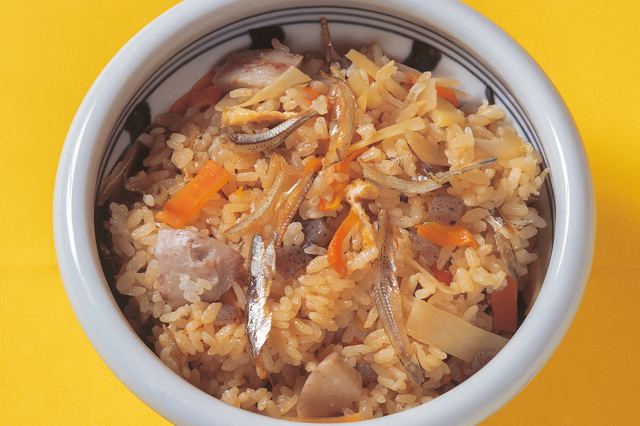
Irikomeshi いりこ飯
| Prefecture | Kagawa (香川県) |
|---|---|
| Region | Shikoku |
| Japanese name | いりこ飯(いりこめし) |
| Reading | Irikomeshi |
| Home area | I'm going to give you a round of applause |
| Main ingredients | I'm going to have to go back to the beginning. |
History and Origins
"Sakiki" is cooked rice with a boiling dish called rice." In the Inland Sea of the Seto, there is a lot of fishing in the sea, and the Ikeu area, especially in the Kagawa Prefecture West, is known as this large area. Making mushrooms is important to the quality of life. The sea eagle caught in the fish is carried to Iseshima in only 30 minutes. The system of consistent development of the same company from this fishing to processing leads to this production. From the fish catch to the head of the store, we have a day and a day and three. Although it's a fast-tempered fish, I'm very careful about raising water. To avoid hurting fish, to control the amount of fish in the net, requires skilled skill. The mushrooms produced in the calm Inland Sea are rich and tasty and produce a strong juice. In Kagawa Prefecture, soup is essential to Japanese cooking, and it is used in many home dishes. Also, I often eat as a stew or a chicken, and it's one of the main ingredients that sustains my culture.
When It Is Eaten
As a daily diet, they ask for seasons.
How It Is Eaten
Cut yourself out of this head and belly. This head is soaked in water and takes the juice from it. I cut the tools and rice, rice, rice, rice, soup, and flavored sauce in addition to the sauce pot. Although many mushrooms and mushrooms are added, the materials vary according to vegetable times and family tastes.
Recipe — Serves 20
Ingredients
- 1 rice
- Mix: 6 tbsp soy sauce
- Mix: 80 g dried sardines
- Mix: 1 aburaage (fried tofu pouch)
- Mix: 140 g carrot
- Mix: 400 g daikon radish
- Mix: 400 g taro
- Mix: 1 konnyaku
Method
- I'll wash the rice about 30 minutes ago.
- A fox breaks its body, except for its head and stomach. Keep your head in the water, and you will take the juice from it.
- Vegetables are cut into five-millimeter half-millimeters, and then re-scanned, oiling, carrots, radishes, and a short one-inch book.
- I'll add to the cooking pot, rice, rice, soup, and water to the full, and add three ingredients and a taste-a.
- Since rice is more delicious at once, we've been working on rice in one piece, but we can adjust it to the number of families we have.
More About Irikomeshi
The rice is rice cooked with rice.
In Kagawa Prefecture, the oyster eagle has been boiled to dry and this rice rice has been eaten. Ichishima, especially in the West Praise District, is known as this large island, and rice is made from every season. Also, because of the high nutritional value of calcium and calcium, it is also adopted into school meals.
This soup is essential to Japanese or domestic cooking, and is often eaten as stew and cucumbers, and it is one of the main ingredients that sustain Japanese food culture. Moreover, making mushrooms is important in the vivid way, and the oyster eagle caught around Iseshima can be fried and raised in about half an hour. This soup, which is made with this fresh oyster, has a delicious flavor that is also distinctive and must be eaten in a pneumatic way. Remove the head and belly, put the head in the water and take out the juice, put rice in rice, put it in rice, add the juice, add the tools of mushrooms and gobou and stir it up.
Text adapted and translated from the Japanese Wikipedia article いりこ飯 by its contributors, licensed CC BY-SA 4.0.
Dish data: Ministry of Agriculture, Forestry and Fisheries (MAFF), “Uchi no Kyodo Ryori” (Our Regional Cuisines) database, used under the Public Data License (PDL1.0); translated and adapted from the Japanese original.