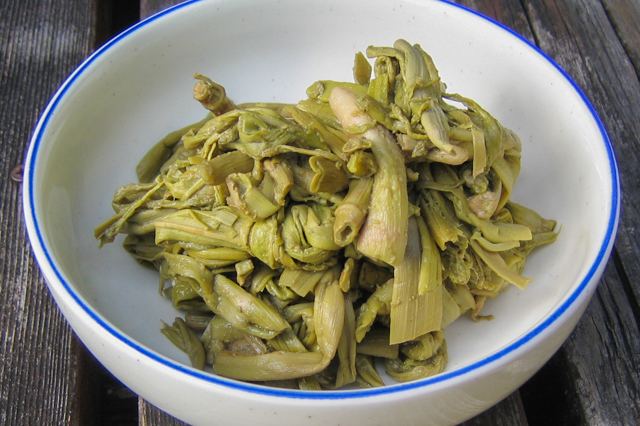
Itadorinonimono いたどりの煮もの
| Prefecture | Nara (奈良県) |
|---|---|
| Region | Kinki |
| Japanese name | いたどりの煮もの(いたどりのにもの) |
| Reading | Itadorinonimono |
| Home area | All in the county, center of Yoshino, midtown. |
| Main ingredients | I don't know. |
History and Origins
The "go" is a multi-year-old plant in the Tade department. It grows in many parts of Japan and is an essential food for spring vegetables. The birds are also known as "gangs" and "kangs" and "kangs" and the traditional favorite foods of Yoshino University's northern northern village are written in the "gangs." The name of the hen is derived from the fact that when it comes to injury, the pain is felt by putting it in the area. Since the chicken has a strong acidity, we can take a little bit of it and use it for cooking. A hen who has made a break can be salted in a barrel for a week in a refrigerator and stored for a long time. You can use a variety of dishes, such as roasting, boiling and fried food. In some places, we eat in cooking. It's eaten all over the province, but especially in the mountains of Yoshino.
When It Is Eaten
The hens become stiffer when they grow, so they are collected and stored in salt by the time the sprouts appear in mid- to early May.
How It Is Eaten
We boil water in a large pot, dip the hens in for a few seconds, and skin them while it's hot. When you peel, you get the water immediately, and then every other night, you take a lick and use it for cooking.
Recipe — Serves 4
Ingredients
- 400 g Japanese knotweed
- 20 g bonito flakes
- oil, to taste
- Mix: 1 tbsp soy sauce
- Mix: 1 tbsp mirin
- Mix: 1 tbsp sugar
Method
- We'll boil a lot of water in a large pot, give the cock a few seconds to the water, then skin it while it's hot. If you peel, you will get water immediately and stay overnight.
- Cut the hen to the length of four centimeters.
- Cook the chicken with oil, season it with flavor A, and then put it on a casserole.
Dish data: Ministry of Agriculture, Forestry and Fisheries (MAFF), “Uchi no Kyodo Ryori” (Our Regional Cuisines) database, used under the Public Data License (PDL1.0); translated and adapted from the Japanese original.