Itokojiru いとこ汁
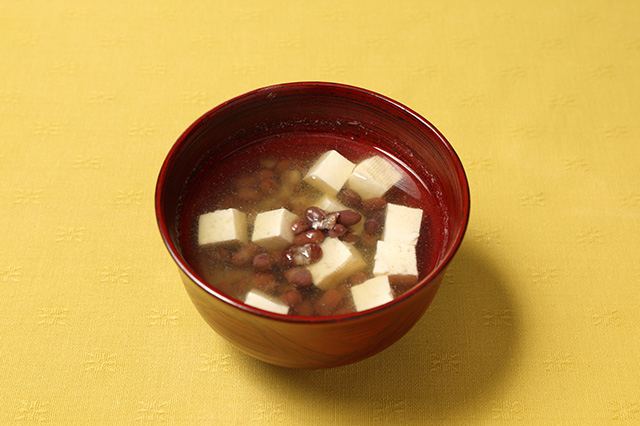
| Prefecture | Ishikawa (石川県) |
|---|---|
| Region | Chubu |
| Japanese name | いとこ汁(いとこじる) |
| Reading | Itokojiru |
| Home area | All within the province. |
| Main ingredients | And I'm going to show you some of the things that I've learned. |
History and Origins
At Ishikawa Prefecture, one of the autumn traditional events is "I'm so sorry." This is a tradition held on November 28th, the anniversary of the death of the founder and father of the Sun of the Sun of Shikoku. After listening to the law at temples and at houses, we call the meal "Safe" and we can act on the guests who gathered for the benefits. The essential part of the thank-you meal is "Space." This is a soup made into lye juice by slowly boiling all kinds of vegetables around beans and tofu. Oyster beans are the favorite of the Mother-in-law. Those who attended the court council are saying that they eat "Space" and then repay their parents for their gratitude. In Egishima, it's called "oo beans juice." There are theories about the unique name "Sacred Koji." It's also because of the fact that the soup that was eaten by the "Kinji" that began to prepare the New Year on December 8th, and the ingredients of the natto and so on are in the citrus. In some areas, roots such as the large roots, the sea cucumbers, and the potato are made to appear to be unspoiled, and interpretations vary from person to person. The menu for the thank-you course also has a "best soup" similar to "surprising." This is a mixture of beans and root vegetables. You can also eat the "Seven Days" that you spent seven days boiling your eggs. XYamaguchi Prefecture and Yamagata Prefecture have "bead soup" but they have little in common with cooking and ingredients, and they have a different flavor.
When It Is Eaten
It's one of the most essential dishes of the reward class. Kanzawa is so absorbed in pure worship that it is called "the kingdom of the true God" that it is still based on the traditional practice of senility. In the reward course, they're eating "beautiful" beans and root vegetables, as well as "beautiful soup" and "seven days of boiling rice" over seven days.
How It Is Eaten
I'll put the tender boiled beans in the soup and put them on the fire. When it's boiling, put in tofu and taste it in the sauce before eating it. The soup is used for inductive cooking, such as lye.
Recipe — Serves 4
Ingredients
- 50 g azuki beans
- 80 g firm tofu
- 80 g daikon radish
- 60 g kabocha squash
- 2 cups kelp dashi stock
- 2 cups azuki beans
- 1 tbsp 1/3 miso
Method
- Put some beans and plenty of water in the pot and put it on fire. When you boil, you boil for about 15 minutes and then drop the hot water once. Put water in and cook again. When the water is low, add water and cook it until it is soft.
- I'll have to put it on top of my head and cut it into juice with beans and beans.
- The tofu and the radish are cut into 1cm angles. The pumpkin takes seed and straw and peels off its skin and cuts it into a small bite.
- It's a pot and a soup and a little bean soup. Put it in and put it on fire. Add a large root and boil it. When the main root is on fire, add pumpkins and cook until it is soft.
- Add the beans and tofu and taste them with the sauce. If you boil up, I'll stop the fire.
More About Itokojiru
My cousin's soup is a native dish that is common throughout Japan and is cooked beans and so on. There are differences in ingredients, cooking and so on, depending on the area. In other words, there are cousins, kanji, cousin, cousin, brother, brother, sister, daughter-in-law, soo-in-law. There are similar dishes, such as cousins, cousins, and bowl soup. There are a lot of days for the reward courses during which we eat, but often they are eaten at wintertime or made for the everyday needs of the day.
Origins
Regarding the origin of the dish, there is a theory that when the parent opens his lecture in his own grass, he has adopted a dish of green rice and beans instead of tea. The "Ichinji Group," which is supposed to be in the late days of room town, was already published as "sub" and then became popular during the Edo.
Origin of Name
There are more than one theory about the origin of the name "behavior soup."
Since the ingredients are so hot that they can't be steamed, the word "cook" is used to refer to the nephew, or cousin, as one of the sources of the word. The theory that all the ingredients were vegetables, the idea that all the ingredients were eaten by cousins, the use of beans and the flavor from the same beans, the idea that they were cooked with similar ingredients, not as similar to those of brothers, the idea that the dressing of this dish was a banquet held by the Edo, and the idea that the soup is "salvation" that is the theme of the meal, and the idea that the soup is "salvation" and the idea that the food is eaten by relatives.
It's the soup made first on December 8th, and it's made with dacon gou soyimo cui, conyak, carrots, soy sauce, soy sauce.
In some areas there is a specific story that leaves out: Little beans and tofu, radish and carrots, potatoes and potatoes are both cousins.
It's all over the place.
Akita Prefecture
The Kagohorn region has a dish made of dacon and beans, which is called cousin's soup.
Yamagata Prefecture
After boiling the rice in the top of the tree overnight until it was only soft, the rice was boiled in the rice that was soaked in water overnight, and the rice was boiled together for about half an hour with the water of the poppy, and then mixed with sugar and a little salt for a while, and then re-finished it with a weak fire. There are ways to cook with a rice cooker instead of boiling with a pot. It's thought to be a farmer's hospitality food from autumn to winter and has a unique sense of food.
And it's called "The Winter Great" except for those who boil pumpkins and beans.
I'm sorry.
Tochigi Prefecture
There are customs in the area of Seo-yeon at the end of the winter, but there are also families that make rice and rice soups for their cousins. In addition to this, there is also the "best soup" of the broth that comes from Toyama Prefecture, which is also served with a large root and a large potato, which is a sultry, which is boiled with a silica and boiled rice.
Ibaraki Prefecture
Ibaraki Prefecture is Japan's best domestic product and is dependent on native and domestic pumpkin food. The pumpkin stew is one of the main recipes, and the pumpkin-snake soup that cooks the pumpkin and beans together is the standard dish during wintertime.
Tokyo
Izu Oshima will be served at the temple on the 10th night of November with sweet potatoes and potatoes and tasties and tasties of beans and tofu.
Kanagawa Prefecture
In the summer, they say, you can eat stew with a taste-smelled sauce, such as beans, beans, peas, dried radishes, and so on.
Northland
I'm going to eat something warm, such as daikon, carrots, chicken, goo, and so on. I'm going to add beans, and I'm going to eat something warm.
It is bound to be served as a dinner for the 7th day before November 27th, the anniversary of the birth of the father of the founder of the Shinji religion and the father of the northern border. It's one of the best dishes.
Niigata Prefecture
Niigata Prefecture uses a lot of remcons, and is mainly in the soup of beans and lemcons. It was thought successful by having holes and "seeing ahead" in the peas.
The recipe is simply to mix the red and the green beans in salt. Not adding sugar is thought to have been a valuable thing in the past, but it has become more popular these days.
During the winter solstice, something using pumpkins was made.
Toyama Prefecture
Since the beginning of the Tokyo temple in 1390, in the Toyama Prefecture, your cousin is made as a "Safe day" when many Kajinists and founders are born. It is thought that beans are a favorite of the parents, and they are also used as tools. Tastes are seasoned with condiments or sesame oil.
Ishikawa Prefecture
I have the custom of making a cousin's stew all over Ishikawa Prefecture as a reward-sai.
Fukui Prefecture
There's a custom of eating beans as well as tata ya yaga tata soo soup at funerals and legal services.
Gifu Prefecture
In the shrine of the Gifu Prefecture Sea XZXXTsu CityXX, they wear their traditional stew as a fast on the second morning of the reward.
Aichi Prefecture
There's a cousin's soup with sweets and beans in Inoi City. Tokugawa City cooks rice from beans, lily, potatoes, and rice on the moon. The old Tatamura and Miga village of Towawa City have the custom of playing their cousin's soup made from beans and ground beef at funerals.
Mie Prefecture
It's customary for the Ha Ni to gather together in the community's "Akihara" diet on the 21st of January when she makes her cousin from dried tadpole leaves, peas, sugar, and stew.
Kyoto Prefecture
There are ways to eat in Kyoto Prefecture. Imoto-town cousin soups are salted with dicho - sesto - sesame potato and flour - made dumplings, and sometimes sugar is added instead of sweet potatoes.
Nara Prefecture
It's made of beans and pumpkins and is seasoned with soy sauce. In Toshimura, I grind the soup, sweeten it, and turn it into "Sunmy."
We were told that eating in the winter solstice would benefit us from colds and moderates, so we gave them to the Shinto altar and the Buddhist altar before eating them.
Kochi Prefecture
In Kochi Prefecture, there is a custom of making and acting on a large amount of beans added to the soup in the soup called "boo soup" and a dish of tofu with soy sauce and sugar. It's called "Sun-Sook."
Hiroshima Prefecture
I call the night before January 16th, the anniversary of the funeral of my father, the eve of the festival, the eve of January, the eve of the day.
Yamaguchi Prefecture
It's made in various places in Yamaguchi Prefecture, but not in Iwaji.
The broth's soup was quite different from the dish on top, and it served with boiled beans and a little sugar and soy sauce from the broth and soy sauce. Cool what has been cooked, and add to it the coral and the citrus that has been brought out of juice.
It's mainly cooked as food for the Memorial celebration. When used for celebrations, they are red-white and green-and-white when used for funerals and legal affairs. At first glance, it seems like "The Snack of the Knee-Cook" but it is less sweet, and it's not dessert, but it's a part of the dinner table.
Fukuoka Prefecture
In the wintertime, you have the custom of boiling beans and pumpkins and of eating beef that is seasoned with sugar and soy sauce. By eating cousin soup, I'll tell you that I have to get medium-sized.
Oita Prefecture
At the Kajijijijijiji in Ida Terrace, you can make rice roots for rice and soups for beans, which are supposed to have been the favorite of your parents. It's said that in some areas it can be grown with rice.
On the waterfront after the harvest, you'll be fed a "bis" that has been cooked with lentils and beans, with raw potatoes cut from the skin, and with boiling and red sugar.
Text adapted and translated from the Japanese Wikipedia article いとこ煮 by its contributors, licensed CC BY-SA 4.0.
Dish data: Ministry of Agriculture, Forestry and Fisheries (MAFF), “Uchi no Kyodo Ryori” (Our Regional Cuisines) database, used under the Public Data License (PDL1.0); translated and adapted from the Japanese original.