Home / Ibaraki / Iwashinōnohanazuke
Iwashinōnohanazuke いわしの卯の花漬け
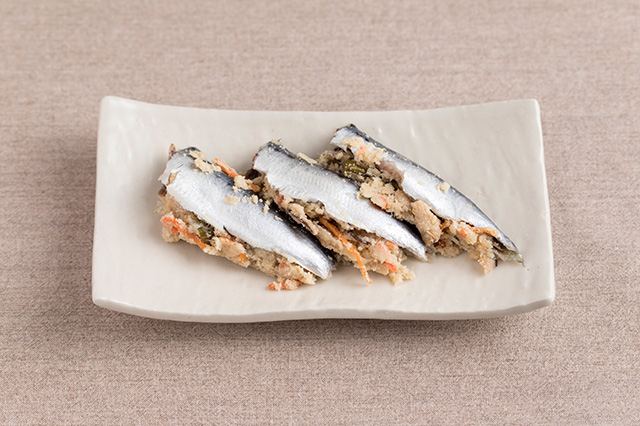
| Prefecture | Ibaraki (茨城県) |
|---|---|
| Region | Kanto |
| Japanese name | いわしの卯の花漬け(いわしのうのはなづけ) |
| Reading | Iwashinōnohanazuke |
| Home area | Northern Area |
| Main ingredients | I'm sorry, I'm sorry. |
History and Origins
It's Ibaraki Prefecture, which is the largest agricultural province in the country. Coastal offshores are rich fishing areas where parental and black tides cross, and various fish and fish are washed off each season. In the harbors of Tsukiji, northern Japan, there are so many Sabas and Eagles and the harbors are so much catching that it takes tens of thousands of tons of fish a year as the state's largest fishing port. Watered sabbaticals and eagles are used freshly, and not only to burn and eat, but also to prepare wood, cans, and so forth, and are now exported abroad. The Ibaraki Prefecture, which is blessed with such ocean prosperity, is one of the long-known native dishes called "The Fabulous Luxus." "The flower of the flower of the flower of the flower of the flower of the flower of the flower of the flower of the flower." It's been valued as a local food preserve because it takes a long time to live in a hard - to - taste fresh eagle in abundance, in a hard - to - mix - with vinegar.
When It Is Eaten
Since the "Kinji' flowered" was also eaten as a sushi dish, each family had built it using a large eagle from about November to November. Other than bedtimes, they've been eaten as daily food.
How It Is Eaten
If you take out a fresh eagle head, anthills and bones and wash them, you'll shake salt and go to bed for a few hours. After that, we'll use the salt in water and put it in vinegar for more than ten hours. After ten hours, you can add sugar to the vinegar and add another ten hours. A tightly boiled water increases the saving power. On the other hand, after you add vinegar and sugar to the roast, you keep it cool and taste good. Finally, I'll mix the vinegar-cut eagle with the pepper-screw leather, the red pepper, the salt. It's delicious for drinking and rice.
Recipe — Serves 4
Ingredients
- 9 sardine
- 100 g salt
- 100 ml vinegar (A)
- 100 g okara
- 30 g carrot
- 3 tbsp sugar
- 3 tbsp vinegar (B)
- 1/2 yuzu
- a pinch dried red chili
Method
- The eagle washs well, and opens its hand to remove the metacarpals and abdomen. I'll wipe out the water and put the salt in it for about 30 minutes. We'll split the vinegar into two pieces and we'll wash the salted Eagle in one of them. I'll prepare the bat, put the eagle in line, pour the remaining vinegar into the bowl, and dip it in for more than half an hour.
- Put in the pot flowers, sugars, vinegar, hawk claws, carrots, and a thousand slices of carrots, and dry them until the water runs out and mix them with a thousand slices of mustard. The rest of the citrus citrus juice is poured into the flower of the citrus.
- I'll open up an eagle, wipe out the vinegar, pick up a flower and pick it up lightly and pick it up. The flowers are covered in the skin.
- I'll put it on the vessel. This recipe will not work, so we'll eat it early.
More About Iwashinōnohanazuke
It's a dish that was served with the vinegared eagle.
Overview
"The flower of the flower" is called "the flower of the flower of the flower."
From Towaji to Kyushu, it is a special place for Mee and the Great Eagle, and there are many native dishes with the eagle. Also, since tofu is eaten so well in the south wing, there is a lot of yield from the tofu product, and there are many other recipes that are made from sauce. The flowers of my rice bowl are one of those dishes.
There are many ways to make it, and there are ways to make it, where you can mix it up with an eagle that has been soaked in vinegar, and where you can mix it with a sweet taste.
You can build an eagle that was caught around March of November and March. In addition to being eaten during New Year's or festival events, they are eaten daily as food and regular food. Processed goods are sold in the year of the year.
Once, it was created by neighbors, such as Iseshima High School and the Cemetery. It was said that when the event was held, they would have more candy and that fifteen nights they would be served with a rabbit-shaped shape. These activities and customs are breaking down.
Text adapted and translated from the Japanese Wikipedia article いわしの卯の花漬け by its contributors, licensed CC BY-SA 4.0.
Dish data: Ministry of Agriculture, Forestry and Fisheries (MAFF), “Uchi no Kyodo Ryori” (Our Regional Cuisines) database, used under the Public Data License (PDL1.0); translated and adapted from the Japanese original.